Understand any stock in simple English
Enter a ticker to learn what the company does and how it makes money.
Verisure plc
Verisure sells monitored home and small-business alarm systems, charging customers a recurring monthly fee to watch over their property and send help when something goes wrong.
Verisure sells peace of mind. A homeowner or small-shop owner worried about break-ins pays to have alarms, sensors, and cameras installed, and then keeps paying every month so that someone is always watching when the alarm goes off. When a sensor trips, Verisure's own monitoring centers check what is happening and can send a guard or the police. That recurring relationship — installation plus a monthly subscription — is the heart of the business.
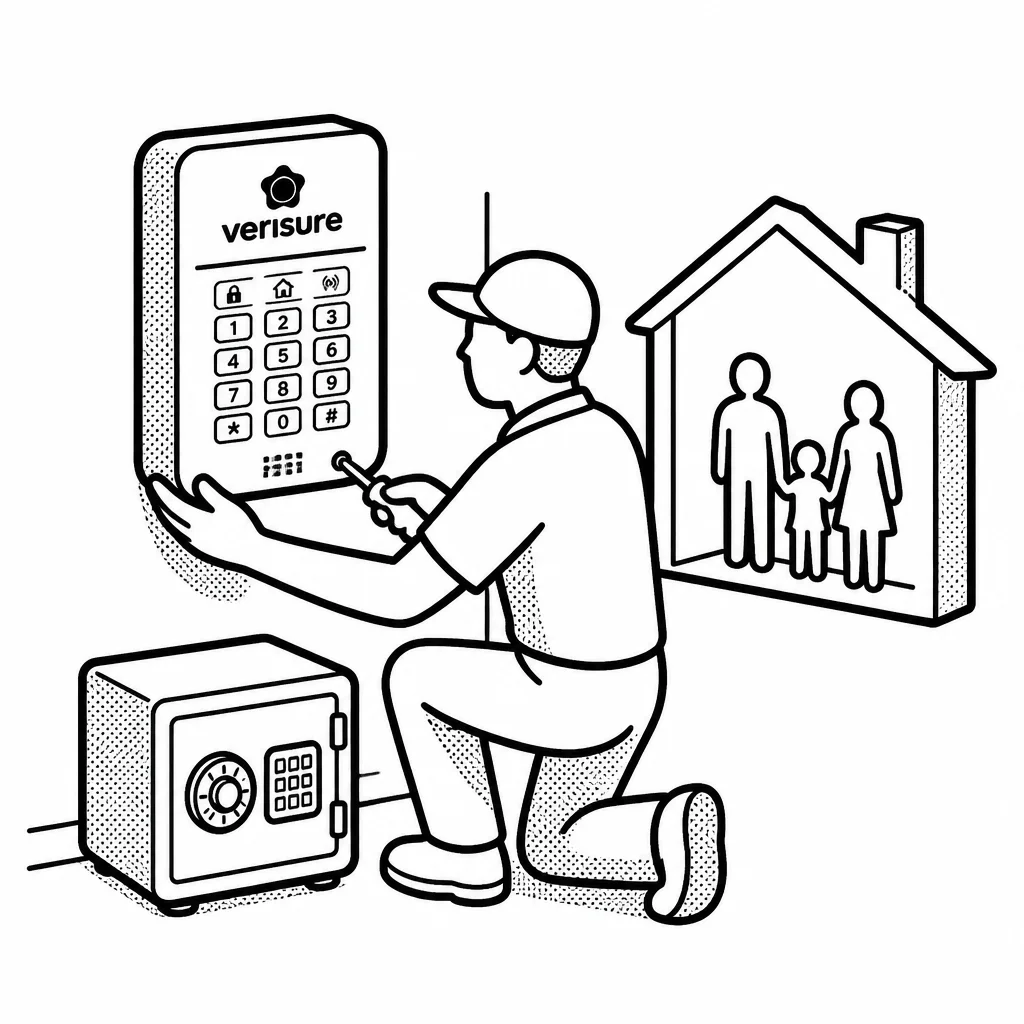
The pitch that makes people choose Verisure over a cheap off-the-shelf alarm is the human layer: its own alarm response guards in many markets, verified alarms that reduce false police callouts, and a sales force that comes to your door to set everything up. The company sells heavily through in-person and door-to-door salespeople, which is expensive but gets security systems into homes that would never buy one online. It operates across much of Europe and Latin America, and its customers are overwhelmingly households and small businesses rather than big corporations. The money model works a bit like a gym membership for your house — install once, collect fees for years. Customers sign multi-year contracts, so revenue is recurring and predictable, and the customer base builds up steadily over time. The flip side is that acquiring each new customer costs a lot in sales commissions and installation, so the company has to keep customers for years before it truly profits on them. Churn — people canceling — is the thing that hurts most.
Verisure has grown largely by expanding into new countries and buying rival alarm companies, and it has a large debt load from its history as a private-equity-owned business. Its main competition comes from telecoms and other security providers selling cheaper, self-installed systems, plus local alarm companies. The bet is that people will pay a premium for a service that actually shows up when something goes wrong.
Saved answer · last researched 12 Nov 2026