Understand any stock in simple English
Enter a ticker to learn what the company does and how it makes money.
Rolex Rings Limited
Rolex Rings makes forged and machined metal rings and parts used in bearings, cars, and machines.
Rolex Rings is a manufacturer of forged and machined metal components. If a part needs to be strong, round, and precise — a bearing ring that lets a wheel spin, or a piece of an auto gearbox — this company is one of the places that makes it. Its customers are mostly bearing makers and car and truck parts companies, in India and abroad.
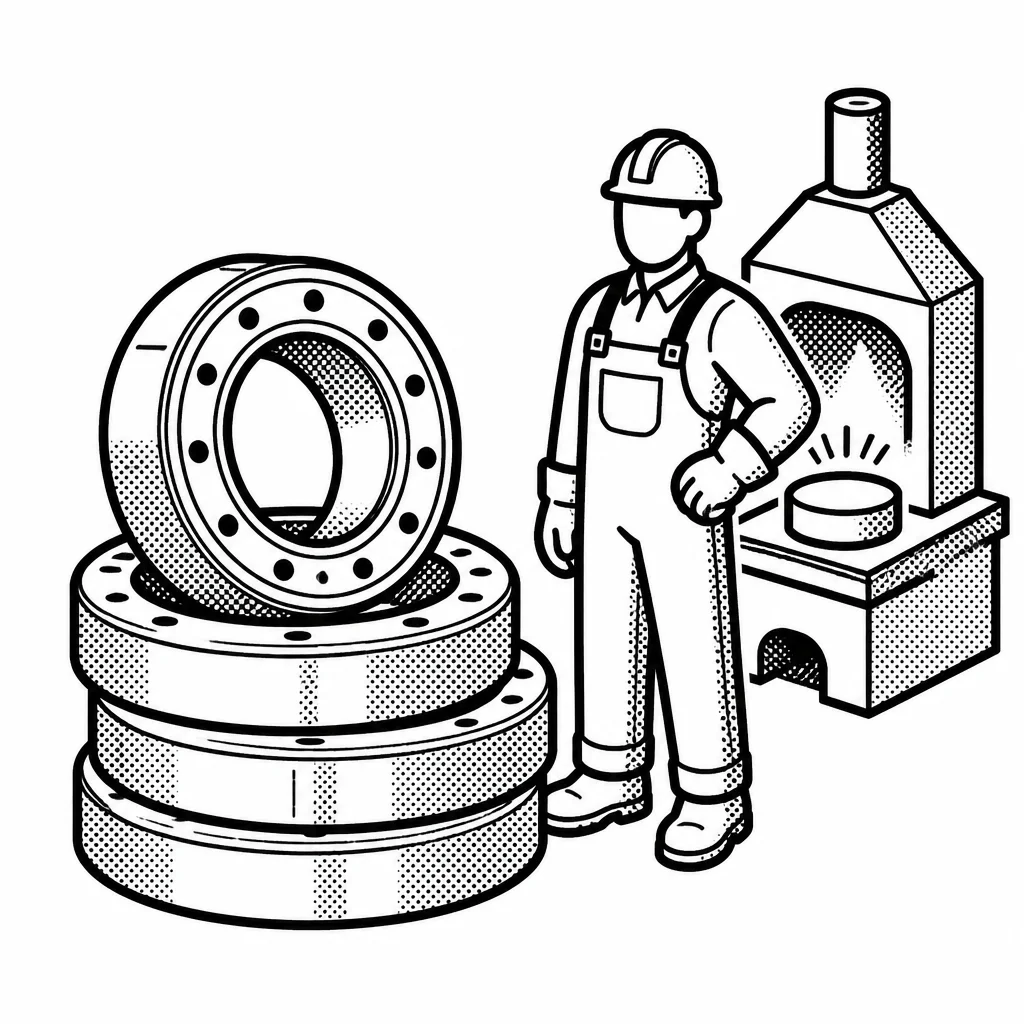
Here is the basic idea. You cannot just cast or carve a bearing ring that has to survive years of spinning under load. You take a chunk of steel, heat it, and squeeze it into shape with enormous force — that is forging. Forging lines up the metal's internal grain, making it far tougher than a cast part. Then machines grind and cut that rough ring to a precise size. Rolex Rings does both steps, which lets it sell finished, ready-to-fit parts rather than rough lumps, and capture more of the value. Most of its sales come from bearing rings, with the rest from auto components. The customers are the big bearing companies like Schaeffler and SKF plus auto suppliers and vehicle makers, who buy in volume and demand consistent quality. Competing for those contracts means investing in automated forging and machining lines and winning approvals from each customer, which takes years. That is the moat: once your part is designed into a customer's product, switching away means re-qualifying a new supplier and risking production, so relationships tend to stick.
The business is cyclical and capital-hungry. When car and truck sales slow, orders for components slow too, and the company carries debt from building out capacity. It has been expanding its forging and machining lines to serve more export customers — a reasonable bet, since global bearing makers want suppliers with scale and reliability. A business like this rarely makes headlines, but it quietly makes the parts that keep wheels turning.
Saved answer · last researched 11 Nov 2026
BIG PICTURE
Rolex Rings makes about 30% of the bearing rings sold in India's home market
- 30% Rolex Rings' share of India's bearing ring market
- 70% Made by other suppliers
Out of every 100 bearing rings sold in India, roughly 30 come from this one company. Bearing rings are the metal loops that let wheels and machines spin smoothly, and they sit at the heart of what Rolex Rings sells. A home share that big means Indian customers already trust it, which is why the domestic market gave the company 56% of its money in FY26. Source: Money9live (citing Trade Brains), data from 2026
Timeline
Two Brothers Start Rolex Industries
In Rajkot, Gujarat, two brothers decided to start their own business. A few years later, they formed a partnership firm called Rolex Industries, though in its early days it was less a factory and more a trading outfit. The city they chose would one day become a hub for metal parts, which would matter a lot for what came next.
From Trading to Making Forged Parts
Being a middleman trading other people's goods has a ceiling. So the brothers changed course and built their own plant in Rajkot to make forged and forged products themselves. That move from trading to manufacturing is the real birth of the business you would recognise today.
Rolex Becomes a Company
The partnership was converted into a joint stock company under the Companies Act, becoming Rolex Rings Private Limited. In plain terms, the firm gained a proper corporate structure, the kind that banks, investors and larger customers take seriously.
An Investor Arrives and Capacity Grows
Rivendell PE LLC put money into the company, and the cash went to work. Rolex bought new hot forging machines, including a Hatebur Hotmatic and a Sakamura, and got its second unit registered for central excise. In short, more capacity and a bigger investor footprint all at once.
Ring Rolling Comes In
The company added an SMS MEER ring rolling line, giving it ring rolling capability next to its forging operations. This was the step that turned it into a maker of rings, not just forged pieces, and it set the company's direction for years.
A Third Unit
Rolex set up Unit 3, expanding its manufacturing footprint. More units meant more room to grow as demand for its parts rose.
Rolex Goes Public
In March 2021 the company turned public and took the name Rolex Rings Limited. That July it raised money through an IPO, mostly by letting early backers sell shares rather than taking all the cash itself, and the stock listed at a big premium. Going public gave the company a wider set of owners and a public scorecard for the first time.
Auto-Loaded CNC Machines
On the factory floor, Rolex switched from traditional CNC machines to auto-loaded ones, where the machines load parts themselves. The payoff was higher productivity and better quality, a quiet upgrade that would help when demand returned.
A Deep Fall and a Sharp Rebound
The stock had fallen to a 52-week low in late 2025, down about two-thirds from its peak, as growth stalled and exports got disrupted. Then things turned: the shares rallied 116% to a 52-week high after strong quarterly results with net profit up sharply, and a brokerage launched coverage with a Buy rating. The argument was that after four years of flat revenue, the company was finally entering a new upcycle, helped by recovering export demand and opportunities in Europe.