Understand any stock in simple English
Enter a ticker to learn what the company does and how it makes money.
Profound Medical Corp.
Profound Medical sells MRI-guided, incision-free machines that destroy diseased tissue inside the body, mainly to treat an enlarged prostate.
Profound Medical sells a machine that lets a doctor destroy sick tissue inside a patient's body without cutting them open. The patient lies inside an MRI scanner, which acts like a live map, and the machine focuses ultrasound energy to heat and kill the target tissue while leaving everything around it alone. The company's main product is called TULSA-PRO, and it is used mostly to treat an enlarged prostate, a very common problem for older men. It also sells Sonalleve, a similar system used to treat uterine fibroids, bone tumors, and other growths.
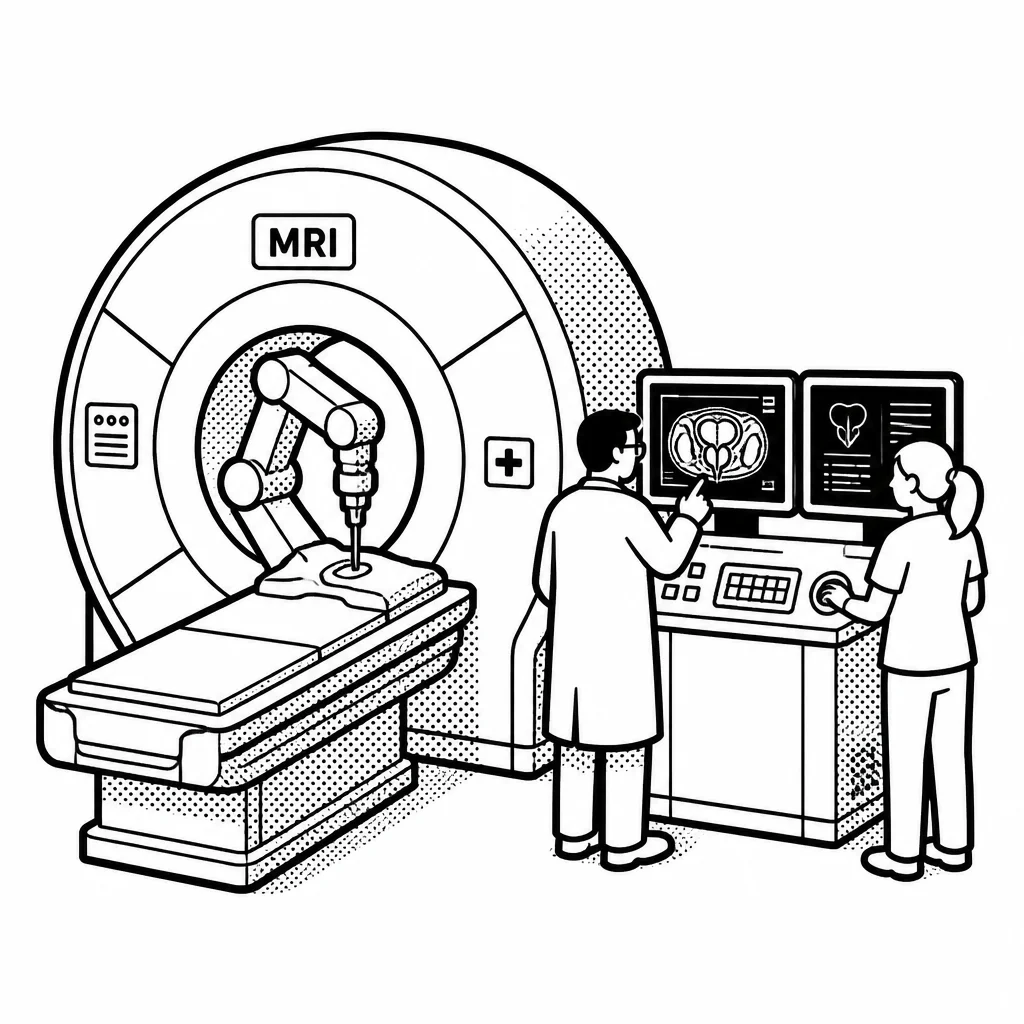
The customer is a hospital, and the money comes from two places. The hospital buys or leases the system, and then Profound earns again every time a procedure is done, because each treatment uses a single-use disposable kit that must be replaced. That razor-and-blades setup is attractive: the machines get the company in the door, and the recurring disposable sales grow as more patients get treated. The pitch to hospitals and patients is simple: no incisions, no radiation, and a faster recovery than surgery. The bet is that men will choose this over traditional options for an enlarged prostate, which include drugs, surgery, and other heat-based treatments. Competitors in that space include Boston Scientific and Teleflex, among others. Profound's edge is the real-time MRI guidance, which gives doctors far more control than older ultrasound-only methods. The risk is that adoption is slow and expensive, since hospitals must already have an MRI suite and trained staff willing to learn a new procedure.
Profound is a small, money-losing company, and that matters for how you read it. Revenue has been growing but remains modest, and the business burns cash while it tries to build awareness and get more hospitals on board. It is headquartered in Toronto. On the plus side, it has won important regulatory clearances, including from the FDA, and its technology has real clinical backing. The whole story now hinges on one question: how fast can a clever, expensive, unfamiliar procedure convince enough hospitals and patients to give it a try?
Saved answer · last researched 16 Nov 2026