Understand any stock in simple English
Enter a ticker to learn what the company does and how it makes money.
Proto Labs, Inc.
Protolabs is an on-demand manufacturer that makes custom parts for prototyping and short-run production, mostly for engineers and product developers.
Protolabs is a factory for the awkward middle of product development — the moment when an engineer has a design on a screen and needs a real part in their hands fast, but not so many parts that it makes sense to build a full production line. Engineers upload a 3D CAD file, get an instant price and lead time, and Protolabs makes the part using processes like 3D printing, CNC machining, and injection molding. Most orders are small: a handful of prototypes, a few hundred parts, or a short production run.
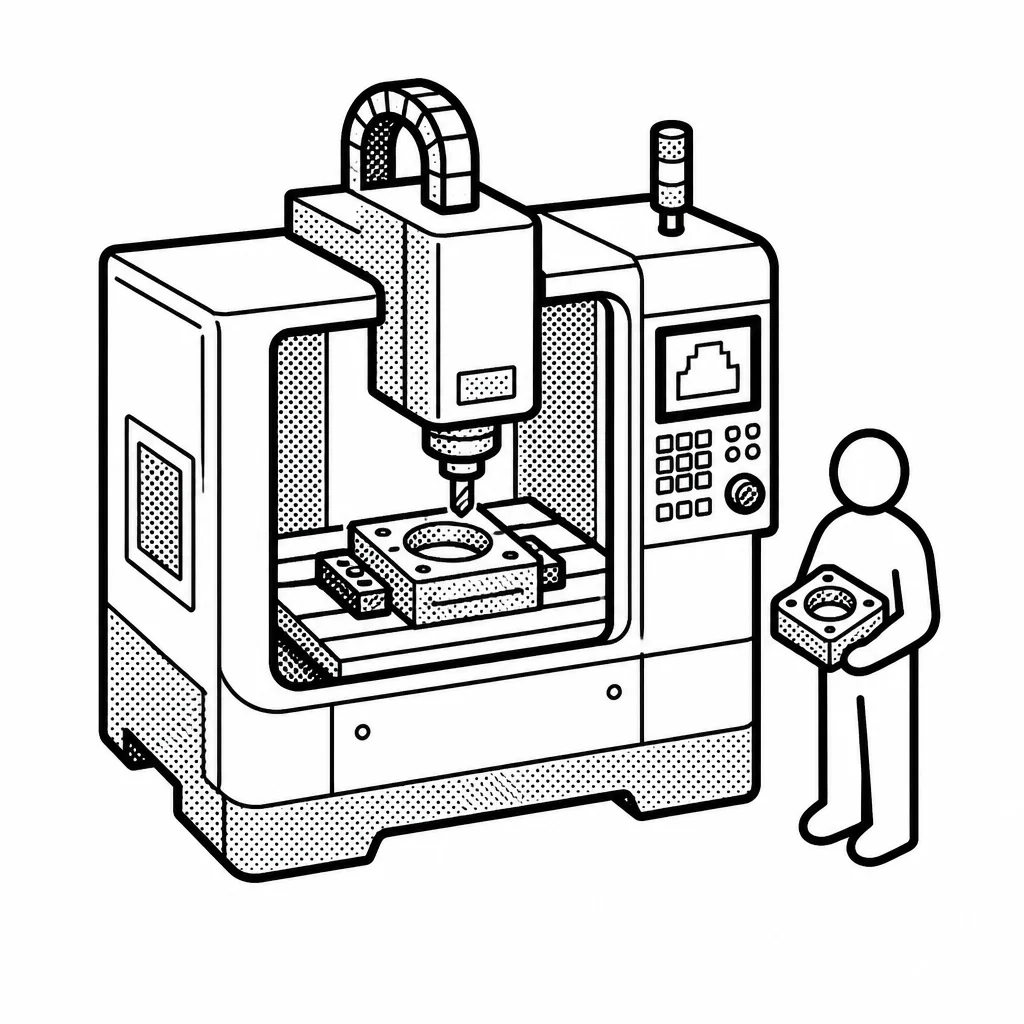
The company runs on speed and automation. Traditional manufacturers quote custom parts slowly, with humans reading drawings and emailing back and forth, and they often prefer big orders. Protolabs built software that reads the customer's design file automatically and prices it in minutes, so it can profitably take small, urgent jobs that other shops would rather avoid. Its customers are mostly engineers and product teams at medical device, electronics, aerospace, and industrial companies, plus a growing number of startups. They pay a premium for speed, and they come back because the same supplier can carry a part from a first prototype all the way toward low-volume production. That model has hit rough patches. Revenue was roughly flat for a couple of years after the pandemic-era boom faded, as customers worked through inventory and demand for small-batch parts cooled. Growth and profit margins have since been lumpy, and the stock has swung hard on quarterly results. Protolabs has responded by expanding its higher-volume injection molding and CNC offerings to capture more of the work that comes after prototyping, rather than only the first iteration.
The company's own scale is its main advantage: a network of factories in the U.S. and Europe packed with machines and automation software, so it can absorb thousands of small jobs at once. Headquarters in Maple Grove, Minnesota, keep it close to a big base of American industrial and medical customers, and it has added facilities abroad to serve overseas engineers faster. It historically acquired smaller players, like the 3D printing specialist Protolabs bought years ago, to widen its menu of processes. The honest summary is a well-run niche manufacturer whose growth depends on how many new products engineers are designing — and whether they need parts quickly enough to pay up for speed.
Saved answer · last researched 14 Nov 2026
BIG PICTURE
Aerospace and defense now makes up about a quarter of Proto Labs' revenue
- 25% Aerospace and defense
- 75% All other industries
The CEO told analysts on the second-quarter call that aerospace and defense is about 25% of total revenue, a slice that grew almost 20% in that quarter. Customers like Blue Origin, Raytheon and drone makers buy fast prototypes and short production runs. That means a company most people picture as a quick parts shop for engineers increasingly depends on the budgets of rocket, satellite and defense programs. Source: Proto Labs Q2 2026 earnings call (Investing.com transcript), data from 2026
Timeline
Larry Lukis Builds Protomold
Larry Lukis was tired of waiting weeks and paying a fortune for the injection-molded plastic parts his laser printers needed. So he wrote software that studied a 3D design automatically and sent it straight to the machines that make the parts, and in 1999 he launched the Protomold Company to sell quick-turn molded parts. The idea was simple: skip the slow, expensive back-and-forth and let software do the work.
The Name Becomes Proto Labs
A decade later, Protomold had a partner service for cutting machined parts, and the two were folded under one corporate name: Proto Labs. The new name said the company was no longer just about molding plastic — it offered a broader menu of ways to make things.
Protolabs Goes Public
In 2012 the company sold shares to the public on the New York Stock Exchange, raising about $79 million. Going public gave it money and attention to grow beyond its roots.
FineLine and a New CEO
Protolabs bought FineLine Prototyping, its first 3D printing company, adding a whole new way to make parts. That same year Vicki Holt took over as CEO with an ambitious goal: turn Protolabs into a billion-dollar company.
RAPID Adds Sheet Metal
Protolabs paid $120 million for RAPID Manufacturing in New Hampshire, a deal that brought sheet metal fabrication into the fold. Another manufacturing service, another way to serve customers who needed parts fast.
3D Hubs Joins the Family
Protolabs agreed to buy Amsterdam-based 3D Hubs for $280 million in cash and stock, adding a network of outside manufacturing partners to sit alongside its own factories. The idea was to offer customers more capacity than the company's own machines could provide. The platform was later rebranded Protolabs Network.
Robert Bodor Takes Over
Vicki Holt retired as CEO and handed the job to Robert Bodor, who had been running the Americas business. A handoff from the leader who chased the billion-dollar mark to one who had grown up inside the company.
Suresh Krishna Becomes CEO
Suresh Krishna was appointed President and CEO, succeeding Rob Bodor. The board tied the change to a strategy of being a single manufacturing source from prototyping all the way to production, chasing a slice of what it called a $100 billion digital manufacturing market.
Betting Big on Jet Fusion
Protolabs expanded its HP Jet Fusion 5600 printing capacity by half, betting on rising demand from aerospace, defense and drones. Multi Jet Fusion revenue through its U.S. factories grew more than 40% year over year, and drone-related revenue was up more than 90% since 2023. Drones were becoming a real growth engine.
Record Revenue, Falling Stock
Protolabs reported record quarterly revenue of $154 million, up 14%, and raised its full-year guidance. Yet the stock fell more than 20% as gross margin slipped and the next quarter's profit outlook was cut roughly 20%, a reminder that a stock priced for perfection can stumble even on good news.