Understand any stock in simple English
Enter a ticker to learn what the company does and how it makes money.
Stratasys Ltd.
Stratasys makes industrial 3D printers and the materials, software, and services that go with them, mostly for manufacturers, healthcare companies, and dental labs.
Stratasys builds the machines that make physical objects layer by layer instead of carving them out of a block of metal or plastic. Picture a printer, except instead of ink on paper it squeezes out melted plastic or shoots droplets of resin and stacks them into a finished part. Its customers are mostly manufacturers making prototypes and production parts, plus hospitals, medical device makers, and dental labs that print things like surgical guides, models, and custom dental pieces.
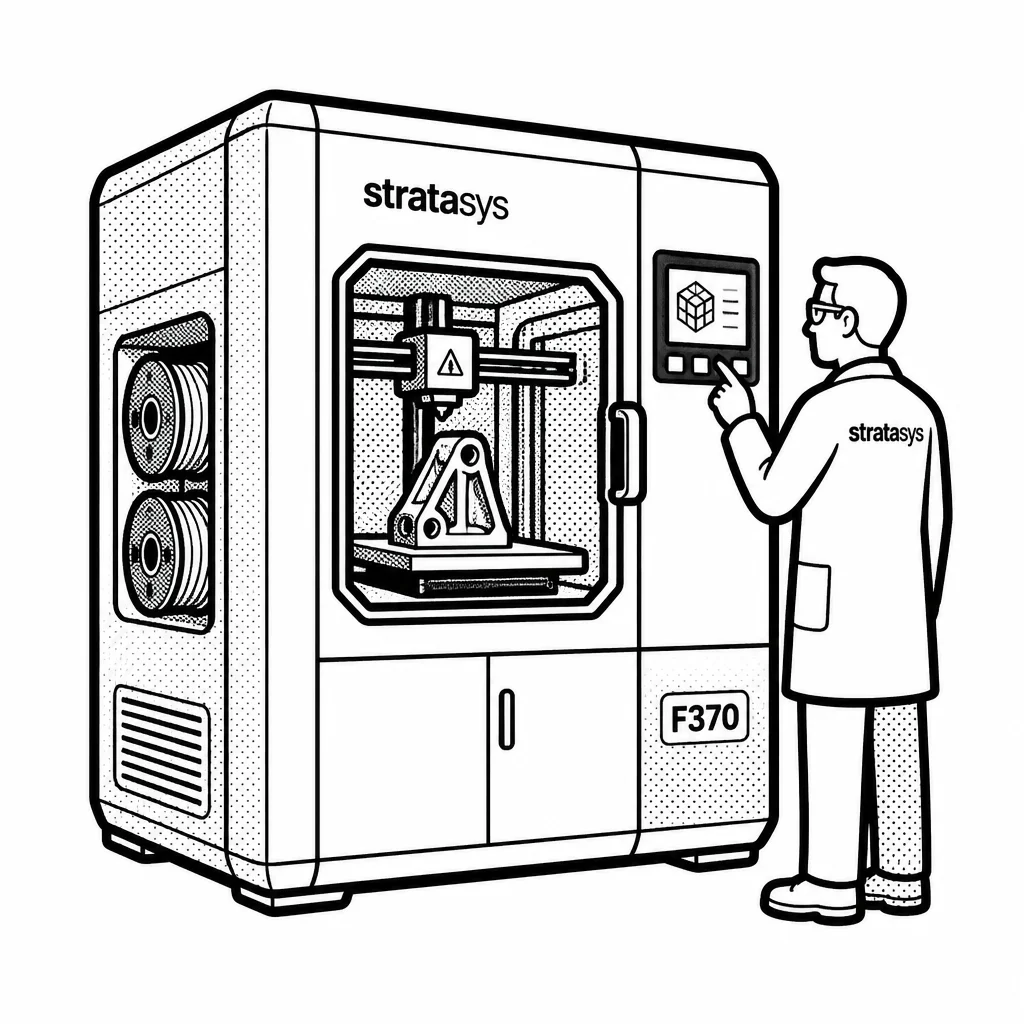
The 3D printer itself is only part of the business. Stratasys also sells the plastic and resin that goes into the machines, the software that prepares a design for printing, and support and service contracts. The consumables are the sticky part of the model: once a factory or dental lab has a Stratasys machine on its floor, it keeps buying Stratasys material to run it. That is why customers choose it — reliability, a proven track record in demanding industrial settings, and a whole system that works together rather than a cheap printer with nothing behind it. This is a tough, competitive market. Stratasys sells against 3D Systems, HP, and a crowd of smaller players, and cheap Chinese printers keep pushing prices down at the low end. The company has also lost money and gone through a rough stretch: a planned merger with Desktop Metal that shareholders rejected in 2023, layoffs and cost cuts, and a fight for control with its largest shareholder, Nano Dimension, which the company fended off. In 2025 it brought in a new chief executive to try to turn things around.
The bet now is on the parts of the market where printing is genuinely better than traditional manufacturing rather than just a novelty. Dental and medical work, where every patient is different, is a natural fit. So is high-end aerospace and industrial production. Stratasys still spends heavily on research and development to stay ahead, and it has trimmed costs to slow the cash burn. The pitch to investors is simple: if 3D printing keeps moving from making prototypes to making real, sellable parts, Stratasys wants to be the company supplying the machines and the material that go into them.
Saved answer · last researched 15 Nov 2026