Understand any stock in simple English
Enter a ticker to learn what the company does and how it makes money.
Plexus Corp.
Plexus builds electronic products and systems for other companies that design them but would rather not run their own factories.
Plexus is a contract manufacturer for electronics. When a company designs a complex machine — a medical device, a piece of networking gear, an aircraft system — and decides it doesn't want to own the factories and supply chains needed to actually build it, Plexus is one of the companies it can hand the job to. Plexus engineers the product alongside the customer, sources the parts, assembles and tests it, and ships it out. The company is headquartered in Neenah, Wisconsin, and it runs factories in the Americas, Europe, and Asia.
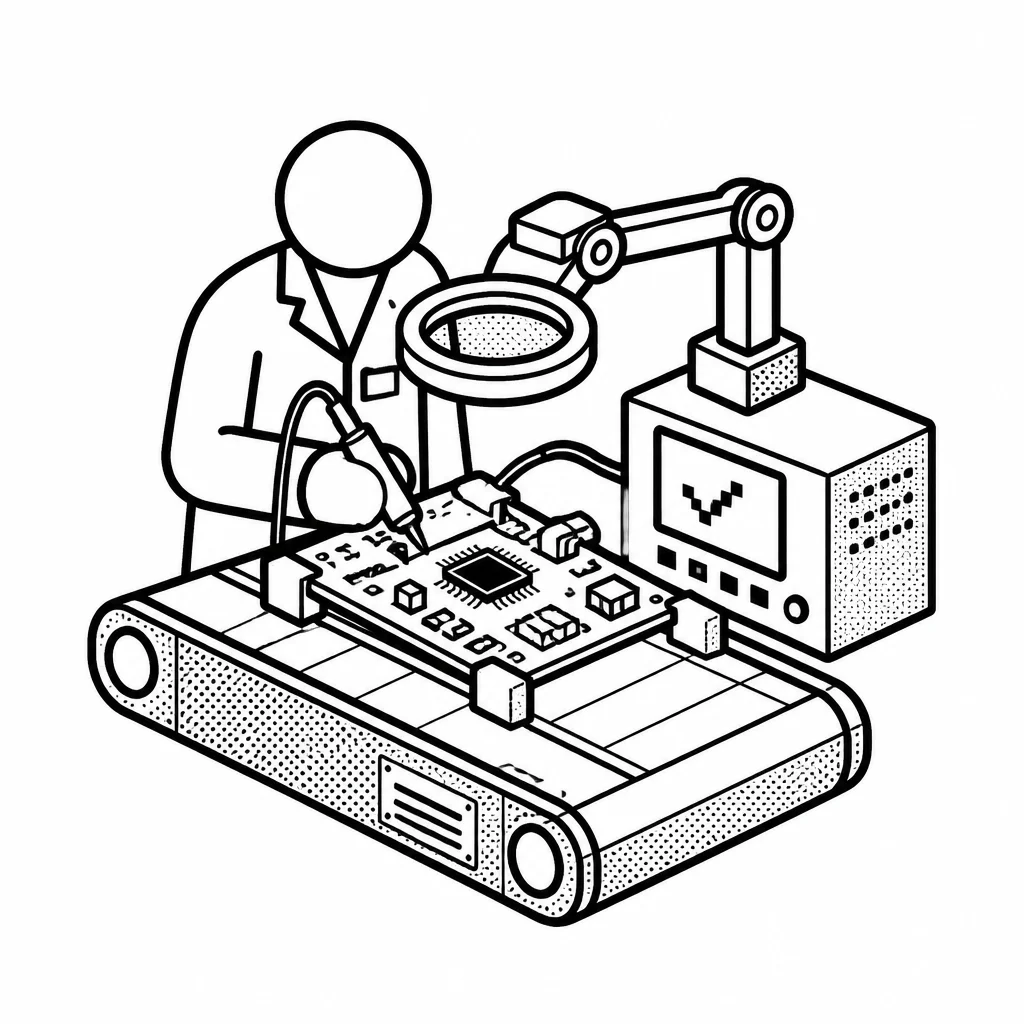
The business splits into three markets. Healthcare and life sciences covers things like surgical devices and diagnostic equipment, where reliability and regulatory paperwork matter enormously. Industrial and commercial covers automated machinery, semiconductor equipment, and aerospace and defense gear. Communications covers networking and data-center hardware. Plexus earns money by charging customers for design help, materials, and manufacturing, aiming to add enough value that the customer is happy to keep sending work its way rather than build in-house or switch to a rival. Contract manufacturing is a brutally competitive, thin-margin business. Plexus competes with much larger players like Flex and Jabil, plus Foxconn, which assembles iPhones and other consumer gadgets at enormous scale. Plexus deliberately avoids high-volume consumer electronics, where margins are razor-thin and customers can squeeze suppliers hard. Instead it targets lower-volume, higher-complexity products with demanding customers — an approach it calls focusing on "complex" manufacturing. The risk is real: a handful of large customers can drive a big chunk of revenue, so losing one hurts.
The company has been investing in its factories and engineering capabilities, and it generates steady free cash flow, which it has used to pay down debt and buy back shares. But the stock has been volatile because demand for electronics components swings with the broader economy. When customers cut back on new equipment orders, Plexus feels it quickly. That's the trade-off: a solid, unglamorous business that makes the physical products other companies rely on, but one whose fortunes rise and fall with industrial and medical spending.
Saved answer · last researched 9 Nov 2026