Understand any stock in simple English
Enter a ticker to learn what the company does and how it makes money.
Kimball Electronics, Inc.
Kimball Electronics builds electronic products and precision plastic parts for other companies in the automotive, medical, and industrial markets.
Kimball Electronics is a contract manufacturer, which means it doesn't sell its own brand of gadgets to the public. Instead, big companies hand it a design and say, "Please build this for us." Kimball makes the electronic guts of products — circuit boards packed with chips, the wiring and assemblies that go inside machines — and it also makes precision plastic parts and finished medical devices. Its customers come from three main worlds: cars, hospitals, and factories.
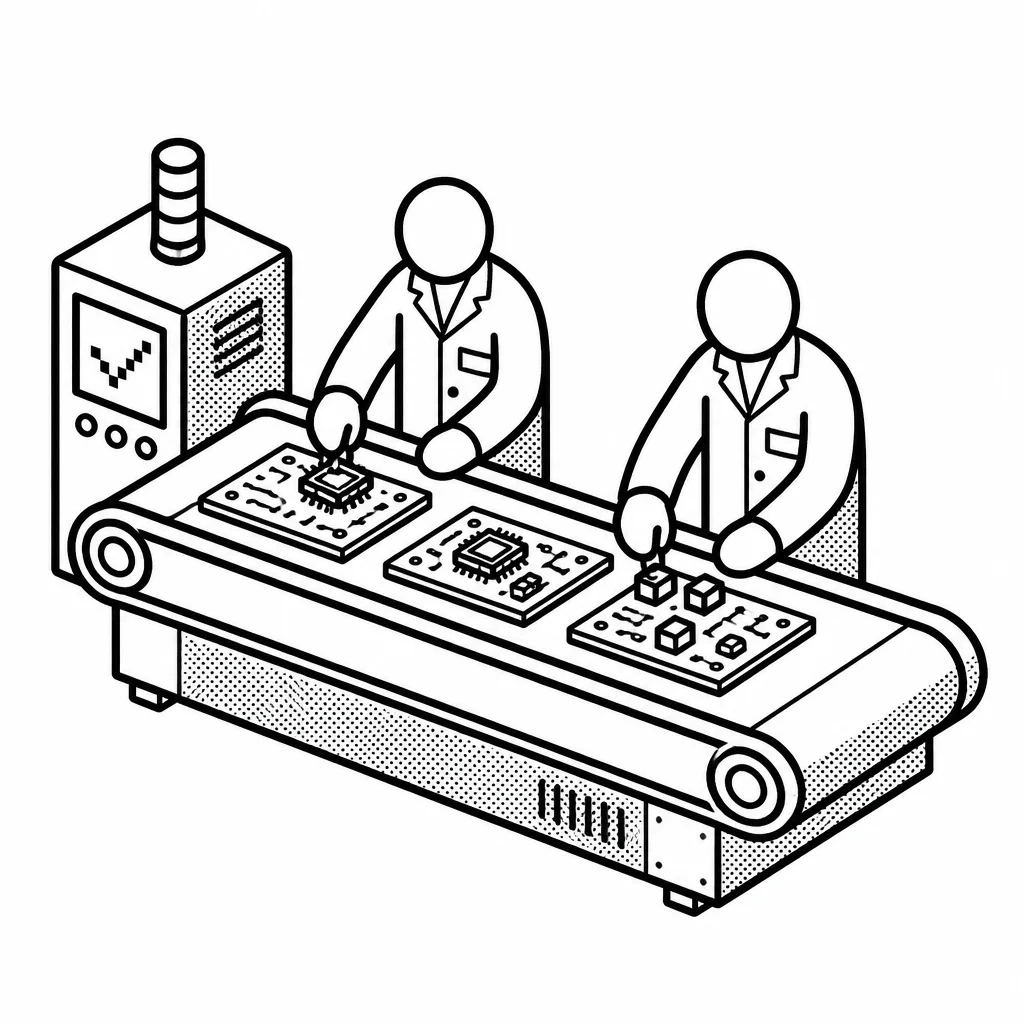
Here is the basic idea behind contract manufacturing. A carmaker or a medical device company wants to focus on designing and selling its products, not on running factories. So it pays a specialist to do the building. Kimball buys the components, assembles them to the customer's exact specifications, tests them, and ships them out. The customer pays for the finished goods, and Kimball earns a margin on top of its material and labor costs. That margin is usually thin — this is a volume business, where winning big programs and running plants efficiently matters more than charging high prices — so scale and reliability are everything. The company is based in Jasper, Indiana, a small town in the Midwest, and it has expanded over the decades into a global operation with plants in the United States, Mexico, China, Thailand, and Europe. That footprint is a selling point: customers want a builder who can make things close to where they're sold, and who can shift production between countries when tariffs or supply problems hit. Its medical business, which includes making finished devices and disposable medical products, is generally seen as the steadier, higher-value part of the mix, while automotive work ties it to the health of car production.
Kimball is a modest-sized player in a field crowded with much bigger rivals like Flex, Jabil, and Sanmina, so it survives by being dependable and specialized rather than by being the cheapest. The business is cyclical and exposed to whatever its customers are going through — a slowdown in car sales or a customer losing a big product hurts. The upside is that once Kimball is designed into a product, switching suppliers is a hassle, so contracts tend to stick around for years. That stickiness, plus steady demand for medical and industrial electronics, is the core of the investment case.
Saved answer · last researched 14 Nov 2026