Understand any stock in simple English
Enter a ticker to learn what the company does and how it makes money.
Oxford Nanopore Technologies plc
Oxford Nanopore makes portable machines that read DNA and RNA by pulling strands through tiny holes, and sells those machines and the consumables and services that go with them to researchers and clinics worldwide.
Oxford Nanopore Technologies makes machines that read DNA and RNA — the instruction manuals of living things. Researchers use its devices to sequence genetic material for science and for diagnosing disease, and the company sells the hardware, the little disposable flow cells each test runs on, and the services around them to labs and clinics around the world. It is based in Oxford, England, and listed on the London Stock Exchange.
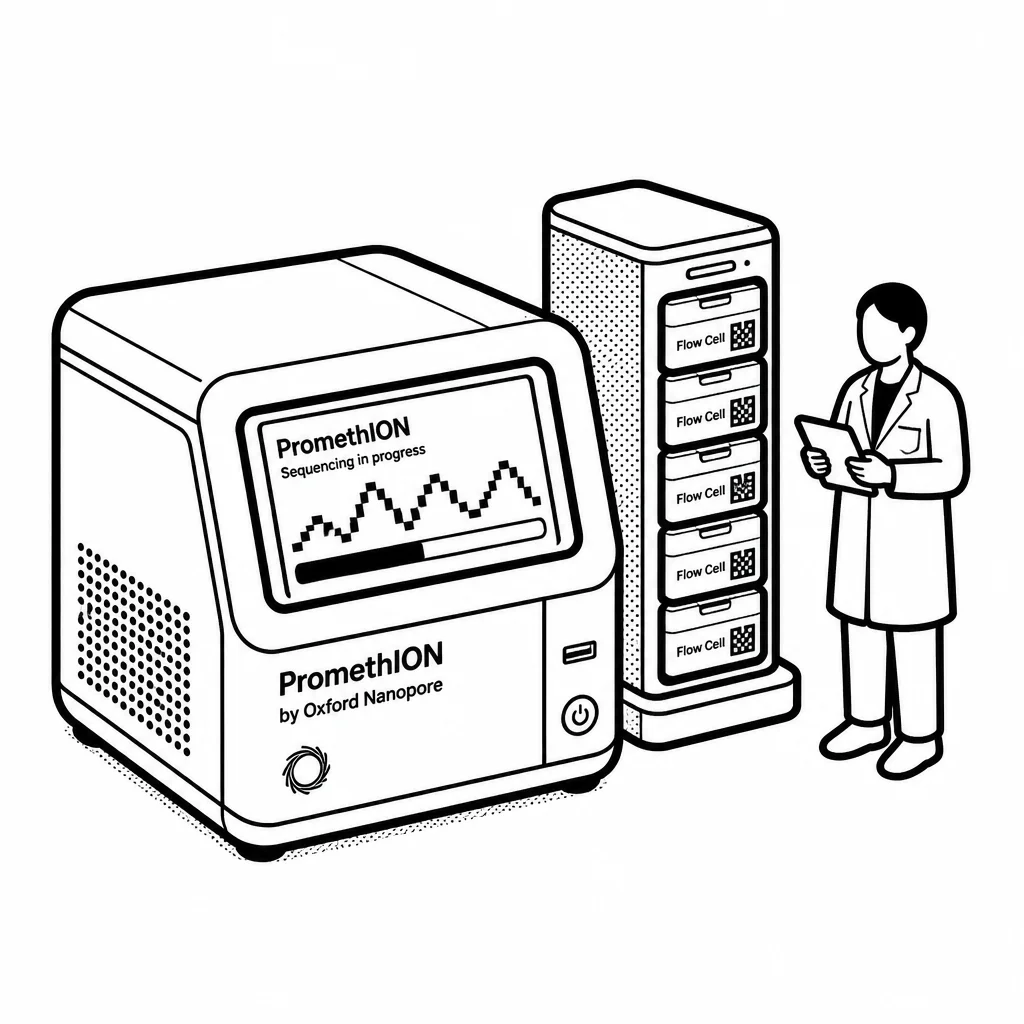
The core trick is elegant. A nanopore is a tiny hole in a membrane, and the machine pushes a single strand of DNA or RNA through it while measuring changes in an electrical current. Each letter of the genetic code interrupts the current in its own way, so the machine can read the sequence as it slips through. Unlike the big established sequencers, which chop DNA into short fragments and reassemble them, Nanopore reads long stretches in one go and can work in real time. That makes it handy for things like rapid pathogen identification or reading samples in the field from a device that fits in your hand. The business model is the classic razor-and-blades setup, with a twist. Customers buy a sequencing device, then keep buying flow cells and kits as they run experiments — that recurring consumable revenue is the heart of the model. The company also sells services and licenses its technology. It spends heavily on research to keep improving accuracy and throughput, because sequencing is a tough, competitive field. Its main rival in large-scale sequencing is Illumina, the long-dominant player, though the two compete more at the edges than head-to-head everywhere. Nanopore's pitch is speed, portability and long reads rather than raw volume.
The company is growing but still loses money, plowing cash back into R&D and manufacturing scale-up. It has pushed into clinical and applied markets — things like cancer research, infectious disease and food safety — where sequencing is moving from pure research labs into everyday diagnostics. That shift is the big opportunity and the big risk: the science is powerful, but regulators, hospitals and budget cycles move slowly, and investors have periodically punished the stock when growth expectations slipped. It is a genuine British deep-tech story, spun out of academic work at Oxford, that turned a clever physics idea into a commercial instrument — and is now trying to prove it can turn that instrument into a durable, profitable business.
Saved answer · last researched 16 Nov 2026