Understand any stock in simple English
Enter a ticker to learn what the company does and how it makes money.
Octave Intelligence plc
Octave Intelligence sells enterprise software that helps companies design, build, run, and protect their physical assets and critical infrastructure.
Octave Intelligence makes software for companies that own big, expensive, physical things — factories, power grids, water systems, buildings, and the machines inside them. Its tools help customers design those assets, build them, keep them running day to day, and defend them from attacks. In plain terms, it is the digital control room for the built world: the place where a utility or a manufacturer can see what it owns, how it is performing, and what might go wrong.
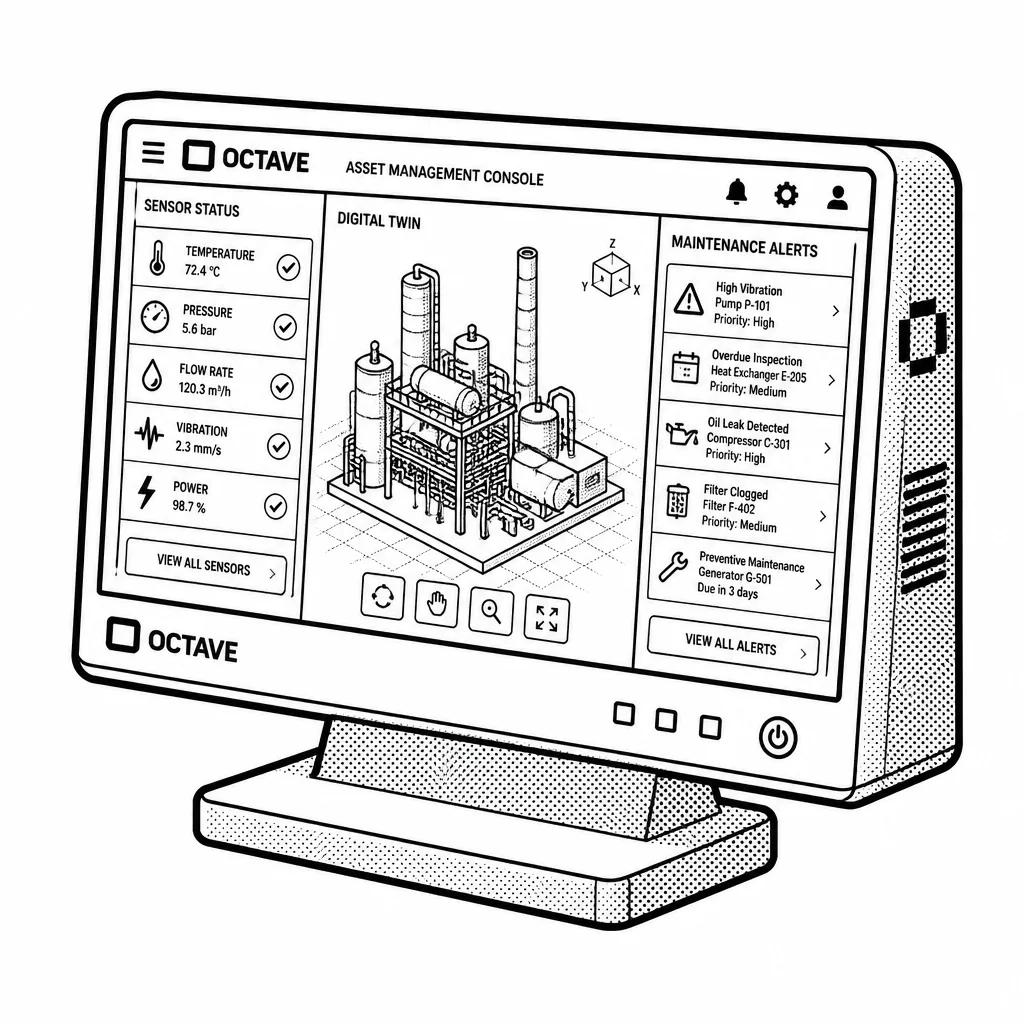
The business is enterprise software, which means the customer is usually a large organization rather than a person. Those customers pay for licenses and subscriptions, and often for ongoing support and services to get the software wired into their operations. They choose a product like this because the alternative is worse: spreadsheets, disconnected systems, and engineers who retire with all the knowledge in their heads. Once the software is embedded in how a company runs its critical infrastructure, ripping it out is painful, which gives Octave a sticky, recurring revenue base. The "protecting" part of the pitch matters more every year. Critical infrastructure is a favorite target for hackers, and regulators increasingly demand that operators prove they can defend it. That turns security software from a nice-to-have into a budget line that is hard to cut. It also puts Octave in the same conversation as bigger industrial software players such as Siemens, Schneider Electric, and PTC, all of which want to be the digital layer over the world's machines.
Octave is listed on Nasdaq Stockholm, a small but growing name in a market dominated by much larger rivals. That means its future depends on winning enough big customers to build scale, since enterprise software only gets truly profitable once the development costs are spread across a wide base of subscribers. The quality of the business will show up in whether customers renew and expand, and whether Octave can sell more modules into accounts it already has.
Saved answer · last researched 12 Nov 2026