Understand any stock in simple English
Enter a ticker to learn what the company does and how it makes money.
Nigeria Inter-Bank Settlement System Plc
NIBSS runs the shared plumbing that lets Nigerian banks, payment apps, and merchants move money to each other instantly and securely.
NIBSS is the shared plumbing of Nigeria's money system. When you send money from your bank app to a friend at another bank, or tap your card at a shop, or a fintech wallet pays a merchant, NIBSS is usually the invisible layer in the middle that checks the details, approves the payment, and makes sure the money lands where it should. It doesn't compete with the banks. It connects them.
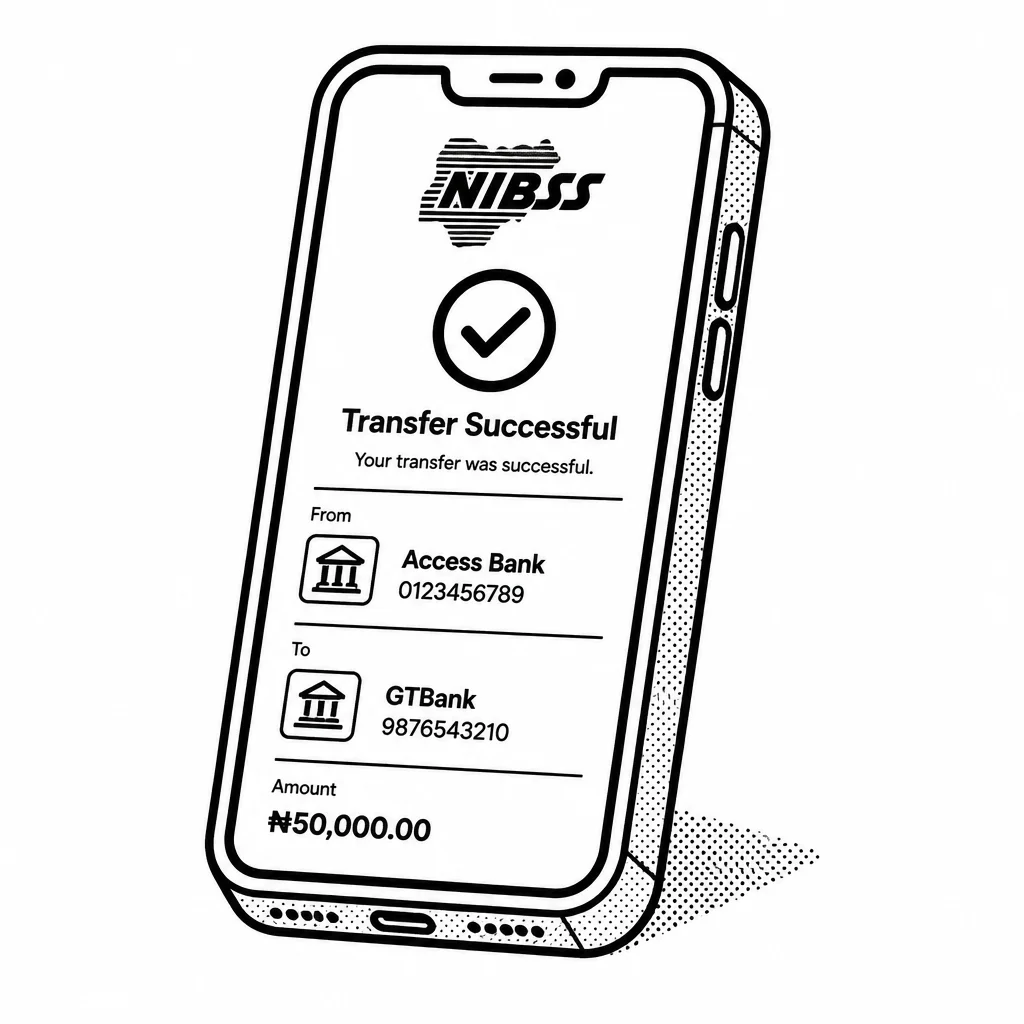
The core products are straightforward. The Nigeria Instant Payment system, known as NIP, moves money between accounts in seconds and has become the country's dominant way to pay. NIBSS Instant Payments handles the real-time transfers, while a separate clearing house settles the checks and batches at the end of the day so banks' books balance. There's also the shared national switch that lets cards and point-of-sale terminals work across different banks, plus a BVN identity database that links every bank account to one verified person. Banks and payment companies pay NIBSS fees for these rails, and because everyone uses the same system, a new fintech doesn't have to strike separate deals with every bank to get off the ground. The scale is the story. Instant payments have exploded in Nigeria as smartphones and fintech apps spread, and NIBSS sits at the center of that flow, which makes it a quiet but powerful toll booth on the country's digital economy. Its ownership is unusual: it is jointly owned by the Central Bank of Nigeria and the licensed banks themselves, so it operates more like industry infrastructure than a normal profit-maximizing company. That structure helps explain why it is trusted to be neutral, but it has also drawn criticism that a single shared monopoly can be slow to innovate and that outages ripple across the entire financial system at once.
NIBSS matters most when you think about what happens without it. If every bank had to build its own connections to every other bank, payments would be slow, expensive, and fragmented, and small new players would struggle to compete. By providing one shared network, NIBSS makes instant transfers feel normal and lets fintechs like OPay and Flutterwave build on top of rails they did not have to create. The flip side is concentration risk: when the shared system hiccups, everyone feels it.
Saved answer · last researched 14 Nov 2026