Understand any stock in simple English
Enter a ticker to learn what the company does and how it makes money.
Nemak, S.A.B. de C.V.
Nemak makes aluminum parts for cars and trucks — engine blocks, transmission housings, structural pieces, and battery housings for electric vehicles — and sells them to the world's big automakers.
Nemak is one of the world's biggest makers of aluminum parts for cars and trucks. When you pop the hood of a Ford, a General Motors truck, or a Volkswagen, there's a decent chance some of the metal inside was cast by Nemak. The company pours molten aluminum into molds and machines it into precise shapes: engine blocks, cylinder heads, transmission housings, structural body pieces, and increasingly the big battery housings that hold the cells in electric vehicles.
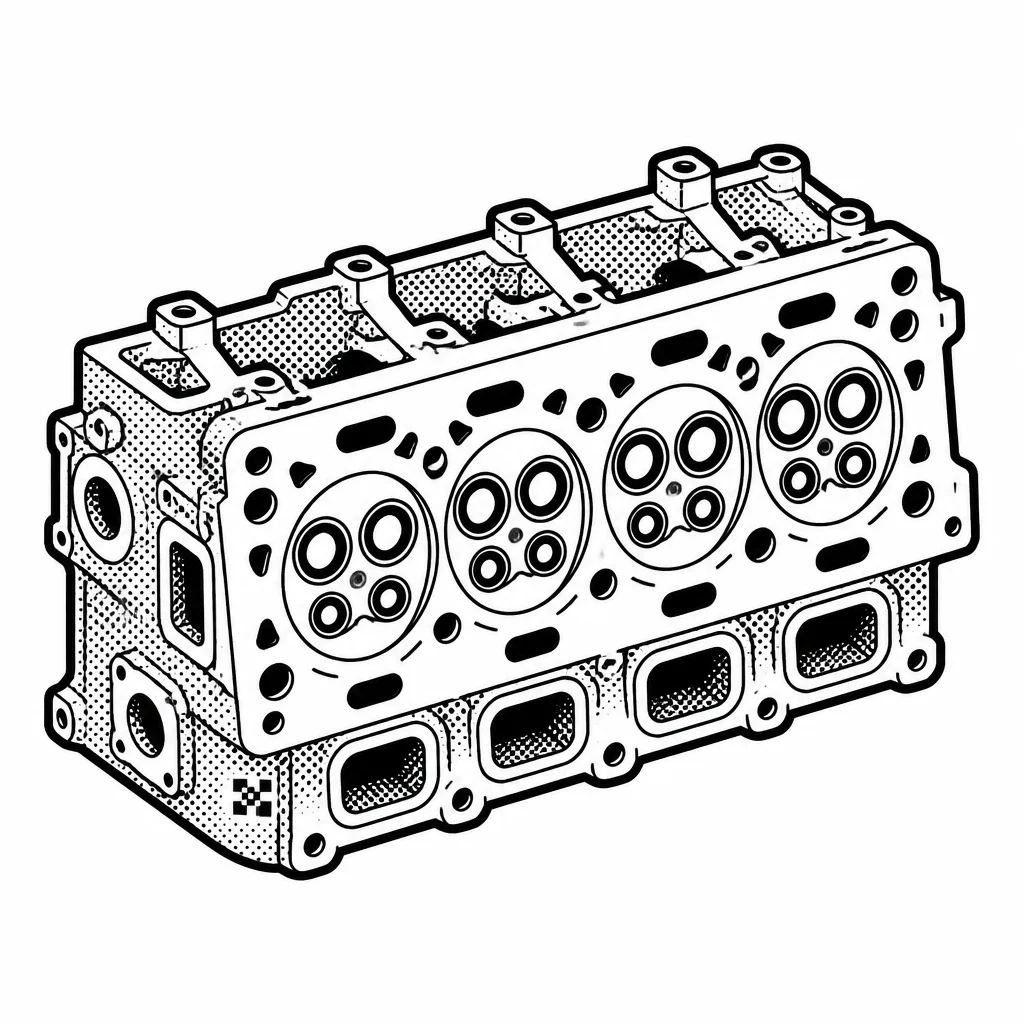
The business runs on a simple idea with a hard execution. Carmakers want lighter vehicles because lighter cars burn less fuel and, for electrics, go farther on a charge. Aluminum weighs roughly a third of what steel does, so replacing steel parts with aluminum is one of the main ways to shed pounds. Nemak sits in the middle of that shift. It designs and manufactures the parts to the automaker's exact specifications, ships them to assembly plants around the world, and gets paid per part. Customers stick with suppliers like Nemak because changing a cast component means re-engineering and re-testing the whole assembly — switching is slow and risky, so contracts tend to be long. For years the company's core product was engine-related parts. That's a problem in a world going electric, since a battery-powered car has no engine block, no cylinder head, and no transmission in the traditional sense. Nemak's answer is the structural and e-mobility side: battery housings, electric motor housings, and large aluminum body structures. This is the bet that matters most. The company has been building out that capacity and winning contracts, but the transition is genuinely uncomfortable — combustion parts still bring in much of the money today, while the electric work is growing but not yet big enough to fully replace what's shrinking. Nemak is headquartered in Monterrey, Mexico, a city that has become a hub for industrial manufacturing, and it operates a global network of plants close to customer factories in North America, Europe, and Asia. It is a major supplier to automakers including Ford, General Motors, Volkswagen, Stellantis, and BMW, along with other global brands. The auto supply business is brutally cyclical — when car sales fall, orders fall fast — and it is capital hungry, because casting and machining plants are expensive to build and keep running. The company also carries meaningful debt, which makes it more sensitive to downturns than a debt-light manufacturer would be. Competition comes from other aluminum casters and from automakers who sometimes make parts in-house.
The bet to watch is straightforward: can Nemak convert its combustion-era relationships and know-how into enough electric-vehicle work before the old business fades? It has the factories, the engineering talent, and the customer list. What it doesn't have is certainty about how fast the shift happens, and that uncertainty is the whole story of the stock.
Saved answer · last researched 12 Nov 2026