Understand any stock in simple English
The NAGA Group AG
NAGA runs a fintech app where people can trade stocks and cryptocurrencies, copy other traders, and manage everyday banking in one place.
NAGA is a German fintech that bundles several money services into one app. You can buy and sell stocks, trade cryptocurrencies, copy the trades of other users, and handle basic banking like holding cash or sending money — all from a single account. The idea is a "super app" for retail investors: instead of juggling a broker, a crypto exchange, and a bank, you get one login and one wallet.
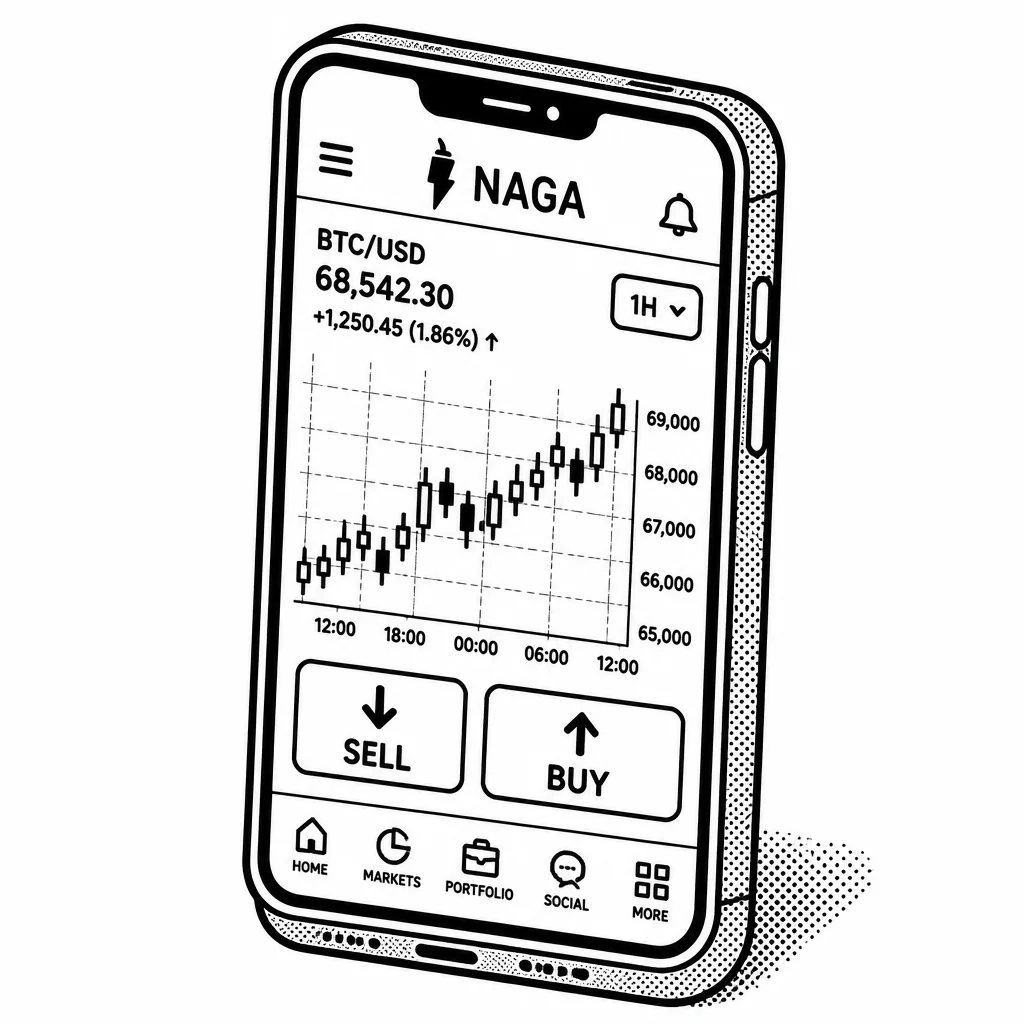
The social and copy-trading piece is the heart of it. NAGA lets users follow other traders and automatically mirror their moves, so a beginner can lean on someone with more experience. That community angle is what separates it from a plain discount broker — trading becomes something you do alongside other people rather than alone. The company makes money from trading fees, spreads, and the usual charges that come with holding and moving money on the platform.
It's a small, volatile, and honestly risky business. NAGA is listed on the Frankfurt Stock Exchange and has had a bumpy ride as a public company, with share price swings, funding needs, and the challenge of competing against far bigger players in both brokerage and crypto. The "super app" pitch is ambitious, and pulling it off against well-funded rivals is the hard part. When markets are hot, trading activity spikes and the business looks great; when they cool off, revenue tends to follow. That makes NAGA a bet on retail trading enthusiasm as much as anything else.
Saved answer · last researched 20 Nov 2026
BIG PICTURE
NAGA now makes 53% of sales through its own channels instead of outside partners
- 53% NAGA's own channels (digital marketing, influencers, organic)
- 47% Outside third-party channels
In the first half of 2026, a little over half of NAGA's sales came from channels it controls itself, up from 36% a year earlier. For a trading app, those direct routes mean it keeps more of each customer relationship and depends less on partners who could take a cut or walk away. Advertising spending fell 25% at the same time. Source: NuWays AG research note, data from 2026
Timeline
Three Founders Start NAGA in Hamburg
In 2015, Yasin Sebastian Qureshi, Christoph Brück and Benjamin Bilski started NAGA in Hamburg. Qureshi, a banking professional who had been the youngest person in Europe ever to get a banking license, came up with the idea. The mission was to build new fintech apps that would crack open an outdated financial system.
NAGA Lists on the Frankfurt Stock Exchange
Two years later, the company went public on the Frankfurt Stock Exchange, and the Chinese conglomerate Fosun International became a shareholder. German magazine Capital slammed the timing of the company's initial coin offering right after the listing, calling it hasty.
Prosecutors Investigate Qureshi
The IPO itself looked like a triumph: shares priced at €2.50 more than tripled soon after trading began, valuing NAGA at €300 million. Then it came out that prosecutors were investigating co-founder Qureshi over suspected tax evasion tied to his past at Varengold. The stock fell sharply, dropping about 40% on one exchange and about 20% on another. This was the first sign that the company's story would not run in a straight line.
The Naga Coin ICO Raises $50 Million
The company also raised about $50 million by selling its own digital token, the Naga Coin. But the money was booked at a Belize company that NAGA Group did not own. The coin was sold for a dollar and later collapsed to around three cents.
Qureshi Leaves the Company
In 2019, Qureshi, the co-founder and longtime CEO, left NAGA. The exit came as the company restructured and its brokerage business struggled.
Fosun Takes Majority Control
Fosun stepped in, buying another 17% to become majority owner, and put up €5 million in bridge money to keep the company going. The restructuring pointed NAGA at social trading. That bet looked smarter when a competitor, Ayondo, went insolvent.
NAGA Pay Reaches a Million Users
NAGA launched NAGA Pay, a mobile app that combined a bank account, a VISA debit card, a share deposit, copy trading and crypto wallets in one place. The platform reached about a million users.
NAGA Merges with CAPEX Operator Key Way
In 2024, shareholders approved a merger with Key Way Group, the company behind CAPEX.com, with nearly unanimous support. The deal created one of the world's leading neo-brokers, with around 1.5 million users in more than 100 countries and expected savings of over $10 million a year.
Octavian Patrascu Becomes CEO
CAPEX founder and CEO Octavian Patrascu took over as CEO of NAGA. He laid out a vision for the "New NAGA": nine licenses, twelve branches and a NAGA SuperApp, with a personal financial stake that was set to make him majority shareholder.
NAGA Reports Its First Profitable Quarter
In 2026, NAGA reported the first profitable first quarter in its history, with a net profit of €0.5 million and EBITDA of €2.3 million. The result came after the CAPEX integration, a lower cost base and AI-driven efficiency gains, and the company confirmed its guidance for the full year.