Understand any stock in simple English
Magnachip Semiconductor Corporation
Magnachip designs and sells analog and mixed-signal chips that sit inside phones, cars, gadgets, and industrial equipment.
Magnachip is a chip designer, not a chip factory. It creates the blueprints for small, specialized chips — the kind that manage power, drive a screen, or translate real-world signals like light and touch into digital ones — and then pays outside factories to actually manufacture them. Its chips end up in smartphones, cars, appliances, computers, and industrial gear, sold to the companies that build those products.
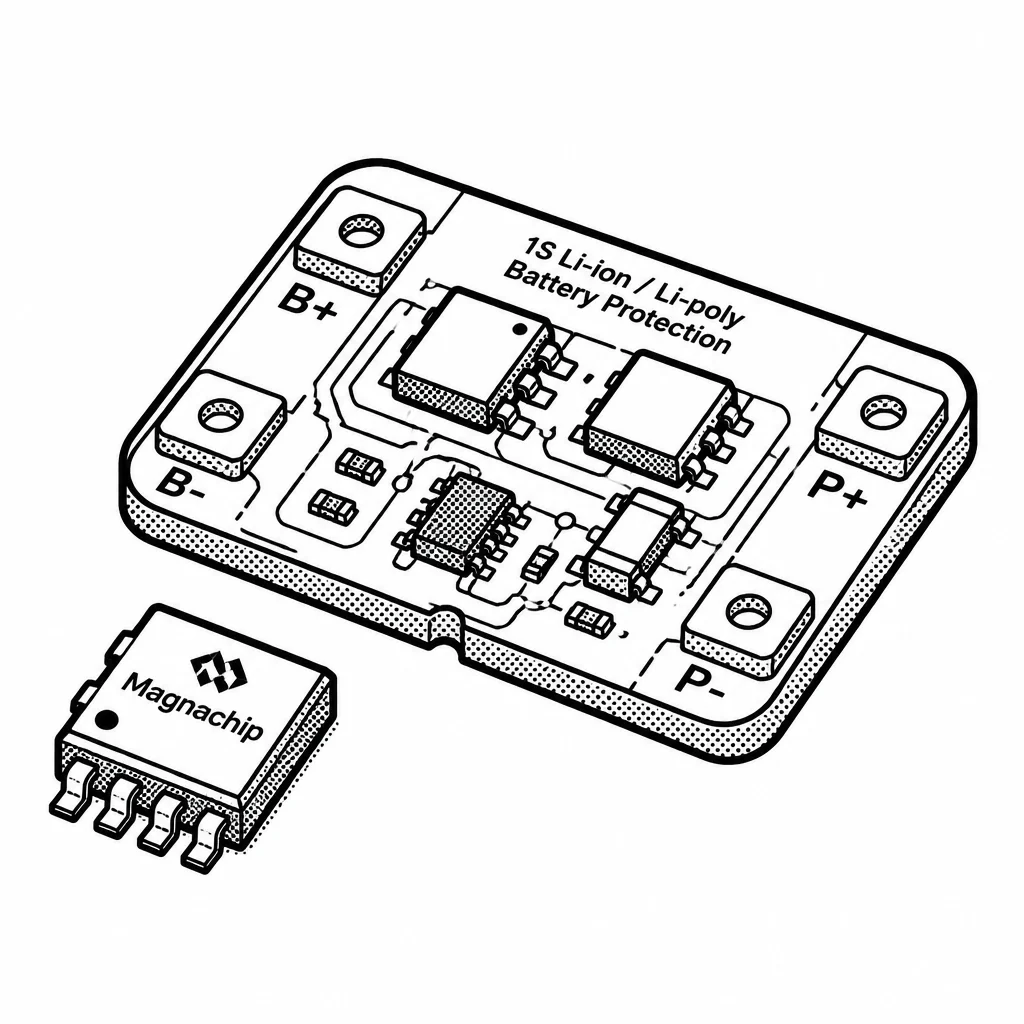
The business splits into two broad buckets. One is display drivers, the chips that tell a screen's pixels when to light up and how brightly — historically the company's biggest seller, tied closely to the phone and display market. The other is power and analog chips: the parts that manage electricity inside a device, convert signals, and handle sensing. That second bucket is where Magnachip has been pushing hardest, because power chips for cars, data centers, and industrial machines tend to sell for more and face less brutal price pressure than consumer display drivers. The economics of a "fab-lite" chip designer are appealing in theory: you don't spend billions building factories, so you can focus on design talent and keep more of each sales dollar. The catch is dependence. Magnachip leans on outside foundries to make its chips, so it competes for factory capacity against much bigger customers, and it has little control over manufacturing costs. It also faces tough rivals in power chips, including giant players like Infineon, STMicroelectronics, and onsemi, all of which own fabs and can undercut on price or outproduce it.
A strange chapter in the company's story: in 2021 a Chinese private-equity firm agreed to buy Magnachip for about $1.4 billion, but U.S. regulators blocked the deal on national security grounds, and it collapsed. Since then Magnachip has been reshaping itself — selling off a chip-testing business, trimming costs, and betting on power chips for electric vehicles and server power supplies. It is a small company in a capital-hungry industry, which is exactly why its fortunes swing on whether that power-chip bet pays off.
Saved answer · last researched 17 Nov 2026