Understand any stock in simple English
Enter a ticker to learn what the company does and how it makes money.
Manitou BF SA
Manitou builds and sells heavy lifting and earth-moving machines — like forklifts, aerial work platforms and compact loaders — for construction, farming and industrial jobs.
Manitou makes the machines that do the heavy lifting on a job site. If a construction crew needs to raise a beam, a farmer needs to move a pallet of feed, or a factory needs to reach a high shelf, Manitou sells the rough-terrain forklift, aerial work platform, or telehandler that gets it done. The company is based in France, in the Loire region, and it sells to customers in construction, agriculture, and industry around the world.
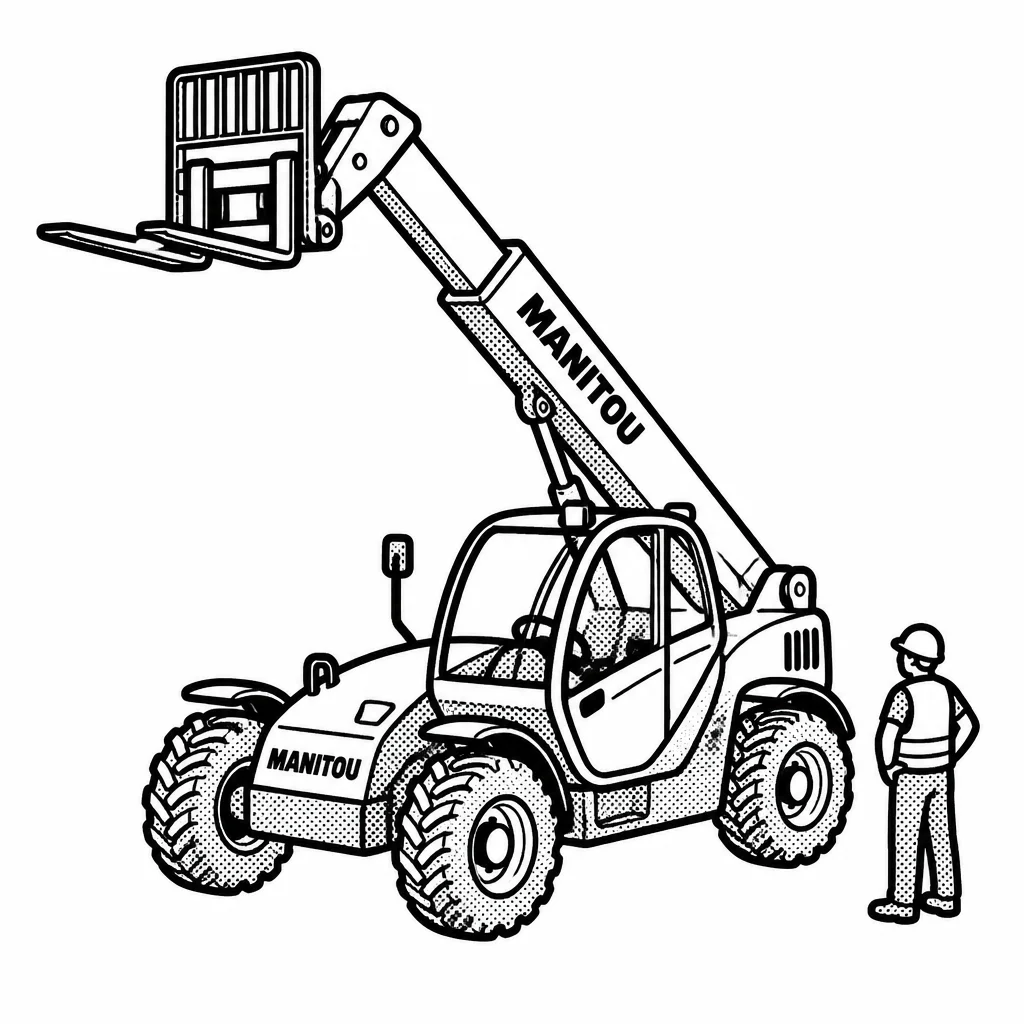
The heart of the business is a machine called a telehandler — a forklift with a long telescopic arm. A normal forklift can lift a load straight up, but a telehandler can reach out and up, placing a pallet on the second floor of a building or over a fence. That one trick makes it indispensable on farms and building sites, and Manitou is one of the world's leaders in making them. The company also builds aerial work platforms (the scissor lifts and boom lifts that raise workers safely to height), compact loaders, and a range of attachments and accessories. Customers choose Manitou because the machines are tough, versatile, and backed by a dealer network that can service them wherever the work happens. Manitou sells mostly through independent dealers rather than directly to end users, and it makes money both from selling new machines and from the parts and service those machines need over their long working lives. That parts-and-service stream is steadier than equipment sales, which rise and fall with construction and farming cycles. The business is cyclical and capital-intensive: when builders and farmers feel confident, they buy machines; when they don't, they hold off. Competition is fierce, with rivals including JLG Industries (part of Oshkosh), CNH Industrial, and Terex. Manitou has also pushed into India and other fast-growing markets, and it has invested in electric and lower-emission machines as regulations tighten in Europe.
More recently, Manitou has worked to grow through acquisitions and by expanding its range of compact equipment aimed at rental companies and smaller contractors. The company pays a dividend and has bought back shares in recent years, returning cash to investors when profits allow. The simple story: Manitou sells the rugged, arm-extending workhorses that keep building sites and farms moving, and it earns a steady cut from the parts and service those machines need for years after the sale.
Saved answer · last researched 14 Nov 2026