Understand any stock in simple English
Enter a ticker to learn what the company does and how it makes money.
Samvardhana Motherson International Limited
Samvardhana Motherson makes the parts and systems that go into cars and sells them to the world's big automakers.
Samvardhana Motherson is one of the world's largest makers of auto parts you never see. It builds the wiring harnesses that carry electricity and signals through a car (the nervous system, essentially), the plastic bumpers and dashboards that make up its skin and interior, and the mirrors on the doors. It sells these to the big automakers — its customers include most of the global names — rather than to you, so its fortunes rise and fall with how many cars the world builds.
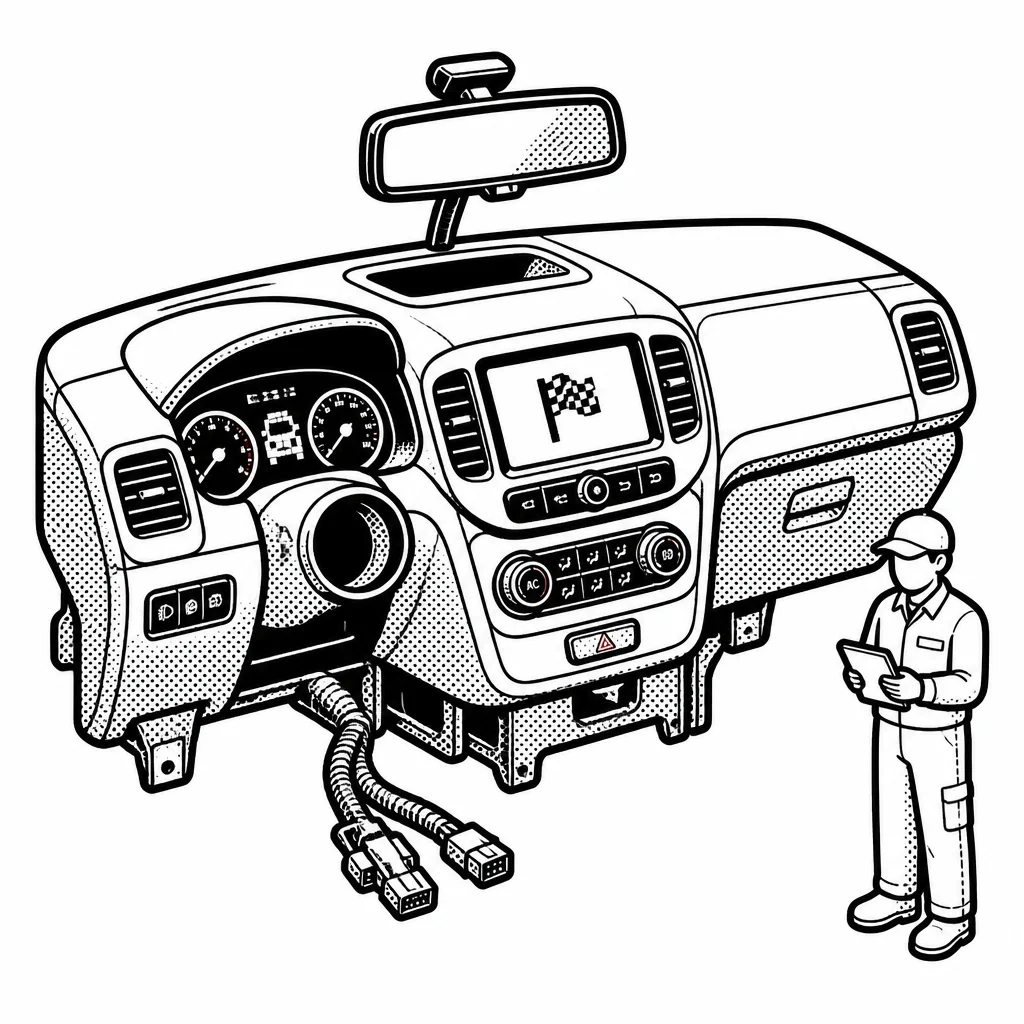
The company grew up inside the Maruti Suzuki ecosystem in India, doing a bit of everything for the carmaker, and then leveraged that into a global rolls-up of parts makers. Today it runs through a few main arms: the big wiring-harness business, a polymers business that molds bumpers and interiors, a vision-systems arm built around mirrors and sensors, and a smaller division that makes modules and does logistics. It is headquartered in India but generates most of its money abroad, which makes it a genuine global player rather than just an Indian supplier. The business is simple in principle and brutal in practice. Automakers squeeze suppliers on price, demand near-perfect quality (a faulty wiring harness can stop a whole assembly line), and expect parts to be delivered right to the line as needed. Motherson's edge is scale and a long record of absorbing struggling suppliers and turning them around — it has bought a string of distressed parts makers over the years and folded them into its network. That acquisition habit is how it got big, and it is also its main risk: integration is hard, debt piles up, and a poorly timed deal in a cyclical industry can hurt.
Its customers are a who's-who of the auto world, including Volkswagen, Stellantis, and Mercedes-Benz, so its revenue is essentially a bet on global car production. Two things are now reshaping that bet: the shift to electric vehicles (which need different wiring, thermal parts, and sensors) and the arrival of Chinese automakers as major customers. The company has been expanding in India and adding new plants to chase that demand. It is a cyclical, low-margin, high-volume business — not glamorous, but the kind of industrial plumbing that every car on the road depends on.
Saved answer · last researched 12 Nov 2026