Understand any stock in simple English
Enter a ticker to learn what the company does and how it makes money.
Modine Manufacturing Company
Modine makes heating, cooling, and thermal management systems for vehicles, buildings, and data centers.
Modine makes the parts that keep things at the right temperature. If an engine is running hot, a building needs heat in winter, or a data center's computers are generating too much heat, Modine sells the equipment that moves that heat around and keeps everything working.
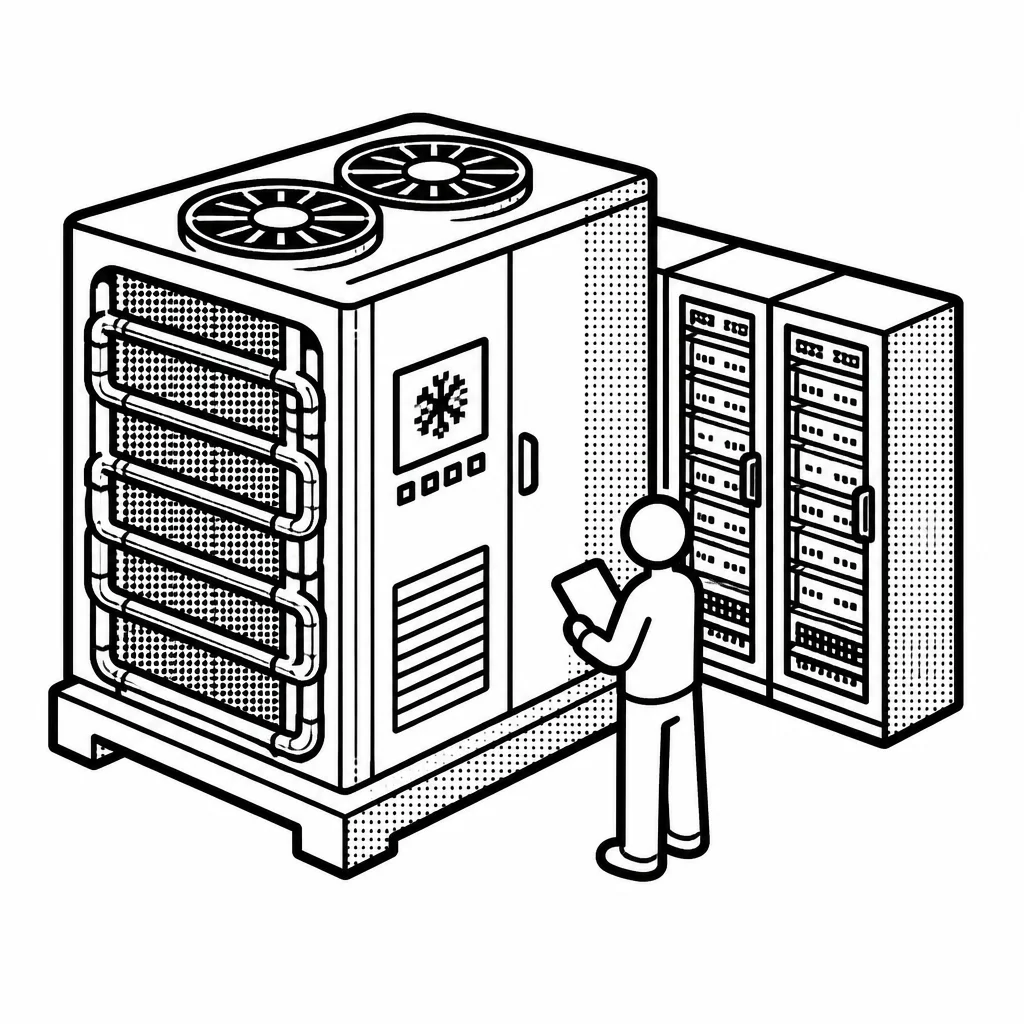
The company has two big pieces. Its climate solutions business sells heating and cooling equipment for buildings — things like school ventilation units, rooftop HVAC systems, and units for offices and industrial spaces. Its performance technologies business sells thermal management systems for vehicles and industrial equipment: engine cooling, charge-air cooling, and heat exchangers for trucks, buses, off-highway machines, and data centers. Customers come to Modine because thermal engineering is fiddly, and getting it wrong means overheated engines or buildings that waste energy. Competitors in climate solutions include Carrier Global and Lennox International, while vehicle thermal work pits Modine against larger suppliers like Dana. The most interesting shift is data centers. All those servers running AI models throw off enormous heat, and cooling them has become a serious engineering problem. Modine has pushed into cooling equipment for data centers, and that business has grown fast — a genuine bright spot as traditional vehicle markets chug along slowly. The company reported roughly $2.5 billion in revenue in its fiscal 2024 year, and the data center cooling push is a big reason investors got excited. Modine is a good example of a boring-sounding industrial company that found a hot market. It has been around for over a century — founded in 1916 in Racine, Wisconsin, where it is still headquartered — making radiators and heat exchangers before expanding into building climate systems. That long history means solid manufacturing know-how, but also the risk that legacy vehicle markets stay slow while faster-moving rivals pile into data center cooling.
Its free cash flow goes mostly toward funding growth in the data center business, paying down debt from past acquisitions, and returning some money to shareholders. The bet is straightforward: the world keeps building more computers and more buildings, and both need help staying cool. Whether Modine can win enough of that data center business against bigger, richer competitors is the real question.
Saved answer · last researched 9 Nov 2026
BIG PICTURE
Modine's ten biggest customers provide nearly half of everything it sells
- 49% Top 10 customers
- 51% All other customers
Modine sells cooling and heating gear to a lot of companies, yet just ten of them brought in 49 percent of its sales in fiscal 2026. One global technology customer alone made up about 11 percent. That closeness makes the data center push very profitable when those buyers spend, and risky if one of them slows down or builds its own cooling systems. Source: Modine Manufacturing Company 10-K annual report, data from 2026
Timeline
Two Brothers and a Better Radiator
Arthur B. Modine started the company in Racine, Wisconsin, in 1916 after a falling-out at the radiator firm where he worked. His big idea was the Spirex radiator, which used a spiral fin design to move heat better and hold up in rough farm and military use. Within a couple of years, most leading tractor makers were buying Modine radiators, and the company's core business of moving heat was born.
Ford Puts Modine on the Map
In 1925, Ford made Modine's Turbotube radiator standard equipment on the Model T. That was the company's first big automotive contract, and Ford became its main customer and biggest source of income for the next 55 years, tying Modine's fate closely to the car industry.
Modine Sells Stock to the Public
In 1928, Modine went public on the Chicago Stock Exchange, selling 100,000 shares. It was still a broadly spread business, selling to car, truck and tractor makers, which gave investors a reason to believe it wasn't riding on just one market.
A Wind Tunnel for War
In 1940, Modine built a groundbreaking wind tunnel for testing vehicles, later used on military machines like the Jeep during World War II. The company also made aftercoolers for the P-51 Mustang fighter plane and earned four Army-Navy production awards, showing its heat-transfer skills could serve far more than tractors.
Breaking Free of the Car Cycle
In 1980, Modine started trying to depend less on the boom-and-bust car market, beginning with its first aftermarket purchase, Lake Auto Radiator. Over the next four years it bought more North American aftermarket businesses and formed joint ventures abroad, widening the business well beyond selling parts to car factories.
Beta-Weld and a Move Abroad
After years of research, Modine brought out the heavy-duty Beta-Weld radiator in 1982, the first to use welded tube-to-header joints. That same year it began making products outside the U.S. through a Canadian joint venture, which became its first fully owned foreign plant a year later.
Cooling the Electric Age
In 2022, Modine launched EVantage, its first set of thermal management systems for zero-emission vehicles. It took a century of heat-transfer know-how and pointed it at batteries, power electronics, fuel cell stacks and cabin heating and cooling.
A Giant Data Center Deal
By 2026, Modine had locked in a long-term agreement to supply more than $4 billion of Airedale data center cooling products over 2027 to 2029. The deal came with a $165 million upfront payment from the customer to help pay for factory expansion. The company also closed its fiscal year with a fourth straight year of record revenue and profit, with data center sales jumping 73% to $1.1 billion.
Spinning Off and Merging With Gentherm
On October 1, 2026, Modine completed the spin-off of its Performance Technologies business and its merger with Gentherm in a deal valued at about $946 million. The move sharpened what was left of Modine around data center cooling, commercial HVAC and refrigeration, and it brought in $198.6 million in cash that was used to pay down debt.
A New Name: Modexus
After the spin-off and the Gentherm merger, Modine announced it would rename itself Modexus Solutions, pending shareholder approval. The new name reflects a broader thermal management company serving data centers, commercial HVAC and refrigeration, while keeping its NYSE ticker and its CEO, Neil Brinker.
The AI Trade Unwinds
Even as the business kept growing, Modine shares fell about 54% from their highs as the AI data center trade cooled off. Margins were squeezed by the cost of expanding capacity, part shortages, tariffs and rushed freight, and a guidance cut after the October spin-off deepened the selloff to around $91 a share by early November, a hard reminder that a good business and a hot stock don't always move together.