Understand any stock in simple English
Enter a ticker to learn what the company does and how it makes money.
Malee Group Public Company Limited
Malee makes and sells fruit juices, canned fruit, and dairy and cereal drinks, mostly in Thailand but also abroad.
Malee is a Thai food and drink company that most shoppers know from the juice aisle. It sells fruit juices, canned fruit, milk and cereal drinks, and other non-alcoholic beverages, both in Thailand and for export. If you have ever seen a small glass bottle of orange or grape juice with a cheerful logo in a Thai grocery store or a 7-Eleven, there is a good chance it was Malee.
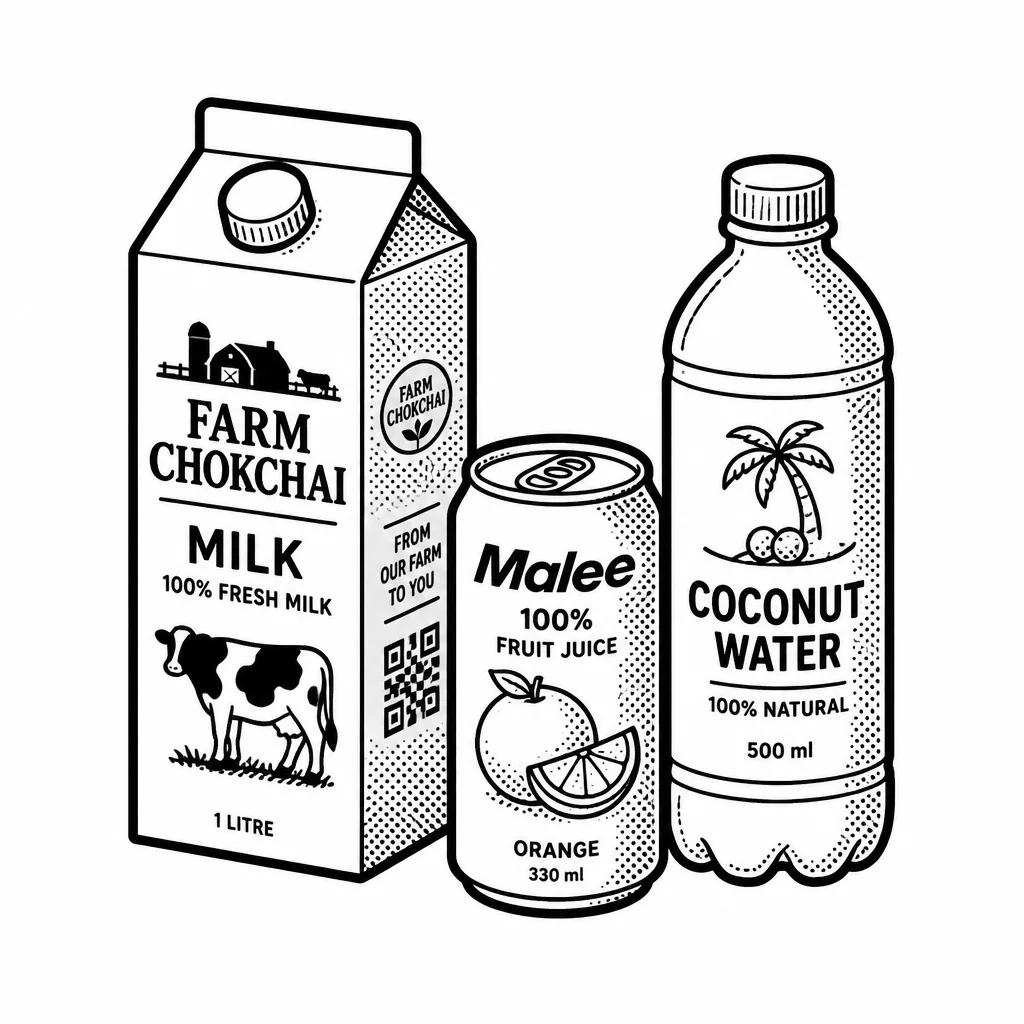
The business runs on two main engines. One is the branded consumer side: bottled juices, canned fruit, and ready-to-drink milk and cereal beverages sold in supermarkets, convenience stores, and shops across Thailand. The other is export and private-label work, where Malee sells its products abroad and also makes drinks for other brands. That mix matters because Thailand's domestic beverage market is crowded and price-sensitive, while exports and contract manufacturing can add volume and smoother demand. Malee does not just depend on household shoppers; it also earns money from retailers, distributors, and overseas buyers who want Thai fruit and beverage products. Malee has a long history in Thai food, and it has gone through some bumps. The company was hit hard by a price war in Thai beverages and struggled with debt in the years after the 2010s. A major turning point came when a group backed by the Indonesian consumer giant Mayora Indah took a controlling stake, bringing in new capital and a push to stabilize the business. Malee has also faced the reality that Thai consumers are drinking less sugary packaged juice, so the company has had to adapt its product mix and lean more on exports and functional drinks. Competition is fierce from big local players such as Ichitan Group and Sappe, as well as global giants like Coca-Cola and PepsiCo in the broader beverage space.
For investors, Malee is a small, controlled company where the key question is whether the turnaround can stick. Its strength is a recognized brand and a manufacturing base with export reach; its weakness is thin margins in a crowded market and a history of financial strain. Anyone looking at the stock should care less about the logo and more about whether volumes and profitability in the branded and export segments are actually improving.
Saved answer · last researched 14 Nov 2026