Understand any stock in simple English
Enter a ticker to learn what the company does and how it makes money.
Kinaxis Inc.
Kinaxis sells software that helps big manufacturers and distributors plan and adjust their supply chains in real time.
Kinaxis makes software that helps big companies plan their supply chains. If you make cars, phones, medicine, or run a huge distribution business, you have thousands of parts, factories, and shipments that all have to line up. Kinaxis gives planners a single live view of all of it, so they can see a problem coming and fix it before customers feel it.
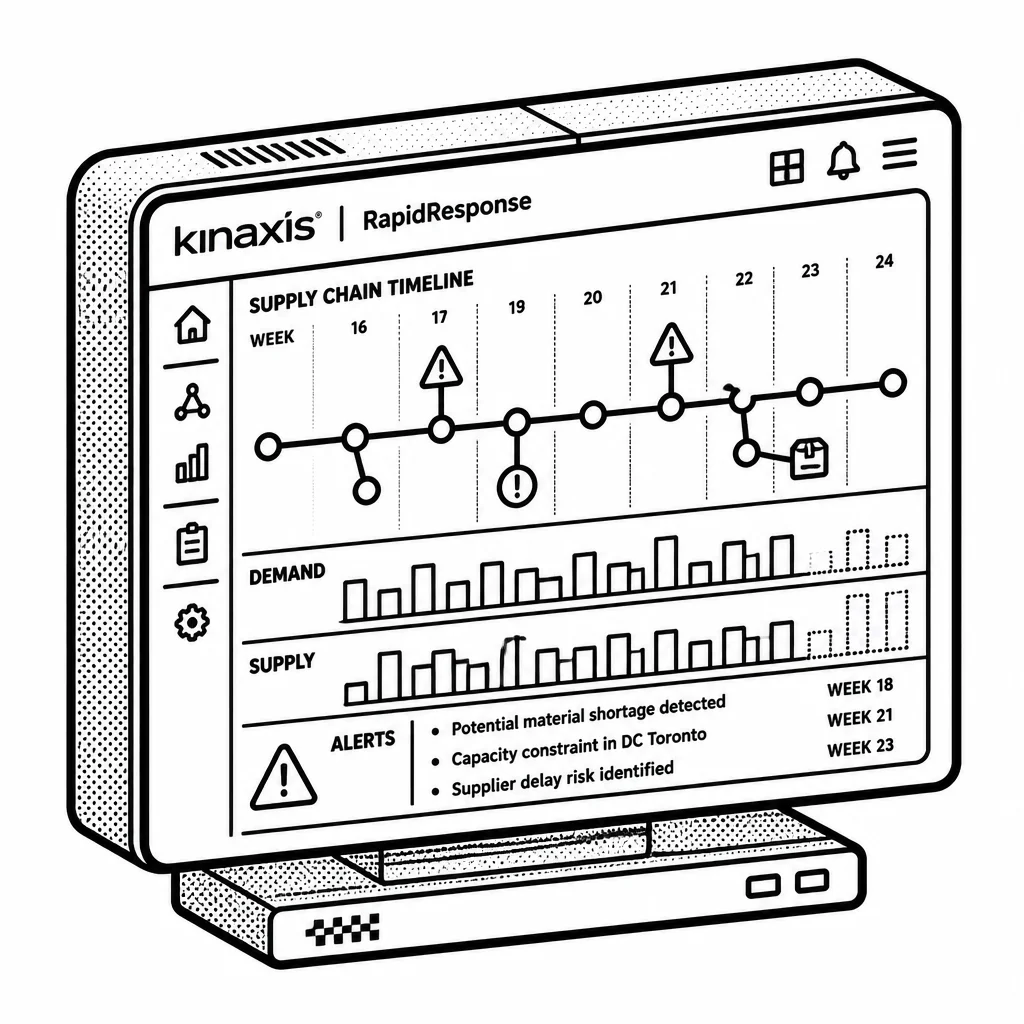
The core product is RapidResponse, a planning platform that runs on a technique the company calls "concurrent planning." Older systems plan in long sequential steps, so one change ripples through slowly. Kinaxis recalculates the whole chain at once, which means a supplier delay or a sudden order spike can be re-planned in seconds instead of days. Customers pay subscription fees, mostly on multi-year contracts, which makes revenue recurring and sticky. Around half its sales come from the Americas, with the rest spread across Europe and Asia. That stickiness cuts both ways. Once a big manufacturer's supply chain runs on your software, ripping it out is painful, so customers tend to stay for years and renew. But the sales cycle is long and lumpy, and deals can slip a quarter. Kinaxis competes with giant planning suites sold by SAP and Oracle, and with specialist rivals like Blue Yonder (private) and o9 Solutions (private). Its edge is speed and a reputation for handling the messiest, most complex supply chains.
The company is based in Ottawa, Canada, and was formerly called Webplan. It went public in 2014 and has grown steadily since, passing $400 million in annual revenue in 2024. It has made small acquisitions, including the supply chain data firm Pledge and, more recently, the AI startup Rulecube, to strengthen its analytics. It generates solid free cash flow and carries little debt, spending on product development and buybacks rather than dividends. The main risk is concentration: a handful of large enterprise deals drive a big chunk of growth, so one delayed contract can dent a year.
Saved answer · last researched 14 Nov 2026