Understand any stock in simple English
Enter a ticker to learn what the company does and how it makes money.
KSB SE & Co. KGaA
KSB makes and services pumps and valves that move water and other fluids for utilities, industry, and mining customers around the world.
KSB is a German industrial company that makes the machines that move liquids. Its two core products are pumps — the hardware that pushes water, chemicals, or sludge through pipes — and valves, the parts that open, close, and control that flow. These are not glamorous products, but almost nothing in the modern world works without them: power plants need pumps to feed water into boilers, water utilities need them to move drinking water and sewage, mines need them to drain pits and move slurry, and factories need valves to keep processes running safely.
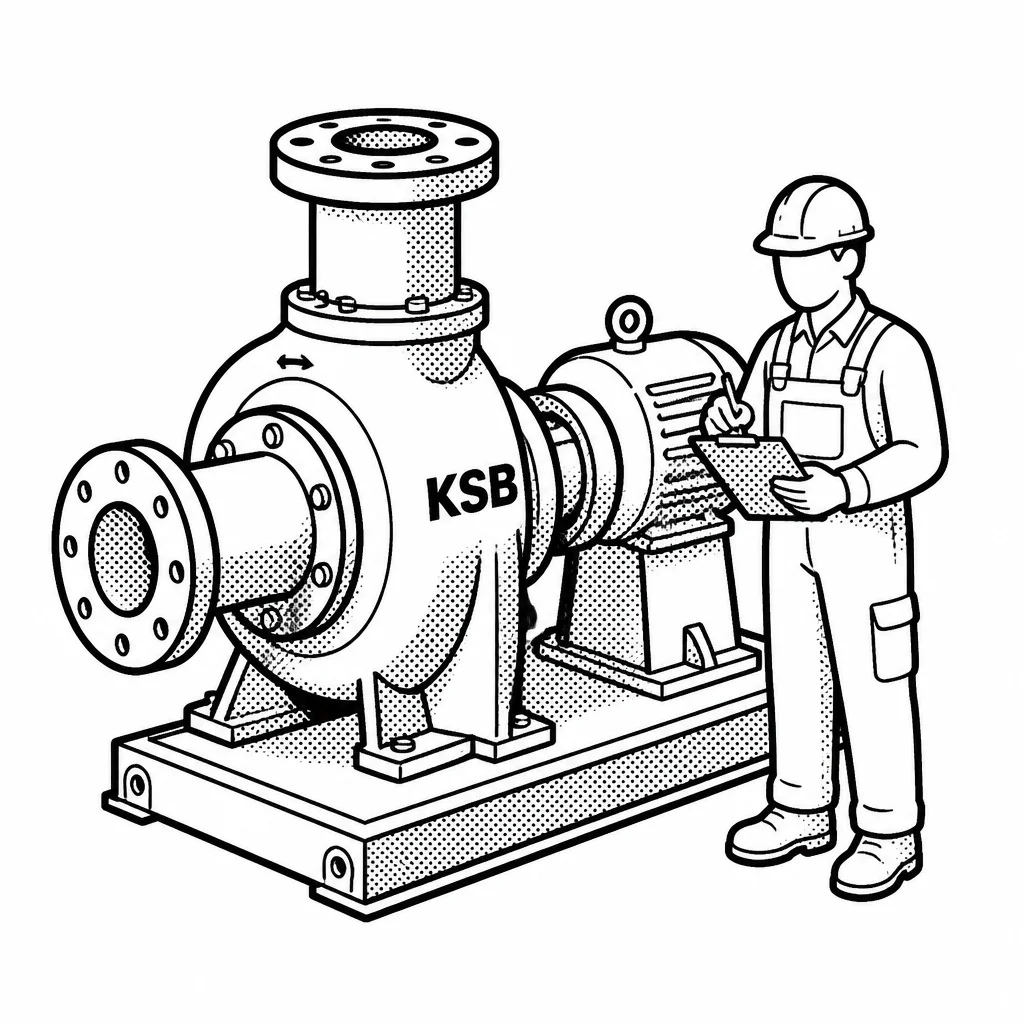
Who actually pays KSB? Three broad groups. The first is water and wastewater utilities, which buy pumps and valves to move clean water and sewage — a large, steady business. The second is industry, everything from chemical plants to power stations, where KSB sells pumps and valves engineered for tough, hot, or corrosive fluids. The third is mining and energy, where equipment has to survive grit and heavy duty. KSB earns money two ways: it sells new equipment, and then it services and supplies spare parts for that equipment over decades, which is the stickier and often more profitable side of the business. Customers choose KSB largely on engineering quality, reliability, and the global service network that keeps their plants running. KSB is headquartered in Frankenthal in western Germany, and its roots run deep — the company traces back to the 1870s, when two founders, Johannes Klein and Friedrich Schanzlin, set up a pump workshop. One genuinely unusual feature: a large chunk of KSB is still owned by the family descendants of the founders, even though the company is listed on the stock exchange. Its main listed competitor is the Swiss pump and valve giant Sulzer, and it also competes with the much larger Flowserve of the United States, plus dozens of regional and specialist rivals.
The business has a clear rhythm: it follows spending on water infrastructure, power plants, and mining projects, so orders rise and fall with big construction cycles. That makes growth steady but cyclical. KSB also pays a dividend and has kept its balance sheet relatively conservative, which matters in a capital-heavy industry where equipment is built to order. The quiet virtue of the model is the installed base: every pump sold becomes a decades-long relationship for spare parts and service, which is why old-line industrial firms like this can be more durable than they look.
Saved answer · last researched 12 Nov 2026