Understand any stock in simple English
Enter a ticker to learn what the company does and how it makes money.
Keysight Technologies, Inc.
Keysight makes the electronic test and measurement equipment that engineers use to design, build, and check that chips, wireless devices, and networks actually work.
Keysight is the company engineers call when they need to know whether something electronic actually works. It builds the instruments — oscilloscopes, signal generators, spectrum analyzers, network testers — that let engineers see the invisible: the electrical signals inside a chip, a phone, a radar system, or a data center. Its customers are mostly other engineers, at chipmakers, phone and network equipment makers, aerospace and defense contractors, car companies, and universities. They don't buy these tools because they're fun. They buy them because a product that fails in the field is a catastrophe, and the only way to catch problems early is to measure precisely.
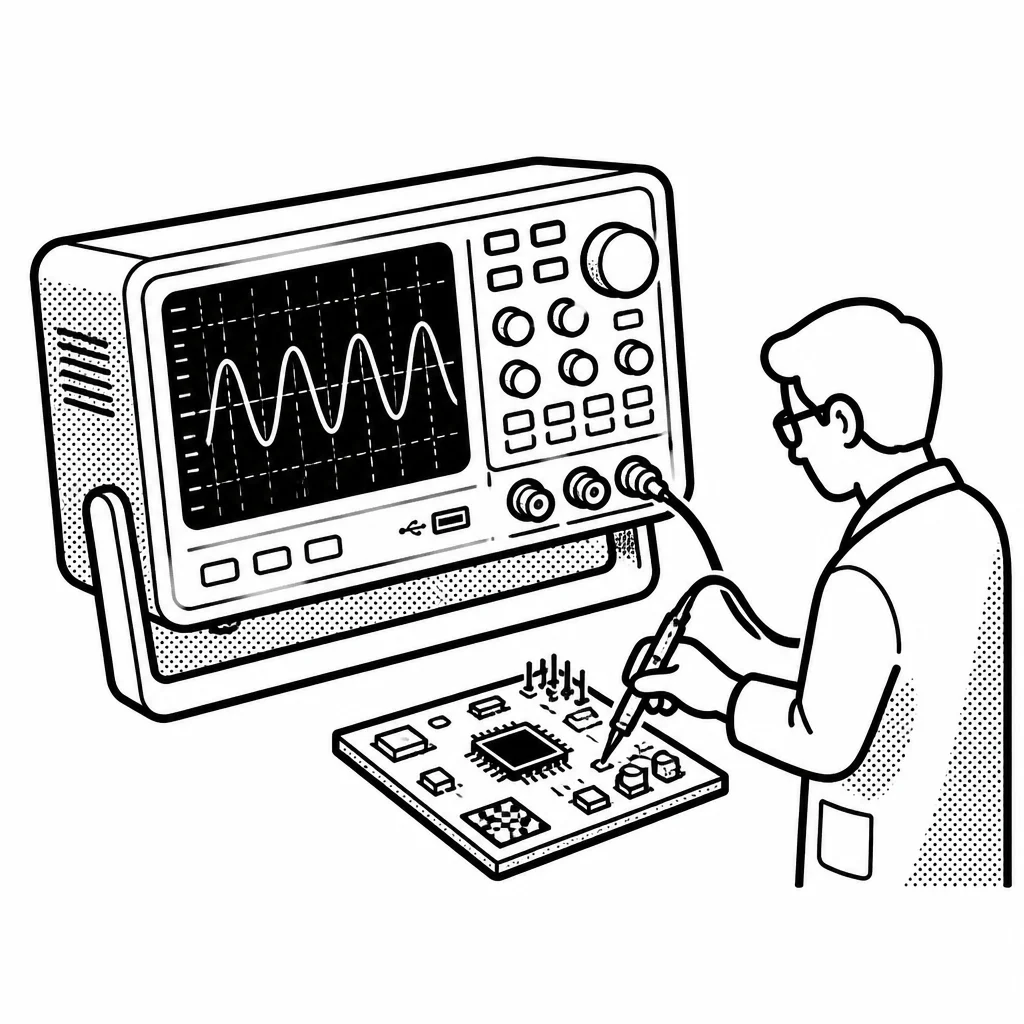
The business has two big halves. The first is electronic design and test instruments — the bench-top boxes and software that engineers use while developing new products. The second is network testing and visibility, which is more about keeping live networks healthy and secure: tools that watch traffic, spot problems, and stress-test networks before rollout. The instrument side is the bigger, steadier business; the network side is smaller but growing and increasingly tied to cybersecurity and cloud customers. Keysight also makes money from services and software attached to all of this, which matters because software carries better margins than hardware. The real moat is precision and trust. When a chipmaker or a defense contractor needs a measurement to be right, they usually can't afford to gamble on a cheaper box. Keysight's instruments are calibrated to extreme accuracy, and once an engineer learns a company's tools and writes test routines around them, switching is painful. That gives Keysight pricing power, but it also means its fortunes rise and fall with the research and development budgets of its customers. When chip and telecom companies cut spending, Keysight feels it quickly. Keysight came from a spin-off: it was carved out of Agilent Technologies in 2014, and Agilent itself was spun out of Hewlett-Packard in 1999, so the company carries a long HP lineage in test and measurement. It has used acquisitions to expand into software and network visibility, including buying Ixia in 2017, and more recently it has pushed into areas like quantum computing control systems and electric-vehicle battery testing. It generates solid free cash flow, pays a modest dividend, and has bought back shares steadily — a sign management sees the business as a reliable cash generator rather than a fast-growth story.
The main risks are cyclicality and competition. Rivals like National Instruments and Rohde & Schwarz fight for the same engineering budgets, and a downturn in chip or telecom spending hits orders fast. Keysight's bet is that as electronics get more complex — faster wireless, denser chips, electric cars, quantum hardware — the need to measure everything precisely only grows.
Saved answer · last researched 9 Nov 2026
BIG PICTURE
Keysight holds about 30% of the global market for testing radio-frequency equipment
- 30.1% Keysight's share of the global RF test equipment market
- 69.9% Everyone else, including rivals like Rohde & Schwarz and Anritsu
Radio-frequency test gear checks the wireless parts inside phones, radars and cell towers. Keysight sold about 30 percent of it worldwide in 2025. That is close to one dollar in every three spent on this equipment, and commercial communications is the company's largest market. Engineers keep buying from the same vendor because their test setups, software and reference data all have to agree, so switching means redoing work. Source: Global Market Insights, data from 2025