Understand any stock in simple English
Enter a ticker to learn what the company does and how it makes money.
Itaú Unibanco Holding S.A.
Itaú Unibanco is a large Brazilian bank that takes deposits, lends money, and sells financial products to people and businesses.
Itaú Unibanco is one of Brazil's biggest banks, and it makes money the way banks mostly do: it takes in deposits, lends money out at a higher rate, and keeps the difference. It serves two broad groups — ordinary people who need checking accounts, credit cards, loans, and investments, and companies that need business loans, cash management, and help raising money in the markets. The bank also runs insurance, private banking for wealthy clients, and asset management, and it has operations across Latin America and in places like the US and Europe.
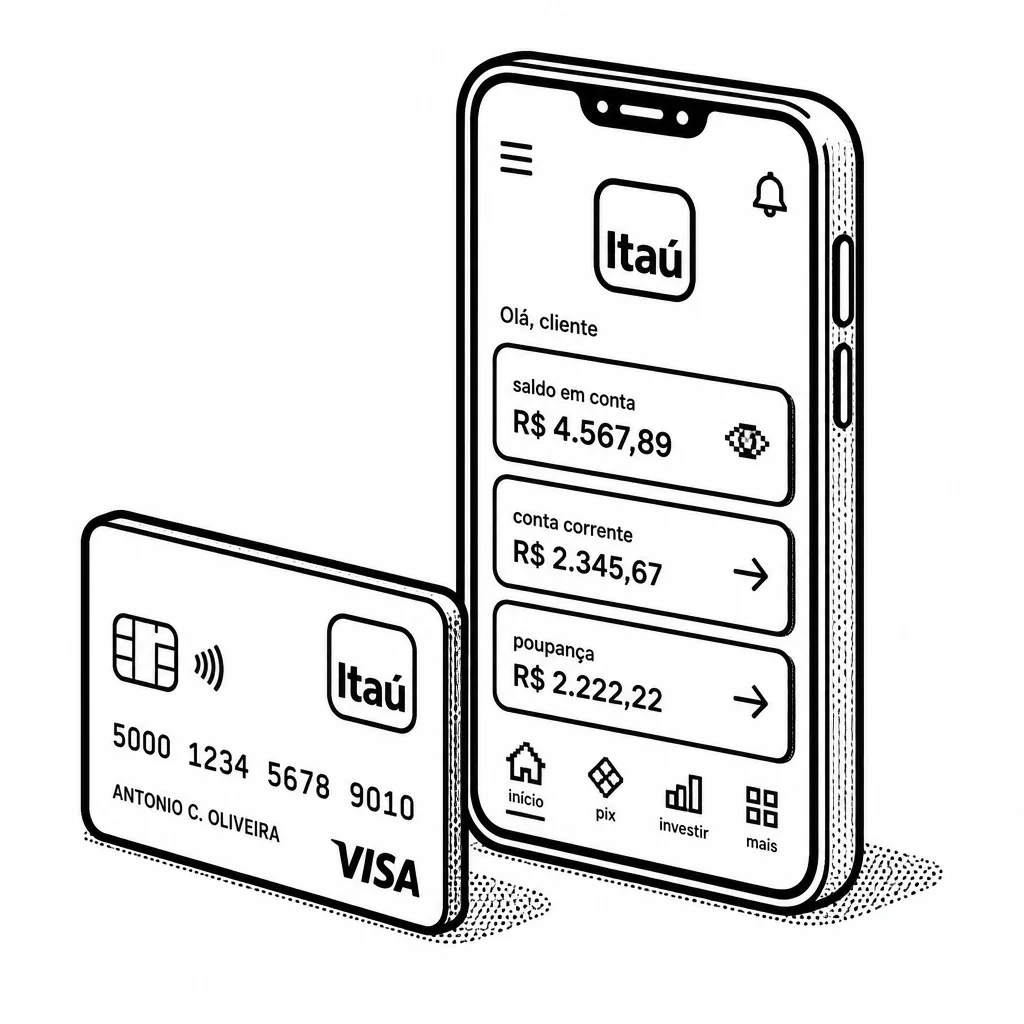
The key to a bank like this is trust and scale. Customers pick Itaú because it is everywhere, its app works, and it feels safe — and because switching banks is a hassle. That loyalty gives Itaú a huge base of cheap deposits to lend against. The flip side is that banking is a crowded, competitive business in Brazil, with rivals like Banco do Brasil, Bradesco, and Santander Brasil fighting for the same customers, plus a wave of digital-only challengers like Nubank that have no branches and lower costs. That competition is the real story. Brazil's banks have historically earned fat margins, partly because the market was concentrated and credit was expensive. Fintechs and digital banks have been chipping away at the easy stuff — checking accounts, cards, small loans — which puts pressure on the incumbents. Itaú has responded by pouring money into its own digital app and by cutting costs, and it remains one of the most profitable banks in the region. But it is a mature business in a slow-growing economy, so growth mostly comes from taking share, expanding credit carefully, and growing outside Brazil.
Because it generates a lot of cash, Itaú returns a good chunk of it to shareholders through dividends and share buybacks, while keeping enough capital to satisfy regulators and absorb loan losses. The big risks are familiar to any bank: a deep recession would mean more borrowers defaulting, and political or regulatory shifts in Brazil can change the rules of the game overnight. Still, as the country's largest private bank, Itaú is about as close to a bellwether for the Brazilian economy as a company gets.
Saved answer · last researched 12 Nov 2026