Understand any stock in simple English
Enter a ticker to learn what the company does and how it makes money.
IOI Corporation Berhad
IOI Corporation runs palm oil plantations and turns the harvest into soaps, cosmetics ingredients, and specialty fats sold around the world.
IOI Corporation is a Malaysian palm oil company. It grows oil palms on big plantations, squeezes the fruit into crude palm oil, and then refines that oil into things people actually use: the fats in chocolate and ice cream, the oils in soap and shampoo, and the ingredients in cosmetics and cleaning products. If you have ever eaten a chocolate bar that stays solid on a warm day, there is a decent chance an IOI plant made the fat inside it.
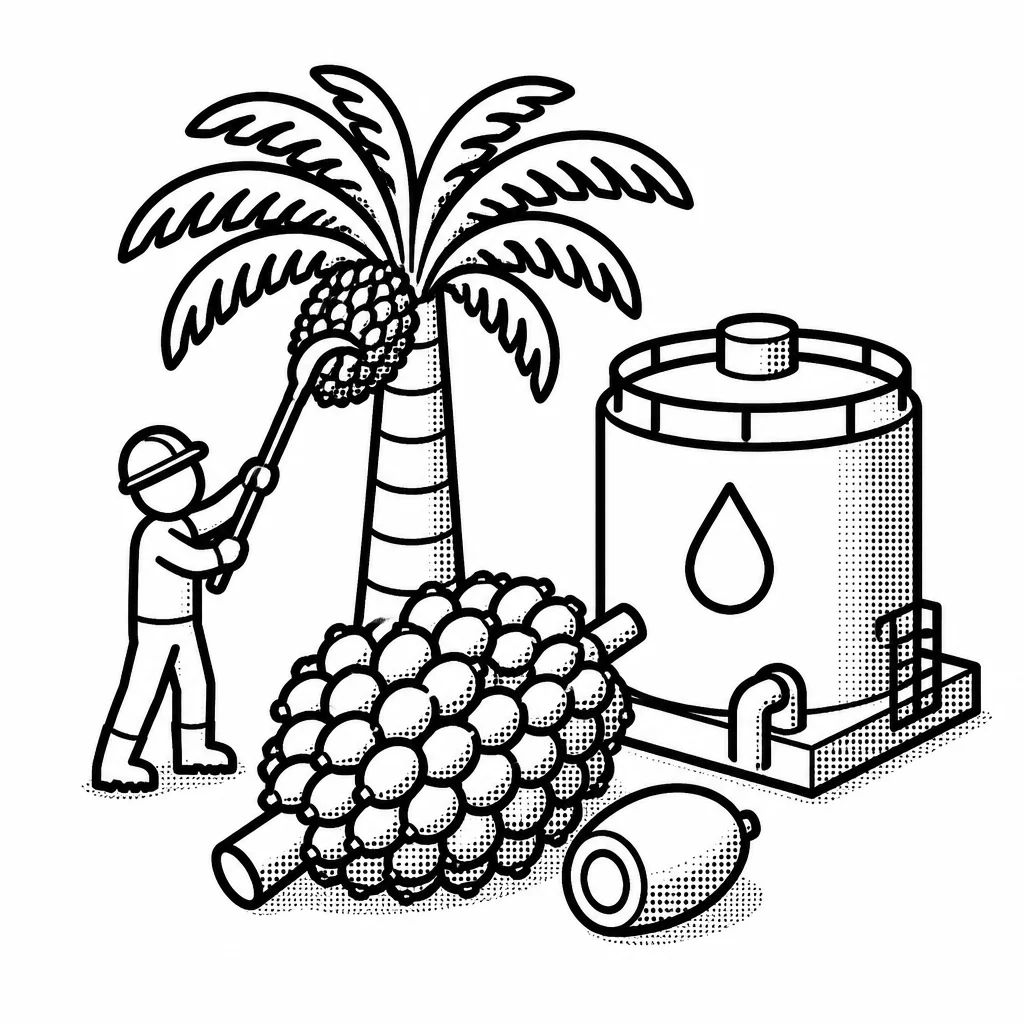
The company has two engines. The plantation side owns and manages oil palm estates, mostly in Malaysia and Indonesia, and sells the crude palm oil and palm kernel oil it harvests. The manufacturing side, called resource-based manufacturing, buys that oil (some from its own estates, plenty from others) and processes it into higher-value products — oleochemicals, specialty oils and fats, and refined oils. Those go to food makers, cosmetics companies, and industrial customers worldwide. Selling refined and specialty products earns better margins than selling raw oil, which is why IOI pushes so hard into the downstream side. Palm oil is one of the most efficient crops on earth per hectare, and it shows up in roughly half the packaged products in a supermarket. That makes IOI's core business steady but also politically and environmentally sensitive. Palm oil has been linked to deforestation, and buyers in Europe and elsewhere increasingly demand proof that the oil was grown responsibly. IOI itself had a rough stretch when its certification was suspended in 2016 over land and labor issues, which hit sales to sustainability-conscious customers until it fixed the problems and was reinstated. The company now touts its certification and sustainability commitments, partly because its customers require it.
The money question is simple: who pays IOI, and why? Food companies, consumer goods giants, and chemical makers pay for consistent, high-quality oils and fats they can't easily source elsewhere at the same scale. IOI's edge is scale and integration — it controls the chain from seedling to specialty fat, so it can promise supply and quality. The vulnerability is palm oil prices, which swing with weather, export taxes, and global vegetable oil markets, plus competition from players like Wilmar International and Kuala Lumpur Kepong. IOI pays out a good chunk of its profit as dividends, which is a big part of why investors own it.
Saved answer · last researched 15 Nov 2026