Understand any stock in simple English
Enter a ticker to learn what the company does and how it makes money.
HealthStream, Inc.
HealthStream sells software and training tools that help hospitals and nurses manage learning, credentials, scheduling, and clinical development.
HealthStream is a software company that helps healthcare organizations train their people and keep track of who is allowed to do what. Hospitals, clinics, and other medical groups use its tools to assign online courses to nurses and staff, track licenses and certifications, build schedules, and support the ongoing development of clinicians. Through its subsidiary, it also sells learning and assessment software directly to nursing schools and their students, who use it to prepare for the exams that launch their careers.
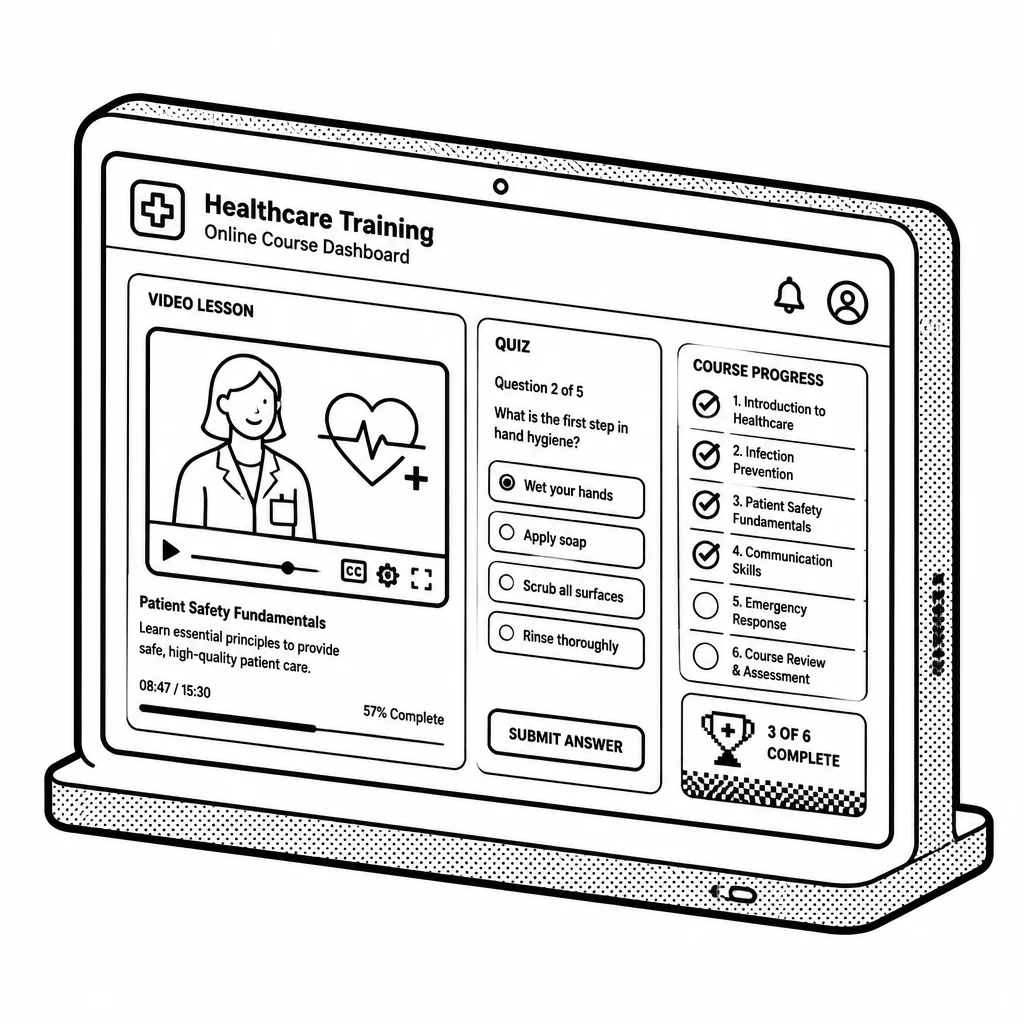
The core problem it solves is that healthcare is a tangle of required training and credentials. A nurse needs a current license, regular continuing education, and proof of dozens of internal competencies, and the hospital has to document all of it for regulators. HealthStream's platform is the system of record that assigns the training, tracks completion, and flags who is out of compliance. Customers pay subscription fees, usually recurring, because the software sits in the middle of compliance workflows that never really end. It competes in a crowded market for healthcare learning and workforce software against larger rivals like Oracle, which bought learning and clinical development tools, and Microsoft and other big platforms at the edges. HealthStream's edge is focus: it sells almost exclusively to healthcare, and it has spent years acquiring smaller players to widen its product set—adding credentialing, scheduling, and nursing-school tools rather than just courses. That M&A strategy has grown revenue but sometimes weighed on profitability, a tension worth watching.
The company is headquartered in Nashville, Tennessee. Its business is sticky and recurring, which makes it a steady cash generator, but it is also tied to the budgets of hospitals that are under real financial pressure. Its growth depends on selling more modules to existing customers and on expanding into nursing education and workforce scheduling—and on convincing healthcare buyers that one focused vendor is better than cobbling together tools from bigger generalists.
Saved answer · last researched 14 Nov 2026