Understand any stock in simple English
Enter a ticker to learn what the company does and how it makes money.
Hesai Group
Hesai makes the laser sensors that help self-driving cars and robots "see" the world around them.
Hesai is a sensor company. It builds LiDAR, a device that works like a camera with a tape measure attached: it fires out laser pulses, times how long they take to bounce back, and turns that into a precise 3D picture of the world. Cars and robots use that picture to spot pedestrians, lanes, and obstacles in real time, even in the dark. Hesai also sells gas sensors, a smaller side of the business, but LiDAR is the main event.
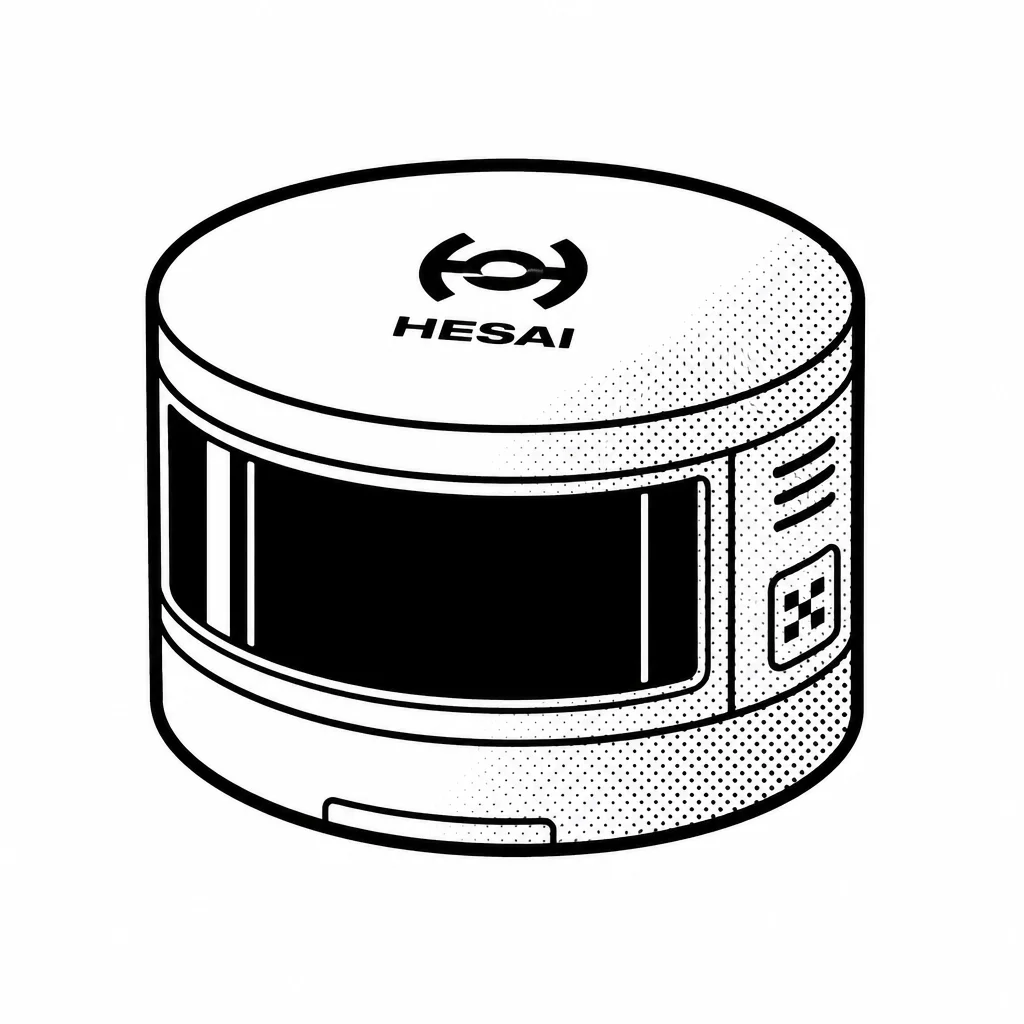
The customers are carmakers, robotaxi and autonomous delivery companies, and robotics firms. The big shift in recent years is that LiDAR has moved from science projects into mass-produced passenger cars, especially in China, where automakers pack advanced driver-assist features into mainstream models. That volume game matters because LiDAR used to be famously expensive — early units cost tens of thousands of dollars. Hesai's pitch is making them cheap enough to bolt onto a normal sedan. The company is headquartered in Shanghai, and it stands out for shipping in serious volume rather than just racking up design wins. It has leaned on its own chip designs and manufacturing scale to push prices down, which is how it wins business against rivals like Luminar Technologies and dozens of Chinese competitors. The flip side is brutal: LiDAR is a price war, customers demand annual cost cuts, and Hesai has historically lost money as it chased growth. Automakers also hold enormous bargaining power, and losing a single big car program can sting.
It is a bet on a specific technological future. Some carmakers, most famously Tesla, argue you can get autonomy with cameras and software alone and skip LiDAR entirely. If that view wins, Hesai's market shrinks. If lidar becomes standard safety equipment on millions of cars, Hesai is one of the few companies positioned to supply it at scale. That fight over which sensors self-driving cars actually need is the whole story of the stock.
Saved answer · last researched 14 Nov 2026
BIG PICTURE
One Chinese company makes most of the lidar that lets robotaxis see the road
- 62% Hesai
- 38% All other suppliers
In the small, fast-moving market for the laser sensors that robotaxis use to map the world, Hesai supplied 62% of the global total in 2025. That is more than every other supplier combined, a rare position of strength in a business usually split among many players. Robotaxi builders in the United States and China buy these sensors, and each order sends money to Hesai. Source: Yole Group, Robotaxi 2026 report, data from 2025
Timeline
Three Founders Start Hesai
In 2014, Kai Sun, Yifan Li and Shaoqing Xiang started a company in China called Shanghai Hesai Photonics. Its job was to build LiDAR: a sensor that shoots out light and measures how long it takes to bounce back, giving a machine a 3D map of the world around it. Think of it as the eyes that let a car or a robot see distance and shape, not just a flat picture. That small startup is the business we now know as Hesai Group.
Hesai Becomes a Joint Stock Company
By 2020 the founders were getting the company ready for bigger things, so they turned it into a joint stock company under Chinese law and renamed it Hesai Technology. Same business, sturdier legal structure.
A New Parent in the Cayman Islands
To raise money from overseas investors, the company set up a holding company in the Cayman Islands in 2021 and folded Shanghai Hesai underneath it. It was a housekeeping move, but an important one: it put the whole business in one place that foreign stock markets could understand.
Hesai Lists on Nasdaq
In early 2023 Hesai sold shares to the public on Nasdaq. The offering brought in roughly 180 million dollars, giving the company cash to grow and a public scoreboard for everyone to watch. It was now a listed company, with all the pressure that brings.
Hesai Hits Profit and a Big European Deal
Then came the year that changed how people saw Hesai. It won an exclusive design deal with a major European automaker, a program meant to run for years across both gas and electric cars. It became the first LiDAR company anywhere to ship 100,000 units in a single month. And it became the first publicly listed LiDAR company to post a full-year profit on a non-GAAP basis. Making money in this industry had been the hard part for everyone.
A Second Listing in Hong Kong
In September 2025 Hesai listed its shares in Hong Kong too, so it traded in both the US and Hong Kong. The offering raised about 530 million dollars. But the honeymoon was short: within weeks the stock had fallen nearly 20 percent from its issue price, and the early investors who bought in were hurting.
Record Profit, Falling Stock
Soon after, Hesai reported record quarterly profit, and the stock fell anyway, down more than 11 percent in Hong Kong and nearly 10 percent in the US. Investors were not cheering the profit. They were worried about slowing growth in LiDAR for driver-assist systems, prices coming down, and how much of the business depended on a handful of big customers. A good quarter can still scare a market.
Shipments Keep Climbing
The numbers behind that quarter were strong: total LiDAR shipments rose more than threefold from a year earlier, and shipments for robots jumped far faster than that. Net income came in solid, and the company raised its profit guidance for the year. The Hong Kong listing, once the extra shares were sold, ended up bringing in about 614 million dollars. So the business was growing even while the stock wobbled.
Beyond Cars, Toward Robots
By 2026 the story had quietly changed shape. Non-automotive robotics made up more than half of total revenue in one quarter, with shipments of robotic actuation modules passing 35,000 units in total. Management targeted about 100 million dollars in revenue for its strategic growth bets by 2027. Hesai was no longer just a parts supplier to carmakers; it was pitching itself as infrastructure for robots and physical AI.