Understand any stock in simple English
Enter a ticker to learn what the company does and how it makes money.
RoboSense Technology Co., Ltd
RoboSense makes lidar sensors and perception software that help cars and robots "see" the world around them.
RoboSense makes the eyes for machines that need to move on their own. Its main product is lidar — a sensor that fires out laser pulses and times how long they take to bounce back, building a precise 3D picture of everything nearby. Cameras can see color and read signs, but they struggle with exact distance and depth, especially in the dark or in rain. Lidar fills that gap, which is why it has become a key ingredient for cars that drive themselves and for robots that need to navigate without bumping into things.
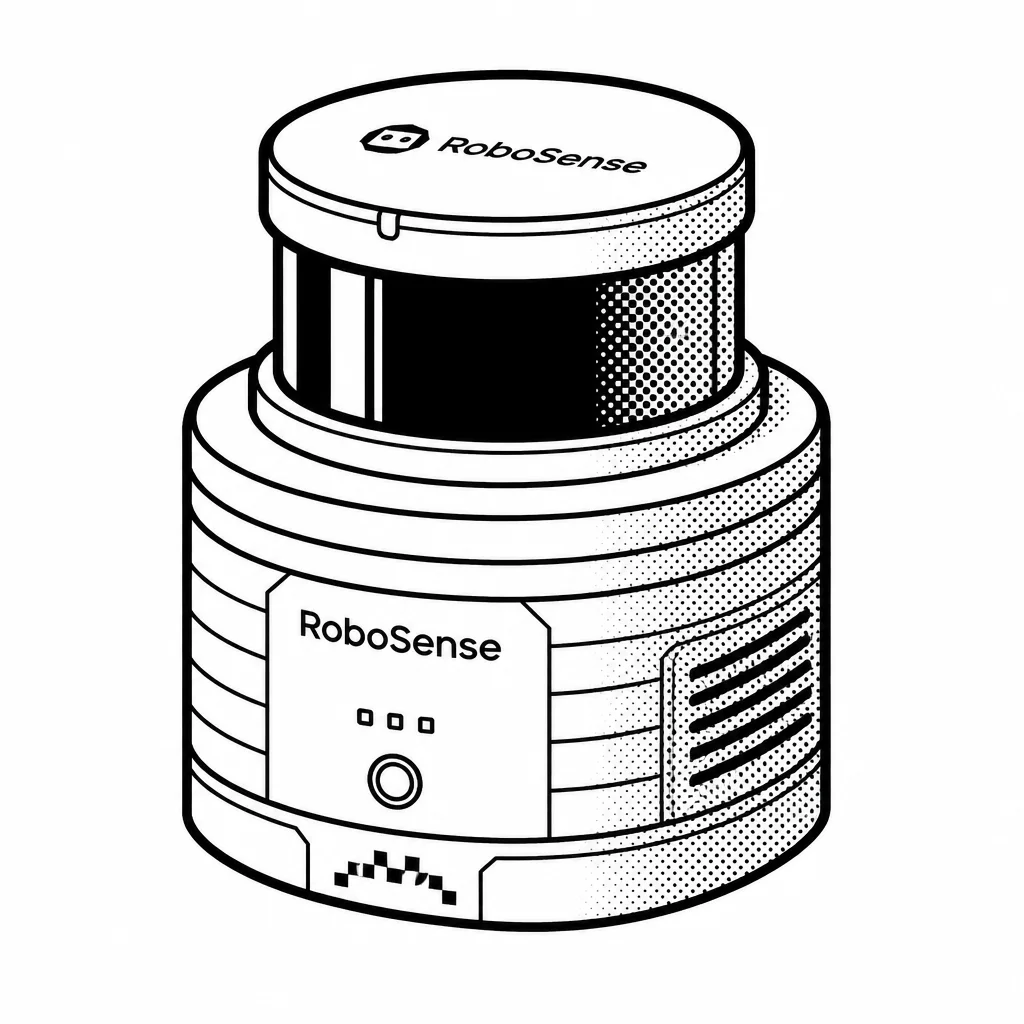
The company sells to two broad groups. The first is carmakers building advanced driver-assistance systems — the lane-keeping, automatic-braking, self-parking features that are now standard on many new vehicles. The second is robotics customers: makers of delivery robots, cleaning machines, warehouse automation, and other devices that need to sense their surroundings. Alongside the hardware, RoboSense sells AI perception software that turns the raw laser data into a clean picture of the world — here's a pedestrian, here's a curb, here's a car — so the customer's own system doesn't have to do that hard interpretation work from scratch. Customers pay for the sensors, and increasingly for the software that makes them useful. The pitch is volume and price. Lidar used to be a luxury item costing tens of thousands of dollars, mostly found on experimental self-driving prototypes. RoboSense's bet is that it can manufacture these sensors cheaply enough to put them on ordinary passenger cars sold by the millions. That has turned the lidar market into a brutal price war, with Chinese rivals like Hesai and others fighting to win design deals with automakers, because once a carmaker picks your sensor for a model, you tend to keep that business for years. Winning those contracts is the whole game, and it requires surviving on thin margins while scaling up factories.
RoboSense is headquartered in Shenzhen, China's hardware manufacturing heartland, which helps it build close to its supply chain and its biggest customers — Chinese electric-vehicle makers who have been the fastest to adopt lidar. That gives it a huge home market but also ties its fortunes to China's car industry and its price wars. The company listed on the Hong Kong Stock Exchange in early 2024, giving it public capital to fund expansion. The core tension in the business is simple: lidar could become a standard part of every car, which would be enormous, or carmakers could decide cameras and cheaper sensors are good enough, which would shrink the opportunity. RoboSense is essentially betting that machines will keep needing better eyes.
Saved answer · last researched 16 Nov 2026