Understand any stock in simple English
Enter a ticker to learn what the company does and how it makes money.
Grieg Seafood ASA
Grieg Seafood farms Atlantic salmon in the cold waters of Norway and Canada and sells it to buyers around the world.
Grieg Seafood is a salmon farmer. It raises Atlantic salmon from tiny eggs to full-grown fish in net pens floating in cold coastal waters, then slaughters, processes, and sells them to wholesalers, fish processors, and retailers who put salmon on dinner plates from Tokyo to New York. The fish themselves are the product — fresh and frozen whole salmon, fillets, and portions.
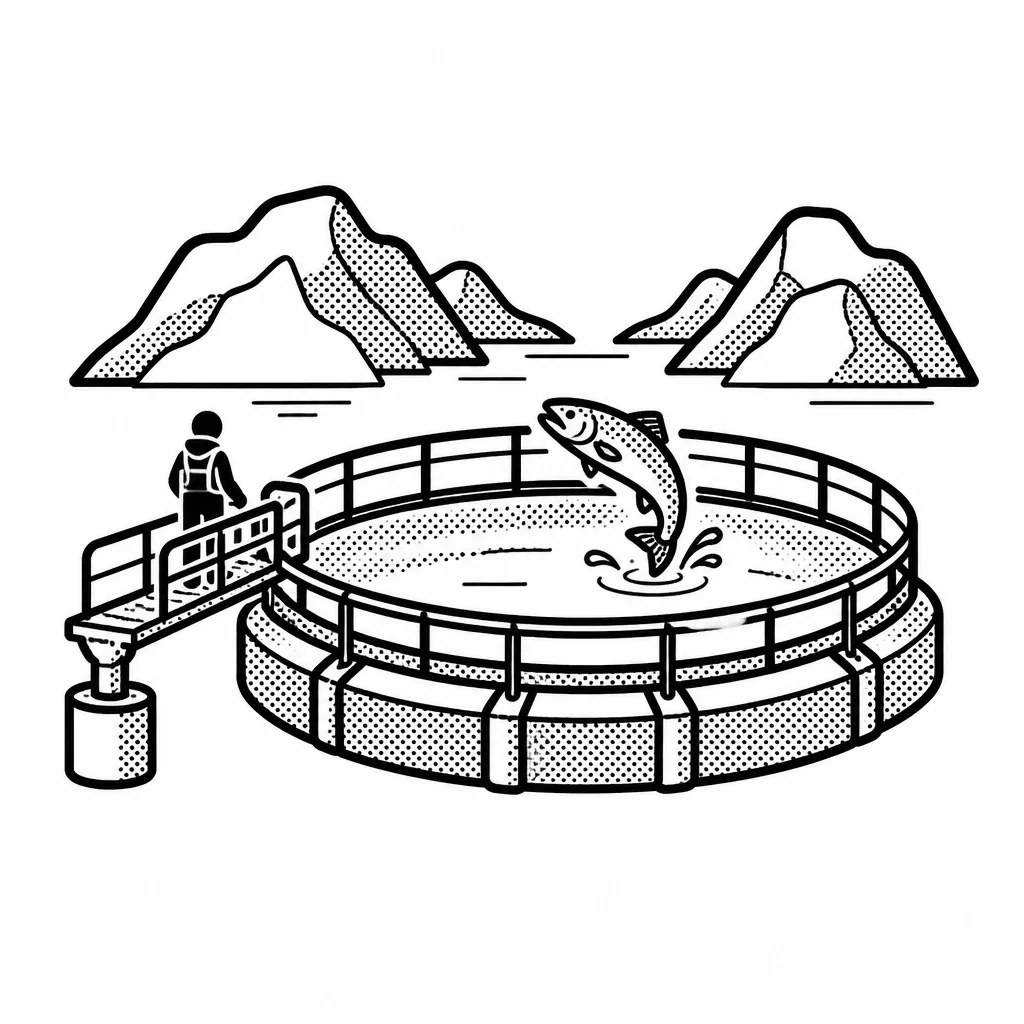
The business runs on a simple biological cycle with a long fuse. Salmon spend roughly a year or more in freshwater hatcheries before they are moved to sea pens, where they grow for another year or so. That means the company must decide how many eggs to hatch today based on guesses about prices two years from now, and it must feed and protect those fish through storms, disease, and algae blooms. Most of the cost sits in feed, which is made largely from wild-caught fish meal and plant ingredients, so the price of a salmon fillet is tied partly to global commodity markets. Grieg Seafood farms in two places: along the fjords of Norway, the world's dominant salmon-producing country, and on the coast of British Columbia in Canada. Norway gives it scale and proximity to European buyers; Canada gives it a foothold near North American markets and a different regulatory environment. Its main rivals are other big Norwegian salmon farmers such as Mowi and SalMar, plus Bakkafrost in the Faroe Islands — all of them selling a fairly interchangeable product, which means the company is largely a price-taker. What it can control is cost per kilo and fish survival. For years the industry's great hope was to grow more salmon without using more sea pens, because Norwegian regulators limit how much biomass each company can hold in the water. Grieg Seafood pushed into land-based and closed-containment projects to escape those caps, but those bets have been rocky, and the company has scaled back or sold some of them. The core truth is that salmon farming is a good business in good years — demand keeps rising as people eat more protein — but a fragile one when sea lice, disease, or a price slump hits, because the fish keep needing feed whether prices are high or low.
Grieg Seafood is controlled by the Grieg family, descendants of the Bergen shipping and fish-export dynasty, which keeps a large stake through the holding company Grieg Aqua. The company pays a dividend when profits allow and has used cash to expand its farming capacity and upgrade processing plants rather than chase big acquisitions. Its results swing with salmon prices, and investors treat the stock as a leveraged bet on the global salmon market.
Saved answer · last researched 14 Nov 2026