Understand any stock in simple English
Enter a ticker to learn what the company does and how it makes money.
Forvia SE
Forvia makes car seats, dashboards, interior trim, lighting, electronics, and cleaner-emission systems for the world's big automakers.
Forvia is one of the world's largest car-parts suppliers, and its business is easiest to picture by walking around the inside of a new car. The seats you sit in, the dashboard and door panels, the screens and electronics, the lights front and back, and the exhaust systems that clean up what comes out of the engine — Forvia often makes one or more of those. Its customers are the automakers themselves, companies like Volkswagen, Stellantis, and Ford, who buy these parts in enormous volumes and bolt them into the cars they sell.
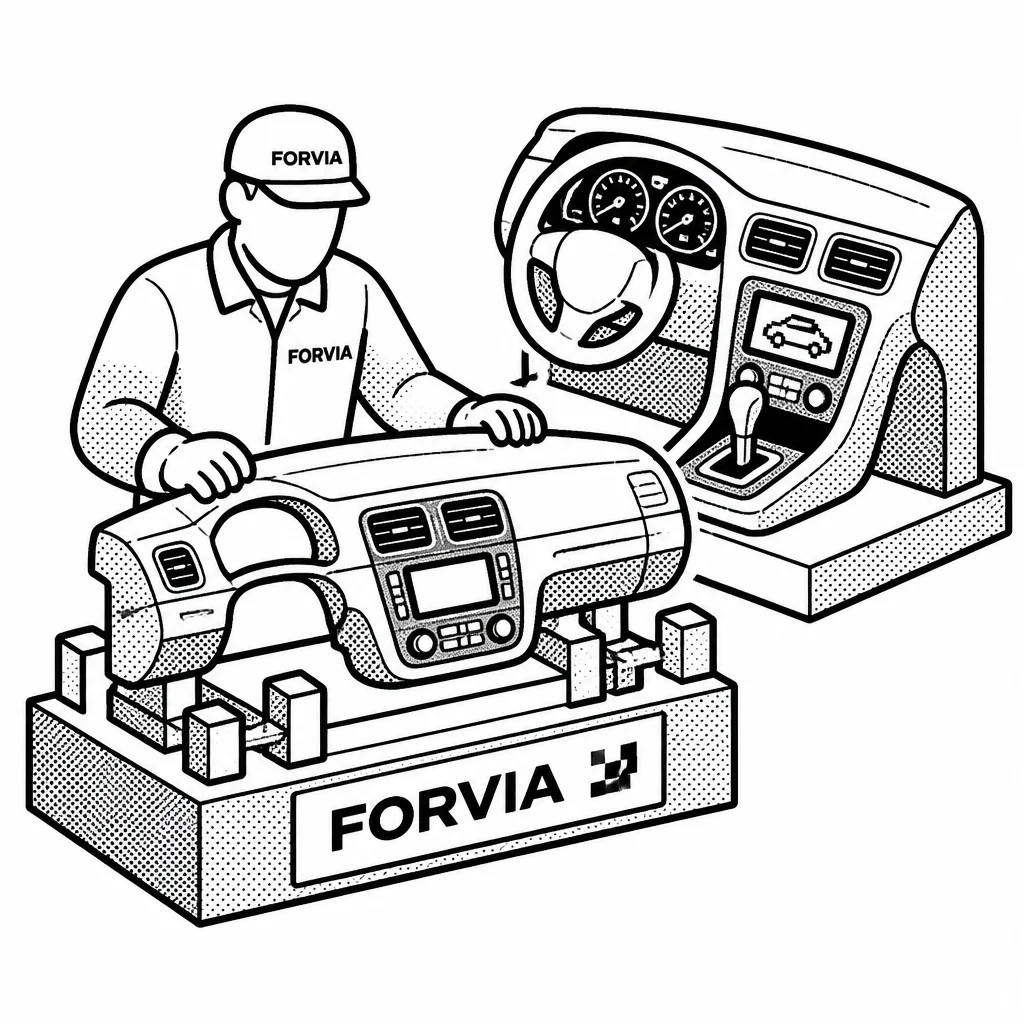
The company is the product of a big merger. Faurecia, a French auto-parts maker focused on seats and interiors, bought the German lighting and electronics specialist Hella in 2022 and rebranded as Forvia. That deal is the heart of the current story: it stitched together a seats-and-interiors business with a lighting-and-electronics business, giving Forvia a wider menu of parts to sell to the same automakers. The bet was that carmakers want fewer suppliers who can deliver more of the cabin at once. Forvia earns money by winning contracts to supply a specific part for a specific car model, then cranking out that part for years as the model sells. It's a volume business with thin margins, and it lives or dies on winning new contracts and keeping factories running efficiently. The auto industry's swing toward electric cars is both an opportunity and a threat. Forvia sells clean-mobility systems like exhaust after-treatment, which matters less as combustion engines fade. But electric cars still need seats, screens, lighting, and interior electronics — often more of them — which is why the company is pushing hard into those areas.
The business is also carrying real weight. The Hella acquisition left Forvia with a large debt load, and management has been selling off pieces of the company and cutting costs to bring that down. In a tough stretch for auto suppliers — slower EV demand, cautious carmakers, and price pressure — Forvia has had to work harder to convince investors that the merger math pays off. It's a classic supplier story: indispensable to the cars you drive, but squeezed between powerful customers and the cost of reinventing itself for the electric era.
Saved answer · last researched 14 Nov 2026