Understand any stock in simple English
Enter a ticker to learn what the company does and how it makes money.
Fresenius Medical Care AG & Co. KGaA
Fresenius Medical Care runs dialysis clinics and makes the machines and supplies used to clean the blood of people whose kidneys have failed.
Fresenius Medical Care is the world's largest kidney care company. It does two big things: it runs dialysis clinics where patients come several times a week to have their blood filtered by machines, and it makes and sells the machines, filters, and fluids those treatments need. If your kidneys stop working, dialysis is what keeps you alive until a transplant, so this is care people cannot skip.
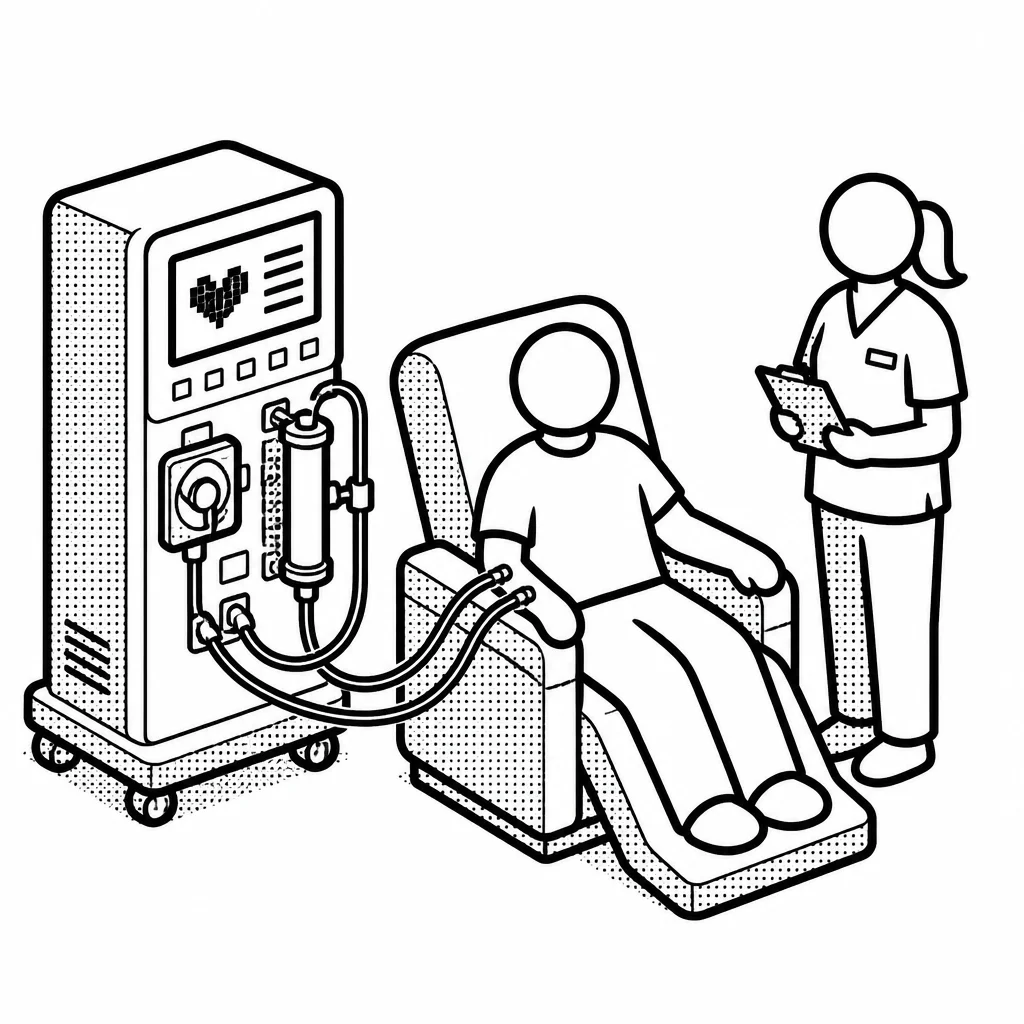
The company makes money two ways. In its clinics, it gets paid by insurers and government health programs for each treatment it delivers. On the product side, it sells its dialysis machines and supplies to hospitals and other clinic operators — including its own network — and it also sells a growing line of products for other kidney-related conditions. Clinics are the bigger piece, but the product business gives it reach beyond its own walls. The story behind the company is a bit unusual. It started inside a German hospital in the 1960s, when a doctor and an engineer built a better dialysis machine, and the business grew from that workshop into a global network. Today it is headquartered in Bad Homburg, Germany, and is majority-owned by the healthcare group Fresenius, which is a separate company — a fact worth noting because the two are easy to confuse.
The business is steady rather than flashy: demand for dialysis grows slowly and predictably, and patients need it for life. But pressure on healthcare budgets means governments and insurers keep pushing for lower prices, and the company has faced lawsuits and regulatory scrutiny over patient safety and billing practices in the U.S., its biggest market. It pays a dividend and has spent heavily on acquisitions and new technology, betting that home dialysis and better data tools will matter more as care moves out of clinics.
Saved answer · last researched 12 Nov 2026