Understand any stock in simple English
Enter a ticker to learn what the company does and how it makes money.
Digi International Inc.
Digi International makes the hardware and software that lets machines and devices talk to each other and to the internet, sold to businesses and governments.
Digi International sells the plumbing that connects the physical world to the internet. Its boxes, modems, routers, and embedded chips go inside other companies' products and equipment, letting those things send data over cellular networks, Wi-Fi, or wires back to a computer somewhere. A city water department might use Digi gear to read meters remotely; a factory might use it to watch machines; a hospital might use it to track equipment. The customer isn't buying a gadget for fun — they're buying a way to get data out of equipment that was never built to be online.
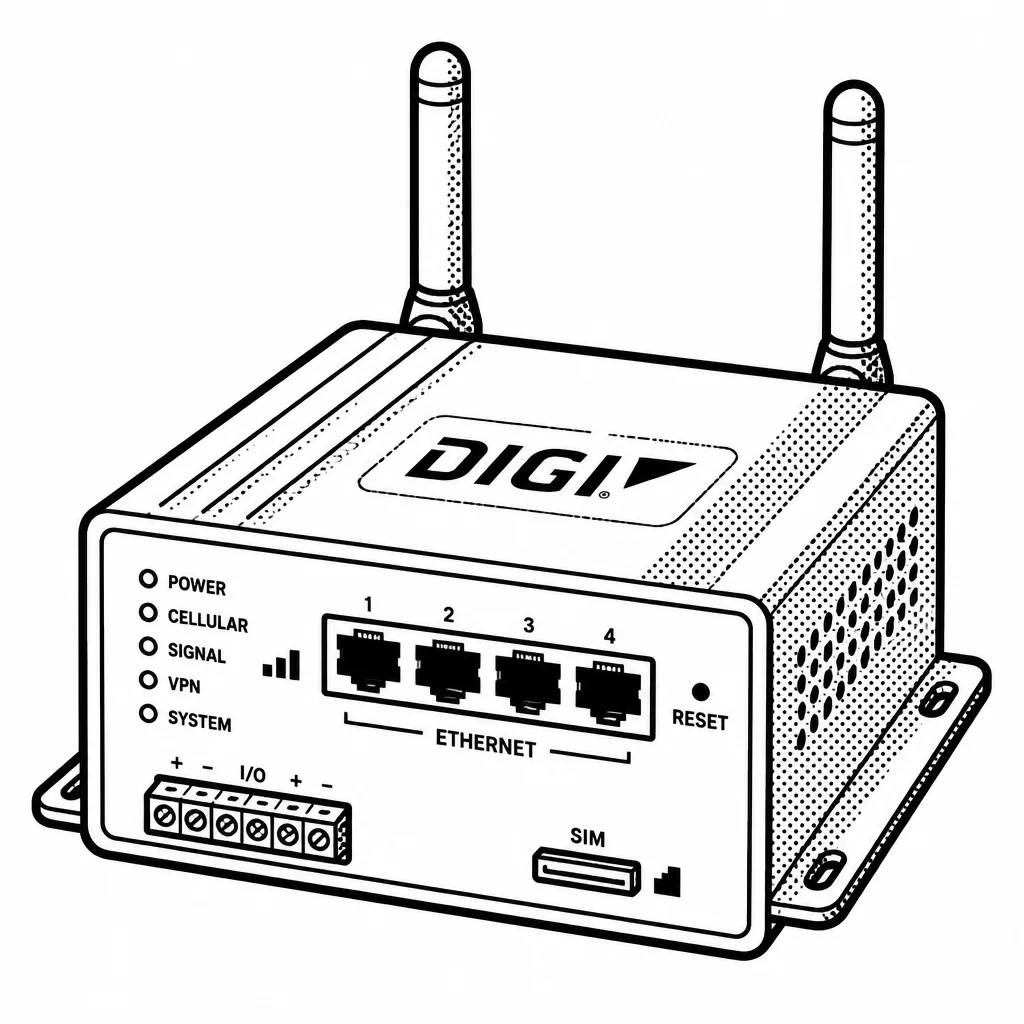
The business has two big pieces. The first is "IoT products and services," which covers the physical hardware — cellular routers and gateways, embedded modules that manufacturers build into their own devices, and the software and cloud services that manage all those connected things. The second is "smart connectivity" and console-server products under the Digi brand, which let companies remotely access and control servers, network gear, and other equipment sitting in data centers or branch offices. Digi also owns the Opengear brand, which sells secure remote-access appliances — the kind of gear that lets an IT team fix a broken server in a faraway office without flying someone there. Digi makes money by selling hardware, often at modest margins, and then layering on software subscriptions, cloud services, and support contracts that recur. It sells mostly through distributors and resellers rather than directly, so it leans on partners to reach thousands of small and mid-sized customers. Competition is fierce and fragmented: big chipmakers and networking giants crowd the space, and cheap overseas hardware makers undercut on price. Digi's edge is that it has been doing this for decades (it was founded in 1985) and offers a broad, integrated lineup plus the software to manage it all, which matters to customers who don't want to stitch together five vendors.
The company is based in Hopkins, Minnesota, and has been reshaping itself around recurring revenue and higher-margin software. It has made acquisitions — Opengear and, more recently, the MiFi hotspot business from Novatel Wireless parent Inseego — to bulk up its portfolio, and it has bought back stock in recent years, a sign management thinks the shares are cheap. The core risk is simple: hardware is a grind, competition is relentless, and the promise of IoT has been "about to explode" for a decade. Digi's bet is that eventually every piece of industrial equipment needs a secure connection, and it wants to sell the box and the software that makes that happen.
Saved answer · last researched 14 Nov 2026