Understand any stock in simple English
Enter a ticker to learn what the company does and how it makes money.
Inseego Corp.
Inseego makes wireless hotspots, routers, and cloud management tools that keep people and organizations connected over cellular networks.
Inseego builds the boxes and software that get laptops, stores, and whole offices online without plugging into a wall. Its core products are 5G and 4G mobile hotspots—small battery-powered devices that create a Wi-Fi bubble around a cellular signal—plus fixed wireless routers that do the same job for a building, and a cloud platform that lets IT teams manage fleets of these devices remotely. Customers include consumers buying a hotspot for travel or backup internet, enterprises wiring branch offices, and government agencies that need connectivity in the field.
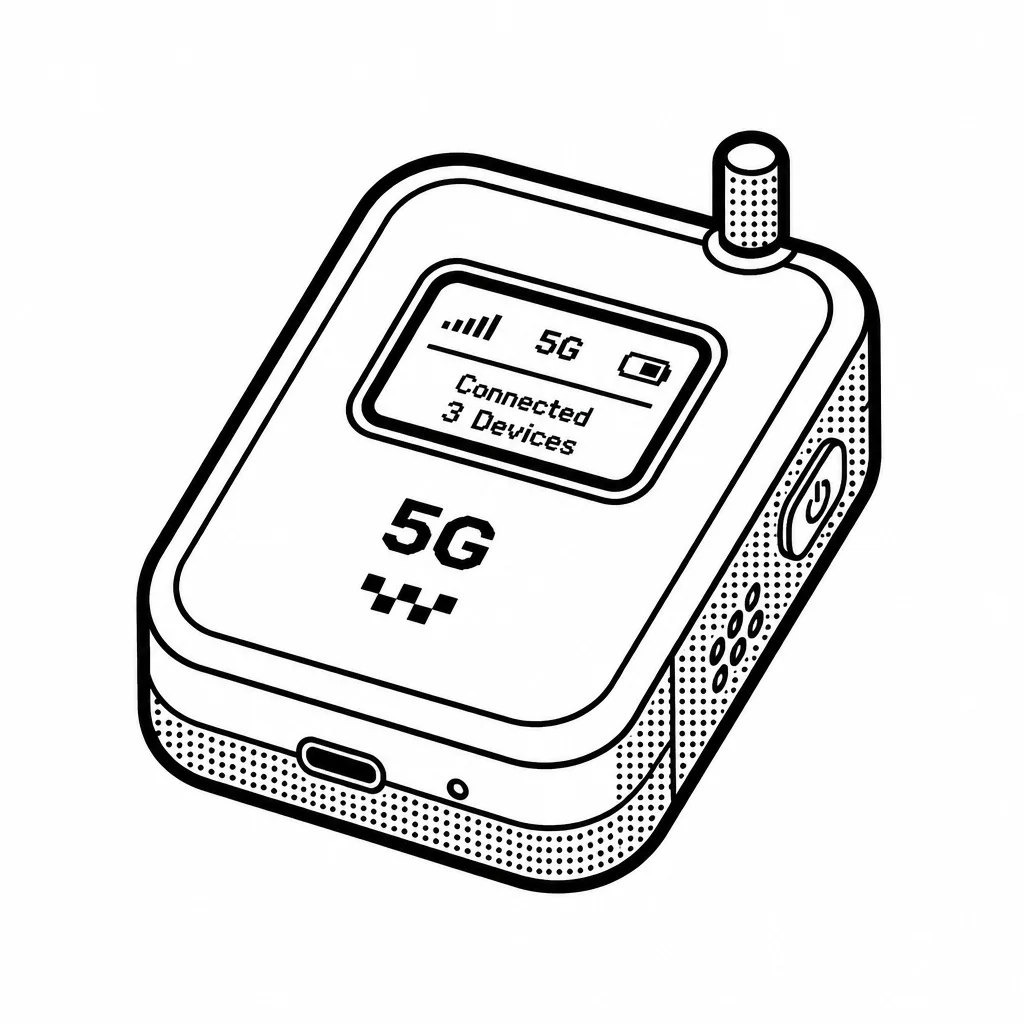
The business runs on two engines. One is selling hardware, where margins are thin and competition is fierce from rivals like Netgear and a long tail of low-cost Asian manufacturers. The other is recurring revenue from software and services attached to those devices—device management, security, and connectivity plans—which is stickier and more profitable. Inseego's pitch is that cellular is becoming the primary way things connect, and it wants to own the gear and the dashboard that manages it. The company has had a bumpy financial history, cycling through name changes and past losses, and it carries debt that has weighed on results. Its fortunes are tied to carrier partnerships—selling through mobile operators rather than directly—so a few large customers hold real leverage over pricing and volumes. That dependence cuts both ways: a big carrier win can lift revenue fast, and a carrier shifting strategy can hurt just as quickly.
For a small company, Inseego sits in a genuinely interesting spot. Fixed wireless access is one of the fastest-growing parts of the telecom world, with carriers like T-Mobile and Verizon pushing home broadband over 5G. If that wave keeps building, Inseego sells picks and shovels to it. If carriers bundle cheap hardware or squeeze suppliers, the company feels it. It is a bet on wireless replacing wires—profitable when the cycle favors it, fragile when it doesn't.
Saved answer · last researched 15 Nov 2026