Understand any stock in simple English
Enter a ticker to learn what the company does and how it makes money.
Darling Ingredients Inc.
Darling Ingredients takes food and animal byproducts that would otherwise be thrown away and turns them into valuable ingredients like animal feed, pet food, and renewable fuel.
Darling Ingredients is the world's biggest recycler of things that people used to throw away. When a butcher trims fat off a steak, when a restaurant finishes frying a batch of chicken, when a cow is processed for beef — there's a lot of leftover material that someone has to deal with. Darling collects that material and turns it into useful products. The company's roots go back to the 1880s, when it was essentially a rendering business: picking up dead animals and meat scraps from farms and butcher shops and cooking them down into fat and protein meal. That business still exists today, but it has become something much bigger and more interesting.
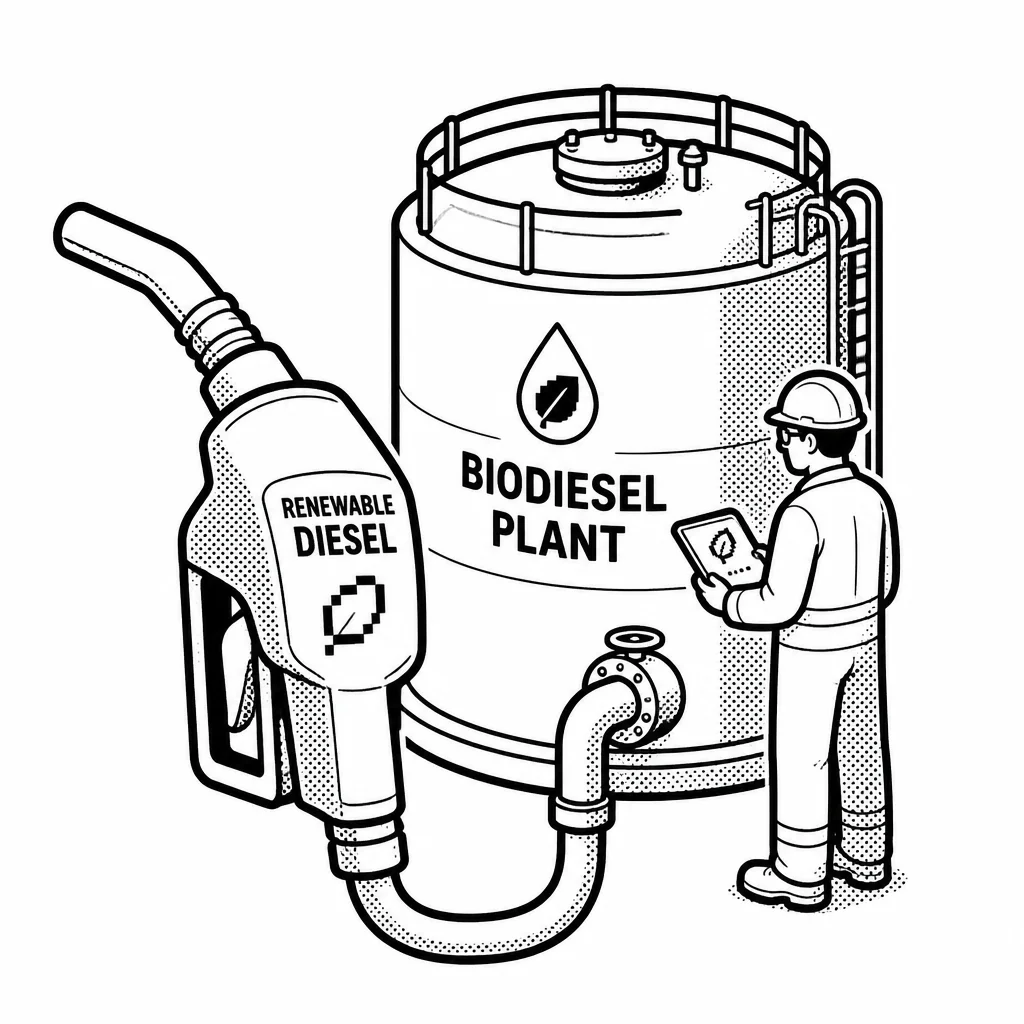
The rendering side is still the heart of the company. Darling collects used cooking oil from restaurants, animal fat from meat processors, and other organic leftovers, then processes them into ingredients. Some of it becomes feed for farm animals and pets. Some becomes fertilizer. And critically, some becomes the raw material for renewable diesel and biodiesel — the fuels that are slowly replacing regular diesel in trucks and buses. That last part has turned a quiet waste-management company into a renewable-energy play. Darling is one of the biggest suppliers of the fats and oils that refiners turn into low-carbon fuel, and the company owns a big stake in Diamond Green Diesel, a joint venture with Valero that actually makes the fuel. When governments in California and Europe started paying extra for cleaner-burning fuels, Darling's leftovers became valuable. The company also sells collagen and natural casings for sausages — the thin skins that hold a brat together. It has a food business that sells edible fats and proteins to food manufacturers, and a pet food business that sells ingredients to pet food makers. These are smaller parts of the story but they show the company's real skill: finding value in the parts of an animal or a plant that most people would pay to have hauled away.
Here's the honest part: Darling's fortune has always been tied to forces outside its control. When energy prices are high and government incentives favor renewable fuel, the rendering business can be very profitable. When those incentives shrink or when cheap imported biofuel floods the market, the business struggles. The company has been on a roller coaster in recent years. Profits surged during the renewable fuel boom of 2021 and 2022, then fell sharply as the market for low-carbon fuel got more competitive. Darling has kept spending money on expanding its renewable fuel capacity and buying up other businesses, which looks smart if demand for green fuel keeps growing and risky if it doesn't. The company is essentially a bet that the world will keep paying up to turn garbage into energy — a bet that has paid off handsomely so far, but one that never stops being a bet.
Saved answer · last researched 8 Nov 2026
BIG PICTURE
Darling makes about 30% of the world's collagen and gelatin, from parts of animals people don't eat
- 30% Global collagen and gelatin production made by Darling
- 70% Collagen and gelatin made by everyone else
About half of an animal doesn't reach a dinner plate, so Darling's edge is squeezing money from hides and bones most meat companies treat as waste. That hidden position gives it roughly 30% of worldwide collagen and gelatin output, sold into supplements, food and pills. It's a very different business from the rendering that pays most of the bills, and one with far better margins. Source: FT中文网, data from 2026
Timeline
Two Families Start a Rendering Business
In 1882, a small Chicago company began collecting and processing animal by-products — the parts of farm animals that would otherwise be thrown away. It was founded by the Swift meat business together with the Darling family, and its whole idea was to squeeze value out of waste. That simple purpose still defines the company today.
Going Public
In 1994, the company sold shares to the public, giving it capital and attention as a standalone rendering business rather than a small private operation.
Randall Stuewe Takes Over
By 2003, the company had not made a profit in years and morale was low. Randall Stuewe became chairman and CEO and set his sights on growth and creating value, which would transform the business dramatically.
Buying National Byproducts
A few years later, the company bought former rival National Byproducts, paying half in borrowed money and half in stock. The deal doubled its scale, and cost savings pushed earnings from roughly $28 million to about $100 million within a year. The CEO called it the deal that changed the world for the company — it went from a marginal player to an acquirer.
Winning Over Griffin Industries
The next big prize was Griffin Industries, its largest U.S. competitor. The two families had feuded for decades, but the company got the deal done, adding poultry rendering and pulling the fragmented U.S. industry further together.
The Diamond Green Diesel Bet
In 2013, the company put $423 million into a joint venture with Valero Energy called Diamond Green Diesel, using technology that was not yet proven. The idea: turn waste fats and used cooking oil into renewable diesel, giving low-value feedstock a high-value outlet. It would become a main driver of earnings and market value in the years ahead.
Buying VION Ingredients
Then came the big one: VION Ingredients, for about $2.2 billion, doubling the company's size. It gave the company a major presence in Europe, China and South America and moved it into higher-margin food ingredients like gelatin and collagen. A regional renderer had become a global specialty ingredients processor.
A New Name
The company renamed itself Darling Ingredients Inc., a plain way of saying it was no longer just an international rendering business but a transformed, global ingredients company.
The Feedstock Flood
A decade later, the U.S. was flooded with used cooking oil and tallow imported from China, which crushed feedstock prices and biofuel margins. Darling's share of Diamond Green Diesel's earnings fell hard, and net income dropped to about $63 million for the year. The company restructured and took impairment charges to exit weaker businesses.
Margins Come Back
Then the tide turned. Feedstock tightened and policy became friendlier, and renewable fuel margins reinflated — Diamond Green Diesel was earning $2.23 of EBITDA per gallon by the second quarter of 2026. Net income rebounded to about $387 million that quarter, management reaffirmed full-year guidance of $2.2 to $2.3 billion, and the company cut net debt by more than $600 million while buying back stock, leaving its balance sheet much stronger.