Understand any stock in simple English
Compagnie Financière Tradition SA
It is a middleman that matches buyers and sellers of financial and non-financial products, earning a commission on the trades.
Compagnie Financière Tradition is an interdealer broker — a middleman that sits between big financial institutions and helps them trade with each other. When a bank wants to buy or sell something like interest rate swaps, government bonds, currencies, or even non-financial products like emissions allowances, Tradition's brokers find the other side of the trade. The banks pay a commission for that matchmaking, and that commission is how the company makes its money.
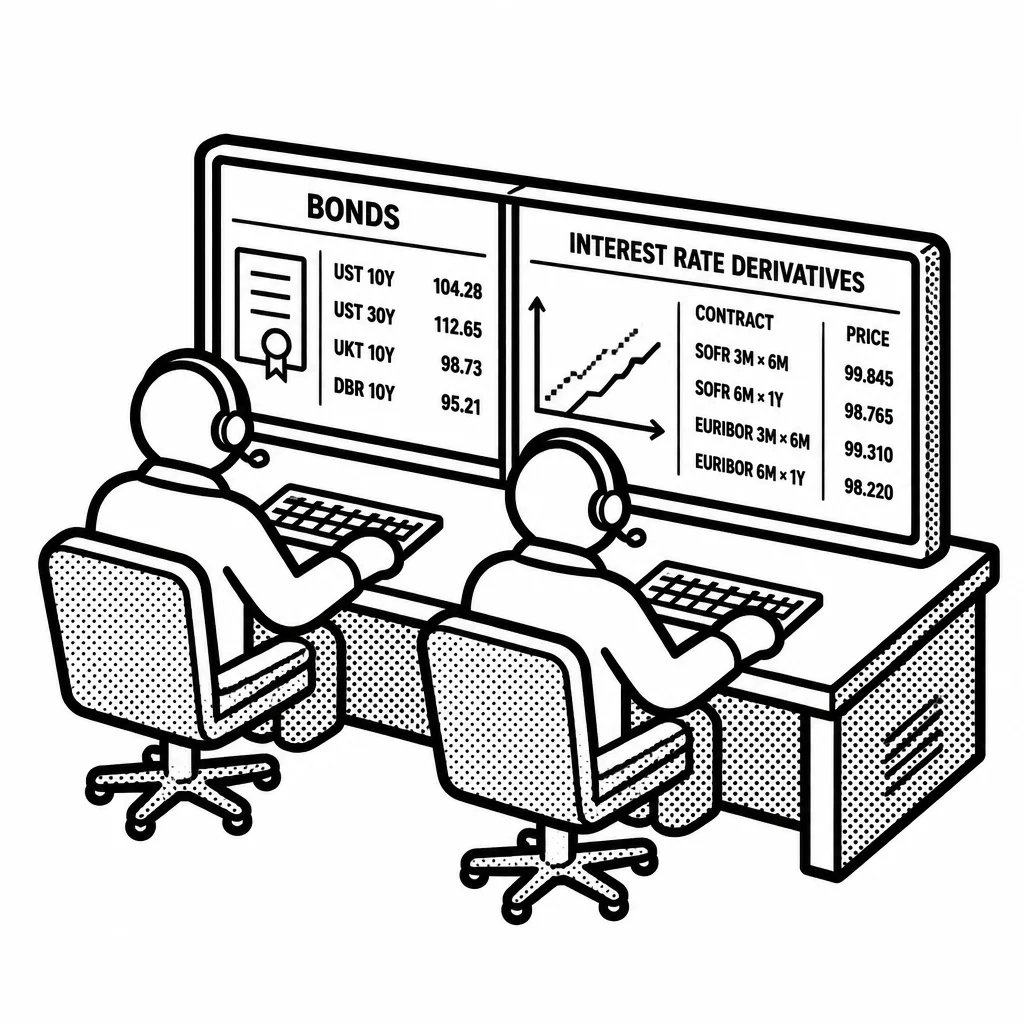
The business works because of a simple problem: many of the products these institutions trade are hard to price and don't trade on a clean public exchange. A bank holding a large position can't just look up a price on a screen — it needs someone who knows the market, who talks to lots of potential counterparties, and who can quietly find a buyer without moving the price against itself. Tradition's brokers provide that human knowledge and reach, and increasingly software does too. If you imagine a stock exchange as a loud public marketplace, Tradition is more like a private broker who knows exactly which dealer wants what, and charges for the introduction. The company is one of the older names in this world, with roots going back to a brokerage founded in the 1950s that grew through acquisitions into a global operation. It is headquartered in Switzerland and split across two broad areas: an interdealer broking business serving banks and dealers, and a smaller division handling non-financial products and other services. Its rivals include large listed brokers such as TP ICAP and BGC Group, so it competes on relationships, market coverage, and technology rather than on price alone.
The broking business is cyclical — when markets are calm and volumes are low, commissions shrink, and when volatility spikes, trading picks up. Tradition is also exposed to the long-term shift toward electronic trading, where margins can be thinner and scale matters more. Still, this is a cash-generative business: it has historically paid a steady dividend and bought back its own shares, returning money to shareholders rather than hoarding it. That mix of steady fees, cyclical swings, and a slow move to electronic platforms is what makes this quiet Swiss middleman worth understanding.
Saved answer · last researched 17 Nov 2026