Understand any stock in simple English
Enter a ticker to learn what the company does and how it makes money.
Keppel Ltd.
Keppel is a global asset manager and operator that builds, owns, and runs infrastructure, real estate, and connectivity assets, earning fees and returns from the money it manages and the projects it delivers.
Keppel is a Singaporean asset manager and operator. It does two connected things: it builds and runs big physical assets — power plants, data centers, office towers, and undersea cables — and it manages money for investors who want a piece of those assets. Think of it as part contractor, part landlord, and part fund manager, all under one roof.
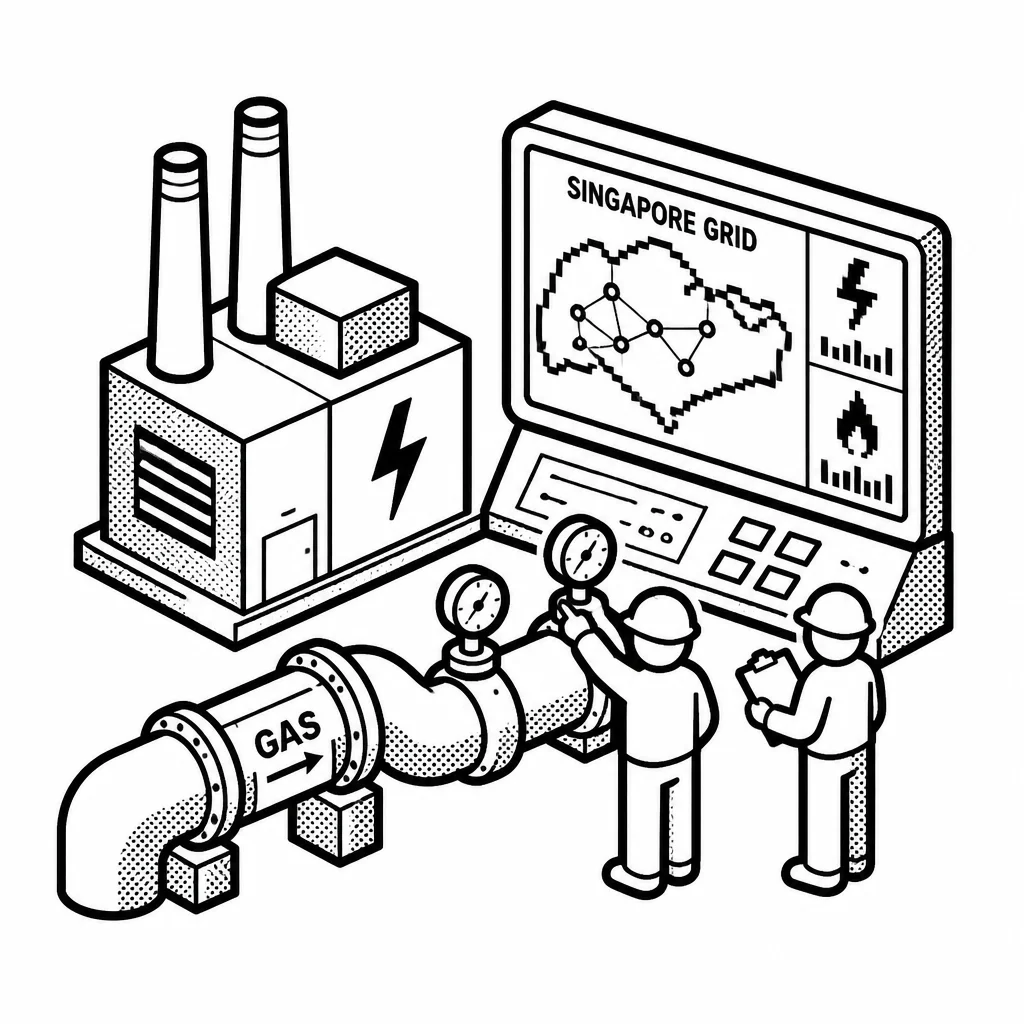
The business splits into three main parts. Infrastructure covers things like power generation, gas, and environmental projects. Real estate is the largest and most familiar piece: developing and owning offices, homes, and commercial buildings, especially in Singapore. Connectivity is the newer arm, focused on data centers and subsea cables that carry internet traffic between countries — the digital plumbing that AI and cloud computing increasingly demand. Keppel earns money in two ways: as an operator, it collects rent, fees, and project income from assets it runs; as an asset manager, it earns management fees from funds it raises and sometimes keeps a slice of the profits when those funds do well. The big strategic shift came in 2024, when Keppel completed the sale of its offshore and marine business — the rig-building arm that had defined the company for decades — to Seatrium. That was a deliberate pivot away from lumpy, cyclical shipyard work toward steady, fee-based asset management. The goal is to grow assets under management, recycle capital by selling mature assets to its own funds, and earn recurring income rather than betting on the next big rig order. It keeps a large property portfolio and a stake in the listed Keppel DC REIT, a data center trust, which gives it a foothold in the fastest-growing part of its connectivity story.
Keppel is not without blemishes. It has faced scrutiny over governance and its historical ties to troubled overseas projects, and its returns have at times lagged the hype around its transformation. The simpler risk is cyclicality: real estate and infrastructure values swing with interest rates, and fee income depends on convincing investors to keep handing over money. Still, the pivot gives it a clearer, more repeatable business — collect fees, run good assets, and recycle capital — which is a lot less exciting than building oil rigs but far more predictable for the people who own the shares.
Saved answer · last researched 12 Nov 2026