Understand any stock in simple English
Enter a ticker to learn what the company does and how it makes money.
Aixtron SE
Aixtron makes the specialized machines that chipmakers use to deposit incredibly thin layers of material onto silicon and other surfaces.
Aixtron builds the machines that lay down the atomic-scale layers inside modern electronics. Its tools use a process called deposition, where gases flow into a chamber and react to coat a surface with a film only a few atoms thick. Those films are what give chips, lasers, and LEDs their electrical and optical properties — a chip is really just many of these engineered layers stacked on top of each other. Aixtron's specialty is a family of techniques grouped under chemical vapor deposition, and it sells the equipment that makes this possible.
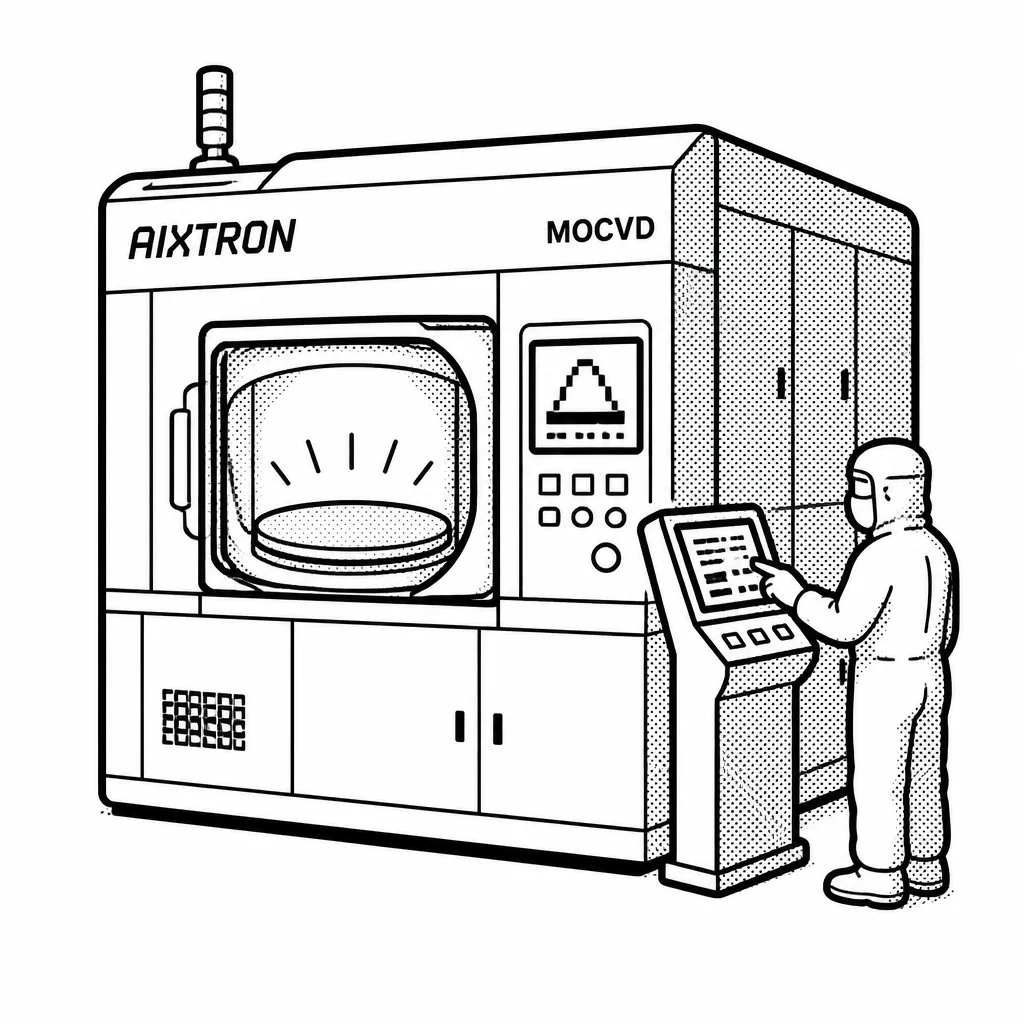
The company's customers are the manufacturers who actually make chips and other devices. Its heartland is a type of chip material called compound semiconductors — materials like gallium nitride and silicon carbide that are far better than plain silicon at handling power and producing light. Aixtron's tools are used to make LEDs, laser sensors, and the power chips that go into electric cars and fast chargers. Its biggest business today is selling machines ordered in large batches by a handful of major chipmakers, often in Asia. When those customers expand their factories, Aixtron's orders surge; when they pause, so does Aixtron. This makes Aixtron a cyclical, lumpy business. A single order can be worth millions, and revenue swings with the capital spending plans of a small group of buyers. It competes with other deposition equipment makers, most notably Applied Materials and Lam Research in the broader chip-equipment world. But Aixtron's edge lies in compound semiconductors and specific deposition niches rather than the mainstream silicon logic market. That focus can be a strength when new materials matter — and a vulnerability when one big customer delays a project.
Aixtron has deep roots in Germany, tracing back to the 1980s. Its headquarters are in Herzogenrath, near the Dutch border, and it has long been listed in Frankfurt and, until recently, on Nasdaq as well. The business is capital-intensive in engineering but rewards scale: building reliable machines that coat wafers precisely is hard, and machinery customers trust matters enormously. Aixtron's fate rides on the adoption of power-saving chips in electric vehicles and the growth of advanced display and sensor manufacturing, making it a bet on the physical materials underneath modern electronics rather than the software on top.
Saved answer · last researched 9 Nov 2026