Understand any stock in simple English
American Bitcoin Corp
American Bitcoin runs large-scale Bitcoin mining operations and builds up a reserve of Bitcoin for investors who want exposure to the cryptocurrency.
American Bitcoin is a Bitcoin company with two connected jobs: it mines new Bitcoin at industrial scale, and it steadily stockpiles the Bitcoin it produces as a reserve on its balance sheet. The idea is to give public-market investors a simple way to own a slice of a growing pile of Bitcoin without having to buy the coins and store them safely themselves.
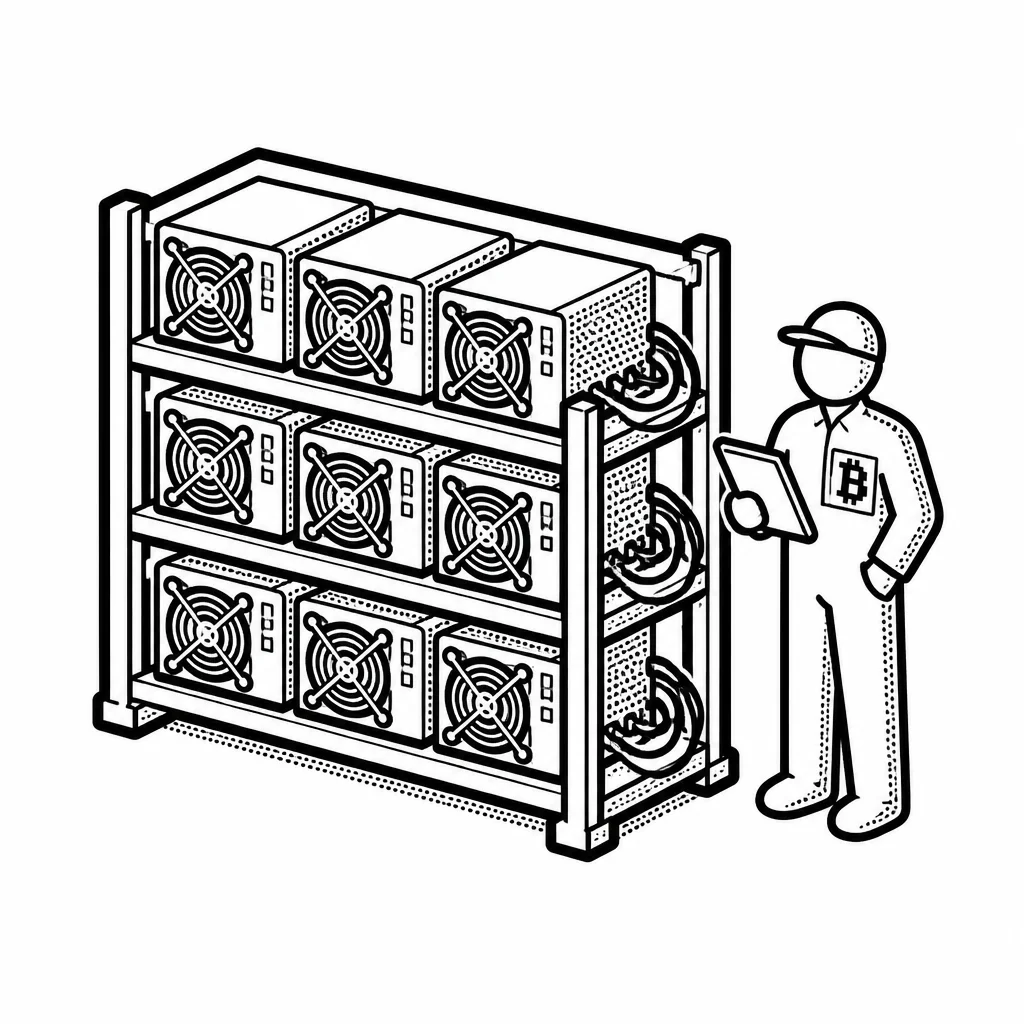
The mining side is the engine. Big warehouses full of specialized computers run day and night, racing to solve mathematical puzzles; the winner earns freshly created Bitcoin and collects transaction fees. It is a brutally competitive, low-margin business where the price of electricity and the efficiency of your machines decide whether you make money or bleed it. American Bitcoin's twist is that instead of selling most of what it mines to cover costs, it tries to hold onto the coins, so the company's value is meant to track the size of its Bitcoin stack. This "accumulate and hold" model makes the company a kind of public proxy for Bitcoin itself, with the mining operation acting as a way to grow the reserve over time rather than just sitting on coins. That cuts both ways. When Bitcoin's price rises, the strategy looks brilliant and the reserve compounds in value. When it falls, the same leverage works in reverse, and the heavy costs of powering and cooling all those machines keep coming regardless.
The company listed on Nasdaq under the ticker ABTC, and it was previously known as ADC. It sits in a crowded field of listed Bitcoin miners and treasury-style crypto companies, all competing for investor attention and capital. The core thing to understand is that this is a leveraged bet on Bitcoin's price: the mining grows the pile, but the pile's worth, and the company's, swings hard with the crypto market.
Saved answer · last researched 17 Nov 2026
BIG PICTURE
One company mines about 2-3% of all the Bitcoin produced on Earth
- 3% Share of global Bitcoin production mined by American Bitcoin
- 97% Bitcoin mined by everyone else
That is roughly the slice of the world's Bitcoin output American Bitcoin says it produces with 28.1 exahashes per second of computing power. For scale, the entire global network runs at about 950 to 1,000 exahashes per second. The company's money comes from turning electricity into newly created coins, and its share of that flow is what backs its growing Bitcoin pile. Source: TradersView, data from 2026
Timeline
Two Brothers and a Mining Fleet
American Bitcoin started as American Data Centers, backed by Dominari Holdings with Eric Trump and Donald Trump Jr. involved. Then Hut 8 handed over nearly all of its self-mining machines for an 80% stake, and the whole thing relaunched under a new name. The pitch was simple: mine Bitcoin for less than it costs on the open market, pile the coins into a reserve, and let public investors ride along on that pile. Eric Trump became co-founder and chief strategy officer, and the family name became the company's main edge in a crowded industry where plenty of miners were fighting for the same coins.
A Shortcut to the Stock Market
Instead of doing a traditional IPO, American Bitcoin announced an all-stock reverse merger with Gryphon Digital Mining, a small company already listed on Nasdaq. Existing American Bitcoin owners would hold about 98% of the combined company. Gryphon shares shot up as much as 400% on the news, because investors saw a way into the Trump crypto story before it even opened for trading.
First Day on Nasdaq
The Gryphon deal closed and the company began trading under the ticker ABTC. It was the first Trump-family crypto venture to reach public markets. Shares jumped on debut, briefly valuing the brothers' stake somewhere around one and a half to two and a half billion dollars, at least on paper.
A Big Pile of Bitcoin
Soon after listing, the company held 2,443 bitcoin worth about $269 million and ran more than 60,000 mining machines. It had raised $220 million by July to pay for equipment and build its strategic bitcoin reserve. The machine was running: raise money, buy miners, mine coins, keep the coins.
The Lock-Up Breaks
Within months of its debut, ABTC fell more than 70%. Part of the damage came from a share lock-up expiring, which triggered a roughly 40% drop in a single session as early holders finally got to sell. The deeper problem was the model itself: Bitcoin was falling, and the company kept issuing new shares to buy more coins, so shareholders ate both the dilution and the losses on the coins already bought.
Selling Stock to Stay Alive
The company raised up to $2.1 billion by selling stock directly into the market, using the money to buy Bitcoin and expand mining, even as its market value fell about 90% from listing. It lost money for three straight quarters. In July 2026 it did a 1-for-15 reverse split, a move that shrinks the number of shares to lift the price per share and keep Nasdaq from kicking it off the exchange.
A Profit Thanks to Bitcoin
Then the picture flipped. Net income hit $126 million in the third quarter of 2026, reversing a $57 million loss the quarter before, mostly because the company's digital assets gained about $197 million in value. Bitcoin holdings grew to 8,427 coins even as mining revenue fell, and the cost to mine a coin rose to about $42,100 thanks to seasonal power prices. The swing proved the model can make money when Bitcoin recovers, but it also showed the whole business is still a bet on the coin's price.