Understand any stock in simple English
Enter a ticker to learn what the company does and how it makes money.
Ambev S.A.
Ambev is one of the world's largest brewers, making and selling beer, soft drinks, and other beverages across Latin America and Canada.
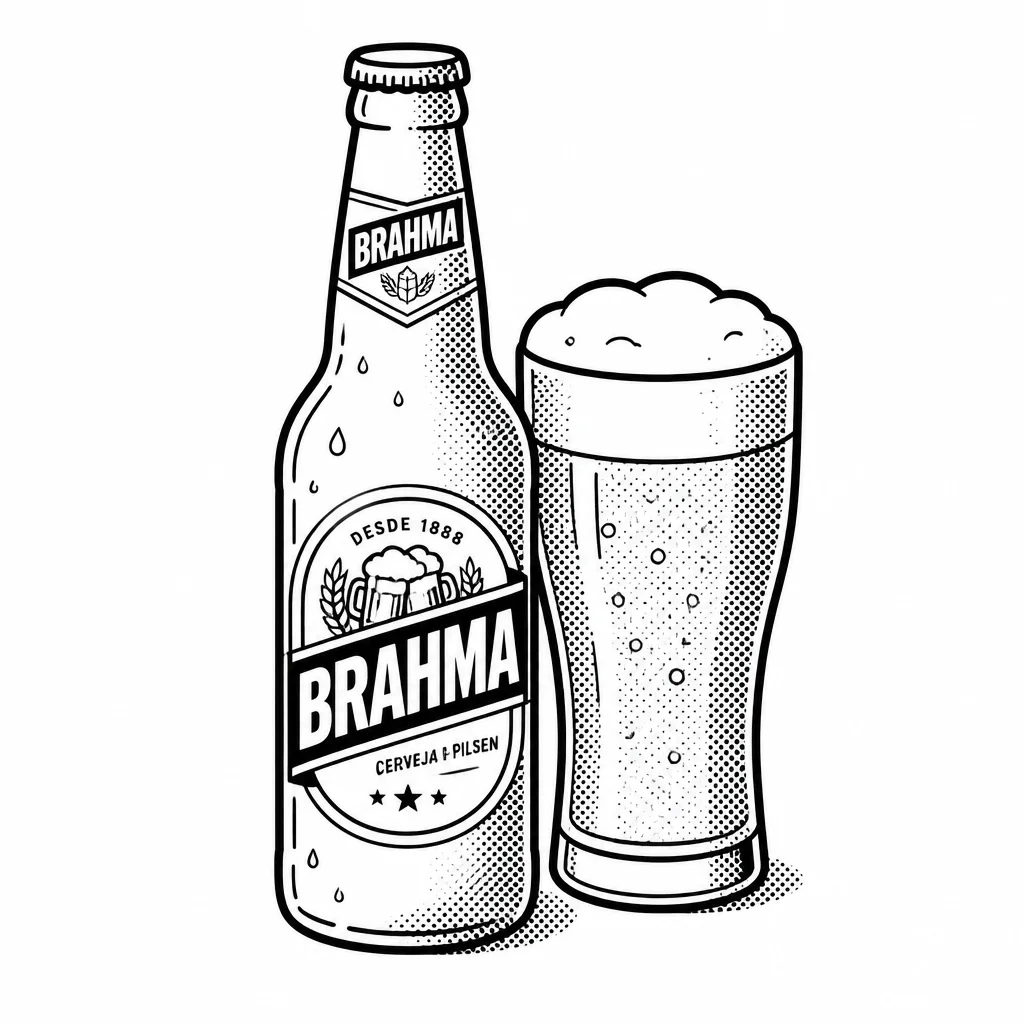
Ambev is a giant beverage company, and its simplest description is this: it makes beer. Lots of it. If you walk into a bar in Brazil, order a cold one, and it comes in a green bottle with a label people know by heart, there is a very good chance Ambev brewed it. Its biggest brand, Brahma, plus Skol and Antarctica, are everywhere in Brazil, and its beers and soft drinks travel across Argentina, Chile, and several other Latin American countries. In Canada, it owns Labatt, the brewer behind Blue and Budweiser north of the border.
The way it makes money is refreshingly easy to picture. It owns breweries, buys barley, hops, and water, and runs trucks that deliver bottles and cans to bars, corner stores, and supermarkets. Its real advantage is scale and route density: it has so many delivery trucks, and they visit so many shops so often, that a small tavern in a Brazilian town can get a fresh case of beer almost daily. Customers, mostly ordinary drinkers, pay a little more than the cost of making the beer, and the gap between those two numbers is the profit. Ambev is a public company but it is controlled by a group of billionaire investors through a holding structure, and it sits inside the massive global brewing empire of Anheuser-Busch InBev. That connection matters: Ambev acts as the Latin American arm of the world's biggest beer maker, sharing brands and know-how. Beer is a business where being big helps, because a company can squeeze better prices from suppliers like can makers and grain traders, and fewer competitors means more room to raise prices.
But do not mistake Ambev for a sleepy, steady utility. It faces real pressure. In its home market of Brazil, it competes hard with Heineken and with smaller, cheaper, local brewers that have been eating into its share. When Brazil's economy slows or consumers have less money, people trade down to cheaper beer or drink less, and Ambev feels it. There is also a quiet, steady cash machine underneath: Ambev generates a lot of spare cash and returns a large chunk of it to shareholders each year as dividends, plowing the rest back into winning more taps and fridges. Its main test is whether it can keep growing in Latin America while fending off rivals who want exactly the same customers.
Saved answer · last researched 9 Nov 2026
BIG PICTURE
In Brazil, Ambev sells about 6 of every 10 beers poured
- 60% Beer bought in Brazil that is Ambev's
- 40% Beer bought in Brazil from other brewers
Ambev holds roughly 60% of Brazil's beer market, a country of more than 200 million people where beer is the everyday drink. Its control runs deeper in smaller neighbors too, at over 65% in Argentina, El Salvador and Uruguay and over 70% in Bolivia. That grip on the region is why a single brewer's pricing and brand choices shape what much of Latin America drinks. Source: Morningstar, data from 2026
Timeline
Two Rivals Become One
For years, Brahma and Antarctica fought each other for every bottle of beer sold in Brazil. In 1999 they stopped fighting and joined forces instead, creating a holding company called Ambev that controlled more than 70% of the Brazilian beer market. That kind of dominance doesn't go unnoticed, so regulators stepped in to review the deal. Still, the merger gave the new company the size and muscle to become Latin America's largest brewer.
Regulators Set the Rules
Brazil's antitrust watchdog approved the combination but with conditions, to keep one company from owning the whole beer market outright. The price of approval: Ambev had to sell Antarctica's Bavaria brand, which went to Molson before the end of the year. Those conditions shaped how the new giant could operate in its own backyard.
A Global Giant Takes Control
A few years later, Ambev made a bold move: it swapped its controlling family's stake for shares in Interbrew, the Belgian brewing group that later became InBev. As part of the deal, Ambev picked up Interbrew's Labatt business in Canada. This tied Ambev to the global brewing group that remains its controlling shareholder to this day.
A Caribbean Foothold
Ambev then teamed up with E. León Jimenes to create the leading beverage company in the Caribbean. The deal brought Cervecería Nacional Dominicana into Ambev's books, and Ambev also bought Heineken's stake in that business. It was a clear push to expand across Central America and the Caribbean.
A Swap Reshapes Latin America
When controlling shareholder AB InBev agreed to merge with SABMiller, Ambev got pulled into the reshuffling. Ambev handed over its Keystone Global holdings in Colombia, Peru and Ecuador to AB InBev, and in return received Cerveceria Nacional in Panama. The swap redrew Ambev's map of Latin America.
A New CEO and New Brands
Jean Jereissati Neto took over as CEO at the start of 2020. Under him, Ambev leaned harder into digital ventures like Zé Delivery and Bees, and launched brands such as Spaten and Brahma Duplo Malte that took off. The focus shifted toward building brands and putting the consumer first.
Politics Hits the Stock
Then came a shock from outside the business. Ambev shares fell 15.5% in a single day after Lula da Silva's surprise election win. Investors worried about higher spending, more regulation and a weaker Brazilian real hurting the company's dollar-denominated results. It was a blunt reminder of how much Brazilian politics and economics can move the stock.
Winning Back Premium Beer
For roughly a decade, Ambev had underestimated how fast Brazilian drinkers were trading up to premium beer. That mistake stung, and management later admitted the period left scars. But after years of rebuilding its brand and category strategy, helped by digital tools like Zé Delivery and BEES, Ambev retook leadership of Brazil's premium beer segment in 2025.
A CEO Rotation
In 2026, Carlos Lisboa took over as CEO, while Jean Jereissati moved to lead the Central America zone. Lisboa had already run Central America and had served as CEO of LAS and Canada, and he had launched Skol back in 2001. The rotation fits AB InBev's habit of moving leaders around, and it signals that the strategy carries on.