Understand any stock in simple English
Hikari Tsushin, Inc.
Hikari Tsushin sells everyday essentials to small businesses in Japan — phone and internet lines, electricity, gas, insurance, and payment systems — and earns a commission or margin on each one.
Hikari Tsushin is a Japanese company that acts as a one-stop shop for small and medium-sized businesses. A neighborhood dentist, a ramen shop, a small factory: they all need phone lines, internet, electricity, insurance, and card payment machines, and most of them have neither the time nor the staff to shop around for each piece. Hikari Tsushin sells them all of that under one roof, and the customer gets one salesperson to call instead of five.
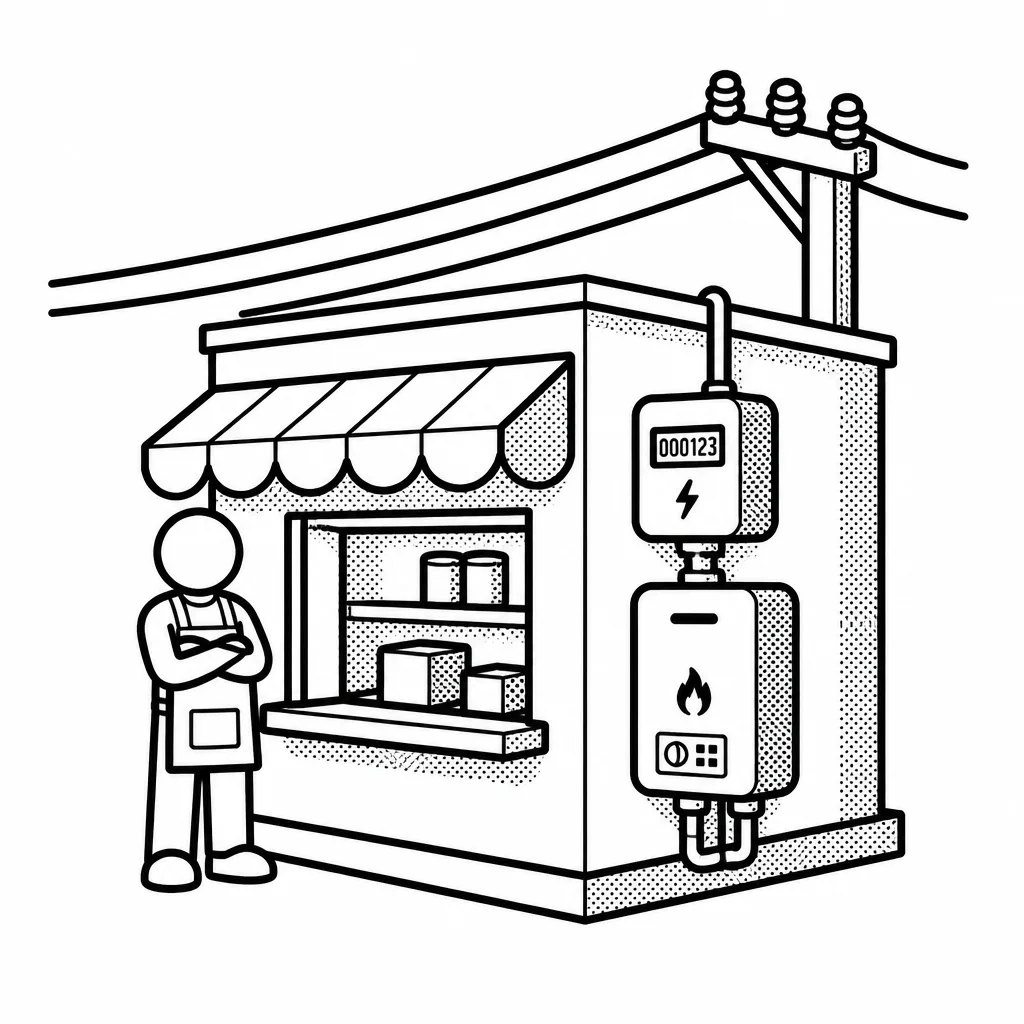
Its biggest engine is communications. The company signs small businesses up for fixed-line, mobile, and internet services from the big Japanese telecom carriers and collects a commission for each new contract it delivers. It also sells its own fiber and business phone services directly, which earns a steadier monthly fee. Then it layers on the rest: electricity and gas deals, insurance policies, and systems for taking payments and managing a small office. Each is a small add-on that makes the relationship stickier, since the more a customer buys, the less likely they are to leave. The business has an unusual structure worth knowing. A holding company sits at the top, and the actual selling and service work is done by hundreds of small, largely autonomous operating companies that Hikari Tsushin controls, most of which it owns a big stake in and some of which are separately listed on the Tokyo market. That setup lets managers run their own unit like a mini-business, and it has made the group a formidable machine at reaching small firms that big-name telecoms find too costly to chase one by one. It is also a hodgepodge of minority stakes, which means the reported profit partly reflects stakes it does not wholly own.
The company has been a remarkable survivor: it was one of the hottest stocks in the dot-com bubble in 2000 and then collapsed along with it, before rebuilding itself into a boring, cash-generating business. Today it throws off a lot of cash and uses its own balance sheet aggressively, holding large investment stakes and buying back its own shares. The vulnerability is straightforward: its core commissions depend on carriers continuing to pay for new contracts, so a slowdown in the telecom market or a regulator squeezing those payouts would hit the biggest source of profit. It is an unglamorous, deeply Japanese business that quietly sits in the middle of millions of very small transactions.
Saved answer · last researched 20 Nov 2026
BIG PICTURE
Hikari Tsushin's stake in other firms has returned 18% a year for nine years
- 18% Annual return on Hikari Tsushin's investment holdings
- 82% Return from other uses of the same money
Hikari Tsushin sells phone lines, power and insurance to small Japanese businesses, but it also holds large stakes in other companies. Over the last nine years those holdings have earned an 18% annual return, a pace most professional investors would envy. That side pocket of money now produces real profit of its own, which helps explain why the company's earnings can jump even when its main selling business grows slowly. Source: Hikari Tsushin Q1 FY2027/3 Earnings Presentation, data from 2026
Timeline
Hikari Tsushin Starts as a Phone Distributor
In the late 1980s, Japan broke up its phone monopoly and let new carriers compete. That created a simple problem: the new carriers had no way to reach customers. Hikari Tsushin solved it by becoming a distributor of mobile phones, buying handsets and signing people up on the carriers' behalf. In doing so, it basically invented the mobile-phone distributor business model in Japan.
The Stock Goes Parabolic
By the late 1990s, the internet was making investors dizzy with excitement, and Hikari Tsushin was a favorite. When its shares listed in the fall of 1999, they quadrupled within months, and the company became one of the most valuable in Japan. The founder was suddenly a star — and the stock price was running far ahead of the actual business.
The Crash and the Founder's Fall
Then the bubble popped, and Hikari Tsushin popped harder than almost anyone. After peaking in early 2000, the stock lost more than 99% of its value in nine months. The trigger was a surprise operating loss that contradicted earlier assurances of profit, along with accounting and scandal worries. The company cut more than 60% of its headquarters staff, and confidence in the founder was shattered.
A Misjudged Mobile Market
That first annual loss in 12 years came from a simple mistake. Hikari Tsushin's shops didn't stock NTT DoCoMo's popular i-mode phones, and the company was paying out overly generous commissions to its franchisees. So the money went out the door while the sales didn't come in. The founder publicly apologized and pledged his own fortune to help repay the debt — a rare and humbling moment for a man who had been treated as a genius.
Hikari Exits T-Gaia
Years later, the company had become something different: less a phone retailer, more an investor. In early 2025, it sold its stake in T-Gaia during a Bain Capital tender offer, giving up its spot as the largest shareholder. The sale marked the shift toward pure investment and actively managing a portfolio of businesses.
Leopalace21 Buyout
That investor playbook showed up again with Leopalace21, a housing company. Hikari Tsushin joined MBK Partners and NEC Capital Solutions in a consortium to take it private. It was the same move Hikari had made before: buy an undervalued subsidiary, then fix its operations.
Record Profits as a Conglomerate
For the year ending in March 2026, the numbers told the story of how far the company had come. Revenue rose 7% to ¥734.8bn and operating profit rose 11.1% to ¥116.7bn, with every profit category at a record high. Return on equity improved to 14.4%, and the dividend was raised to ¥751 per share, with more planned. Today Hikari Tsushin is a diversified conglomerate with seven segments, built on recurring revenue and investments — a very different creature from the phone distributor that once made Japan's stock market gasp.