Understand any stock in simple English
Enter a ticker to learn what the company does and how it makes money.
East Japan Railway Company
JR East runs Japan's biggest passenger railway network and sells everything from train tickets to apartments and hotels.
East Japan Railway is the giant train company that moves millions of people around Tokyo and northeastern Japan every day. Its famous green-striped trains are the arteries of the region — commuters tap their fare cards at stations, hop onto a train, and get where they're going in minutes. But the railway is just the front door. JR East also runs the shops, restaurants, and kiosks at its stations, operates hotels, and develops real estate around its tracks, turning transit hubs into places where people live, shop, and spend time.
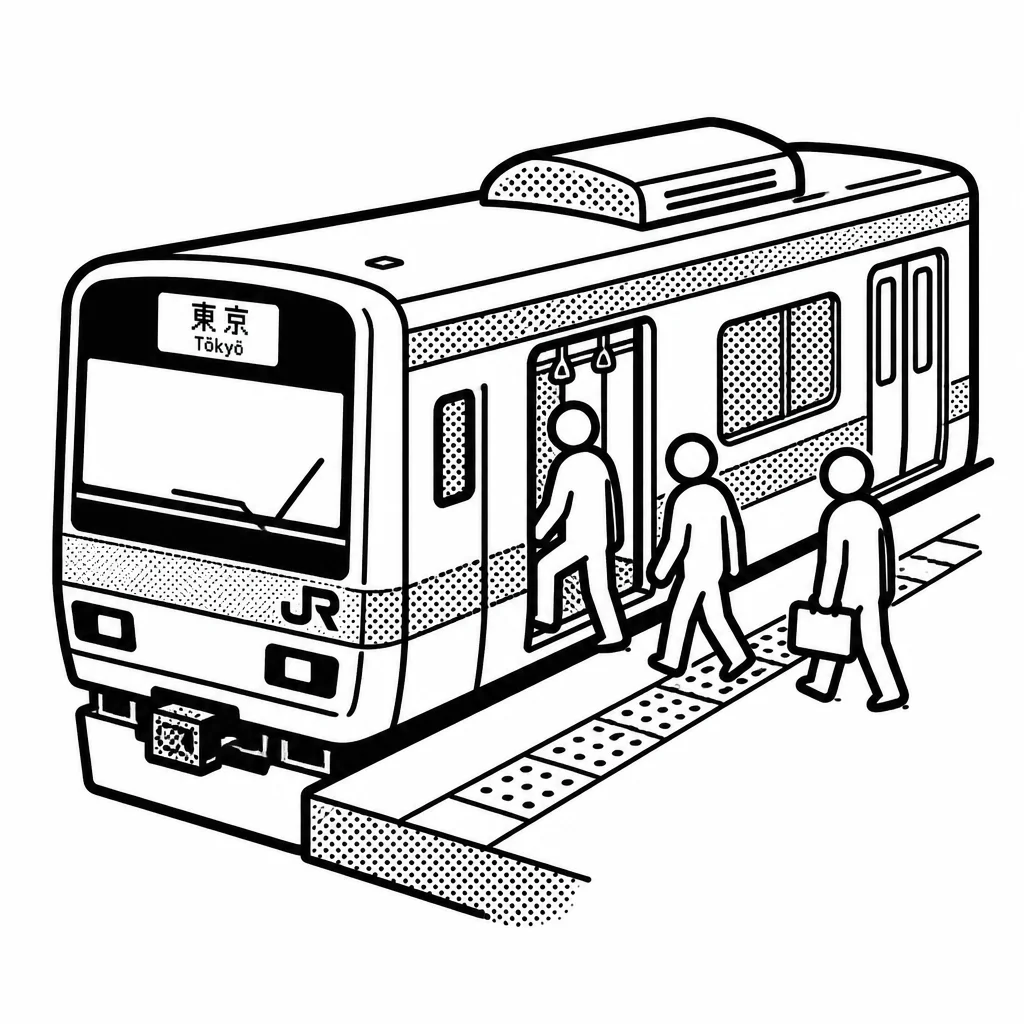
The core business is simple: people pay fares to ride the trains. Commuting traffic in the Tokyo area is the bread and butter, and it's steady because millions of people depend on the network to get to work. The company also earns money from the Shinkansen bullet trains linking Tokyo with cities to the north, which serve business travelers and tourists. Fares and station retail together form a huge, reliable cash machine built on the daily rhythm of Japanese life. What makes JR East unusual is how it uses the land it owns. Stations aren't just platforms — they're shopping centers, and the company builds offices and apartments around them so that ridership and real estate feed each other. That land bank is a moat competitors can't easily copy. The railway also faces real pressure: Japan's population is shrinking and aging, which means fewer long-term passengers, so the company keeps diversifying into retail and property to keep growing.
JR East is a huge, steady business, but it's not a high-margin tech story — railways are capital-intensive, and the company spends heavily on tracks, trains, and safety. It returns cash to shareholders too, mainly through dividends, and has a long history of paying out reliably. Big challenges include population decline, competition for tourist spending, and the cost of keeping a sprawling network running safely. But for anyone in eastern Japan, the green trains are simply how the day starts and ends.
Saved answer · last researched 12 Nov 2026
Timeline
A Railway Is Split Apart
In 1987, Japan took its government-run railway and broke it into pieces. One of those pieces, JR East, got the tracks around Tokyo and the northern Tohoku region — the busiest and most crowded part of the whole network. But here is the catch: this was called privatization, yet the government still owned it through a holding company. So for a while, JR East looked free but was still on a leash.
A Rough First Day on the Market
Six years later, the company sold shares to the public on the Tokyo Stock Exchange. The welcome was not warm. After the listing, the stock market fell for a long stretch — a drop of about a fifth — and many people blamed the weak reception of JR East's offering. A company that had just been let off the leash was learning that public markets can be a harsh judge.
The Government Lets Go
Then, in 2002, the last chunk of government-owned shares was sold off. That finished what started back in 1987: JR East was finally a fully public company, owned by ordinary investors rather than the state. The leash was gone for good.
A Train to the Airport
That same year, JR East bought into Tokyo Monorail and made it part of the group. Why does a railway company want a monorail? Because it runs to the airport — and that gave JR East a piece of the airport-access business, a new way to earn money beyond its own tracks.
Suica Becomes a Business of Its Own
Suica, the tap-and-go card, had always been treated as part of running trains. In 2007, the company moved it into its own headquarters alongside the IT team. That small reorganisation said something big: the card was no longer just a fare box. It was becoming a business pillar in its own right.
The Earthquake That Shook the Business
In 2011, the Great East Japan Earthquake hit. Trains stopped, tourism dried up, and the company's results got much worse. Its share price tumbled over those years, a reminder that a railway is tied to the land it serves — and the land can shake.
The Pandemic Empties the Trains
Nine years later, COVID-19 did something the earthquake could not: it kept almost everyone at home for months. Travel restrictions emptied the carriages, earnings fell hard, and the share price slid again. Twice in a decade, the world had found a way to stop people from riding.
A Fare Rise and a New Map
By 2026, JR East was ready to push forward again. It raised fares across the board for the first time since privatization — a bold move that added real money to the top line. Around the same time, it set out a new vision built on two ideas: moving people, and selling them lifestyle services around the stations. New developments like TAKANAWA GATEWAY CITY and OIMACHI TRACKS helped push revenue and profit to record highs. The company that once struggled to be let go was now setting its own course.
The Gate You Walk Through
And the next act was already being tested: a gate you simply walk through, no card or phone tap needed. Trials were set to begin in 2027, with plans to spread across hundreds of stations by the early 2030s. The little tap card from 2007 was evolving into something bigger — a lifestyle platform you barely have to touch.