Understand any stock in simple English
Enter a ticker to learn what the company does and how it makes money.
Central Japan Railway Company
JR Central runs the Tokaido Shinkansen bullet trains and regular railways, carrying millions of passengers between Tokyo, Nagoya, and Osaka.
JR Central is a railway company. Every day it moves huge crowds of people around Japan, mostly on the Tokaido Shinkansen — the famous bullet train that links Tokyo, Nagoya, and Osaka — plus a web of regular train lines serving the region around Nagoya. If you've seen a photo of a sleek white train gliding past Mount Fuji, that's almost certainly one of its trains.
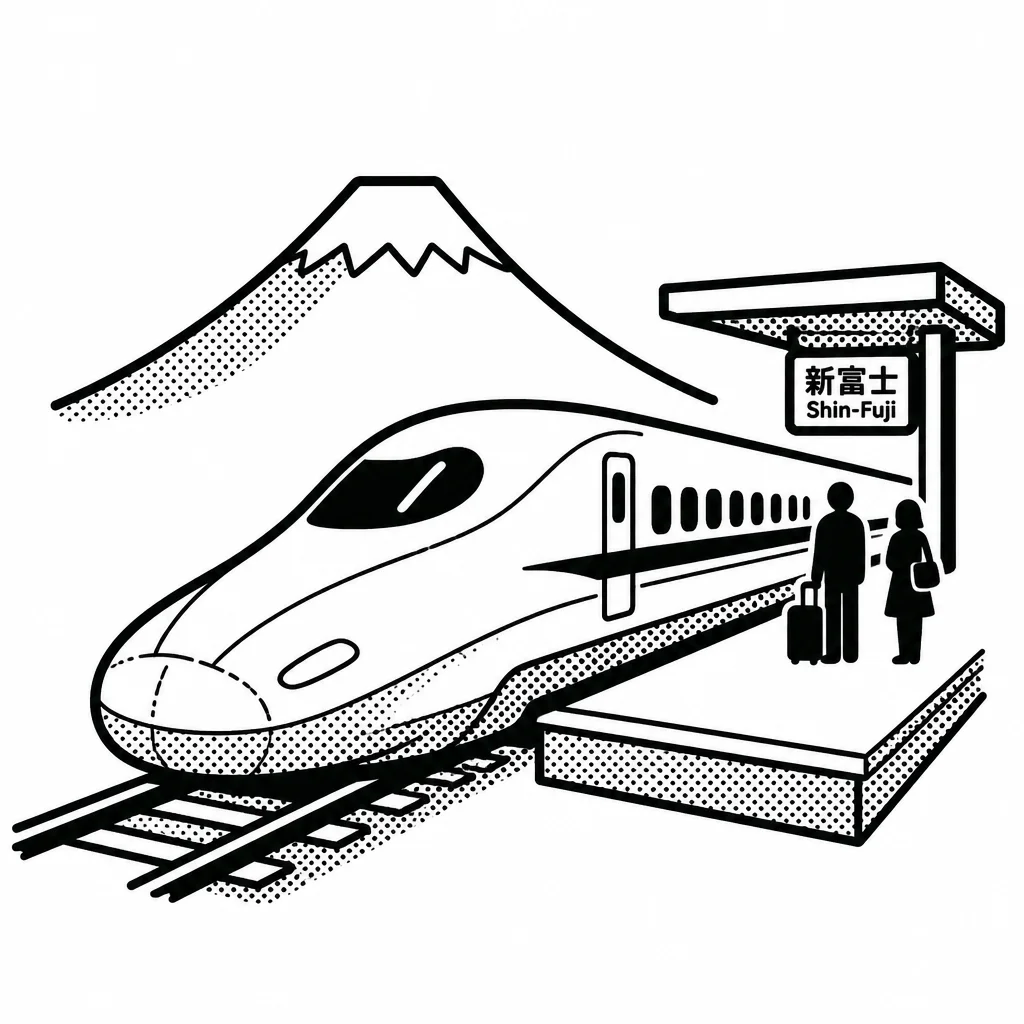
The Shinkansen is the heart of the business. The Tokaido line is the busiest high-speed rail route in the world, and it's popular because it's fast, punctual, and convenient: Tokyo to Osaka takes a little over two hours, city center to city center, with trains departing every few minutes. That reliability keeps business travelers and tourists coming back. JR Central also earns money from station retail and real estate around its lines, but ticket sales are what really pay the bills. The company is headquartered in Nagoya. Its position is unusually strong. There is no serious competitor on the Tokaido route — flying is slower once you count airport time, and buses take far longer. That gives JR Central pricing power and famously steady cash flow. It invests heavily in safety and earthquake readiness, since the line runs through one of the most earthquake-prone countries on earth. A big chunk of its recent spending goes toward building the Linear Chuo Shinkansen, a futuristic maglev line meant to eventually connect Tokyo and Osaka in about an hour. The project has run into serious trouble: Shizuoka Prefecture has refused to approve construction through its territory over environmental concerns about the Oi River, and the opening date keeps slipping.
The company likes to reward shareholders. It pays dividends and buys back its own stock — in one recent buyback it repurchased roughly 2.5% of its shares — while also carrying a large debt load to fund the maglev. The key things to watch are straightforward: how many people ride the trains, whether the maglev project ever gets unstuck, and whether Japan's falling population and the rise of remote work slowly chip away at the commuter crowds that fill its carriages.
Saved answer · last researched 12 Nov 2026