Understand any stock in simple English
Enter a ticker to learn what the company does and how it makes money.
Powertech Technology Inc.
Powertech packages and tests memory and logic chips for semiconductor makers around the world.
Powertech Technology does the unglamorous final steps that every chip needs before it can go into a phone, a laptop, or a data center. Chipmakers design and manufacture the actual silicon wafers, then hand them to Powertech, which cuts the wafers into individual chips, wraps each one in protective plastic or ceramic packaging, connects it to the outside world with tiny wires or solder bumps, and runs stress tests to make sure it survives heat, cold, and years of use. You never see Powertech's work, but almost every device you own has passed through a company like it.
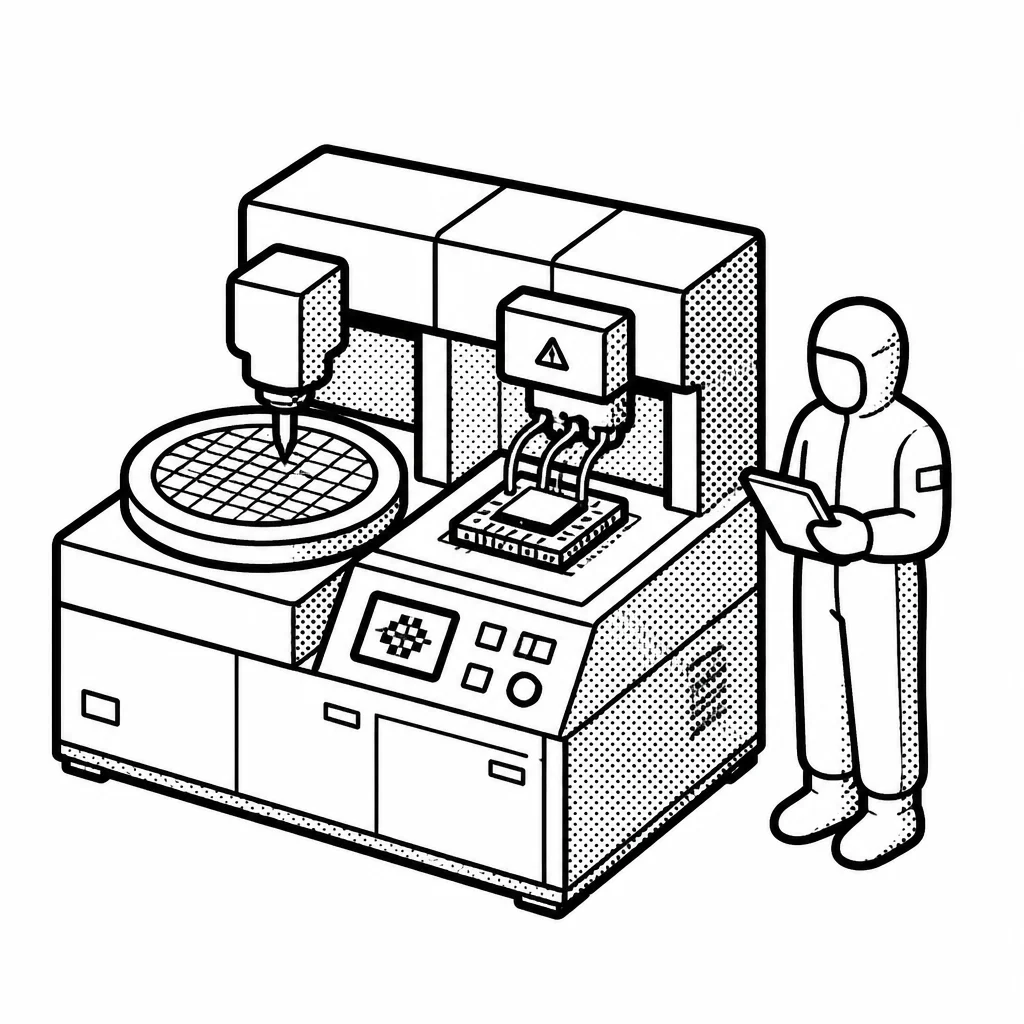
The business is built on memory. Powertech is one of the world's largest outsourced packaging and testing houses, and its biggest customers are the memory chipmakers — companies like Micron and SK Hynix — who would rather pay a specialist than build their own back-end factories. Powertech's specialty is advanced packaging for stacked memory, where multiple chips are piled on top of each other and wired together to cram more storage into a small space. That work is technically fiddly and capital-intensive, which is exactly why customers outsource it. The company earns money two ways: charging per unit for packaging and testing, and charging more for the advanced techniques that get chips into denser, faster configurations. Its edge comes from scale and know-how — the packaging recipes are tuned over years, and customers hate switching once a process is qualified. Powertech also leans on its close relationship with memory giants; in 2023 it sold a majority stake in its wholly owned subsidiary, Powertech Technology (Suzhou), a move that reshaped its China operations and its balance sheet.
Headquartered in Hsinchu, Taiwan, right in the heart of the island's chipmaking cluster, Powertech sits downstream of TSMC and alongside rivals like ASE Technology and King Yuan Electronics. The big risk is the memory cycle — when DRAM and NAND prices fall, memory makers cut output and Powertech's order book shrinks with them. The opportunity is the same thing that makes it necessary: as chips get denser and more complex, packaging and testing become harder and more valuable, not less.
Saved answer · last researched 12 Nov 2026
Timeline
Two Chipmakers Start Powertech
Powertech began in 1997 as a joint venture between two Taiwanese chipmakers, Powerchip and Macronix's investment arm Xincheng — the name itself is a mashup of 'Power' and 'Cheng'. Powerchip put up most of the money, so its man Huang Chongren took the chairman's seat. The idea was to package and test memory chips for other companies. But the orders didn't come, the factory sat half idle, and the young company lost money two years in a row.
Kingston Buys Half the Company
Salvation arrived in 1999 from an unusual place: Kingston, the big American memory-module maker, bought the entire cash raise at a modest price per share, putting real money into the business and taking half of it. Kingston's Far East boss Cai Dugong moved into the chairman's chair. In one stroke, a struggling startup had a deep-pocketed owner and a customer with a reason to keep it busy.
Powertech Lists in Taiwan
Five years later, the company went public on the Taiwan Stock Exchange. Listing gave it a public currency for raising money and a scoreboard the whole market could watch.
Powertech Bids for Greatek
For most of its life, Powertech had lived in one world: memory chips. That changed when it launched a public tender offer for Greatek Electronics, a logic-chip packaging and testing firm. Packaging memory and packaging logic chips are related crafts, but this deal pushed Powertech beyond its home base and set it on a path toward a broader business.
Advanced Capacity and a Merger
Two moves in 2014 widened the toolbox. Powertech bought a Singapore plant from Korea's Nepes, gaining the ability to do high-end bumping on large 12-inch wafers — a key step in advanced packaging. Later that year it absorbed Jucheng Technology in a simple merger, folding a smaller player into itself.
Micron Deal Takes Powertech to Japan
The biggest step outward came in 2017, when Micron agreed to sell Powertech its stake in Tera Probe, a testing company listed in Japan, plus its Japanese packaging plant. Combined with shares Powertech already owned, the stake crossed the halfway mark, making Tera Probe a subsidiary and turning the old Micron plant into Powertech Technology Akita. Suddenly the company had factories and customers in Japan.
Breaking Ground on Fan-Out Packaging
Chips were getting harder to shrink, so the industry began looking at packaging itself as a way to gain performance. Powertech broke ground on a new plant in Hsinchu Science Park to mass-produce Fan-Out Panel Level Packaging, a technique that spreads chips across a large panel instead of a small wafer to cut cost and boost capacity. The building topped out a couple of years later, marking the company's entry into the advanced-packaging race.
Powertech Moves into Image Sensors
The next growth bet was camera chips. Powertech set up a dedicated unit to package CIS — the image sensors inside phones, cars and security cameras — using its existing TSV know-how to make tiny wafer-level packages. It was another step away from memory and toward markets with more room to grow.
Buying a Factory from AUO
With AI and high-performance computing driving demand for advanced packaging, Powertech needed more room to build it. The board agreed to buy a Hsinchu factory from display maker AUO for billions of New Taiwan dollars, with plans to renovate it and install equipment in stages to speed up Fan-Out Panel Level Packaging production. The memory packager that once couldn't fill its lines was now buying plants to keep up.