Understand any stock in simple English
Enter a ticker to learn what the company does and how it makes money.
King Yuan Electronics Co., Ltd.
King Yuan Electronics tests and packages integrated circuits for chipmakers, and also sells burn-in machines and spare parts.
King Yuan Electronics is a chip testing and packaging company. When a chipmaker like TSMC finishes making a silicon wafer, the chips on it are not yet ready to go into a phone or a car. Someone has to cut them apart, wrap each one in a protective case with tiny metal legs, and then stress-test them to make sure they actually work and won't fail in the field. That someone is often King Yuan.
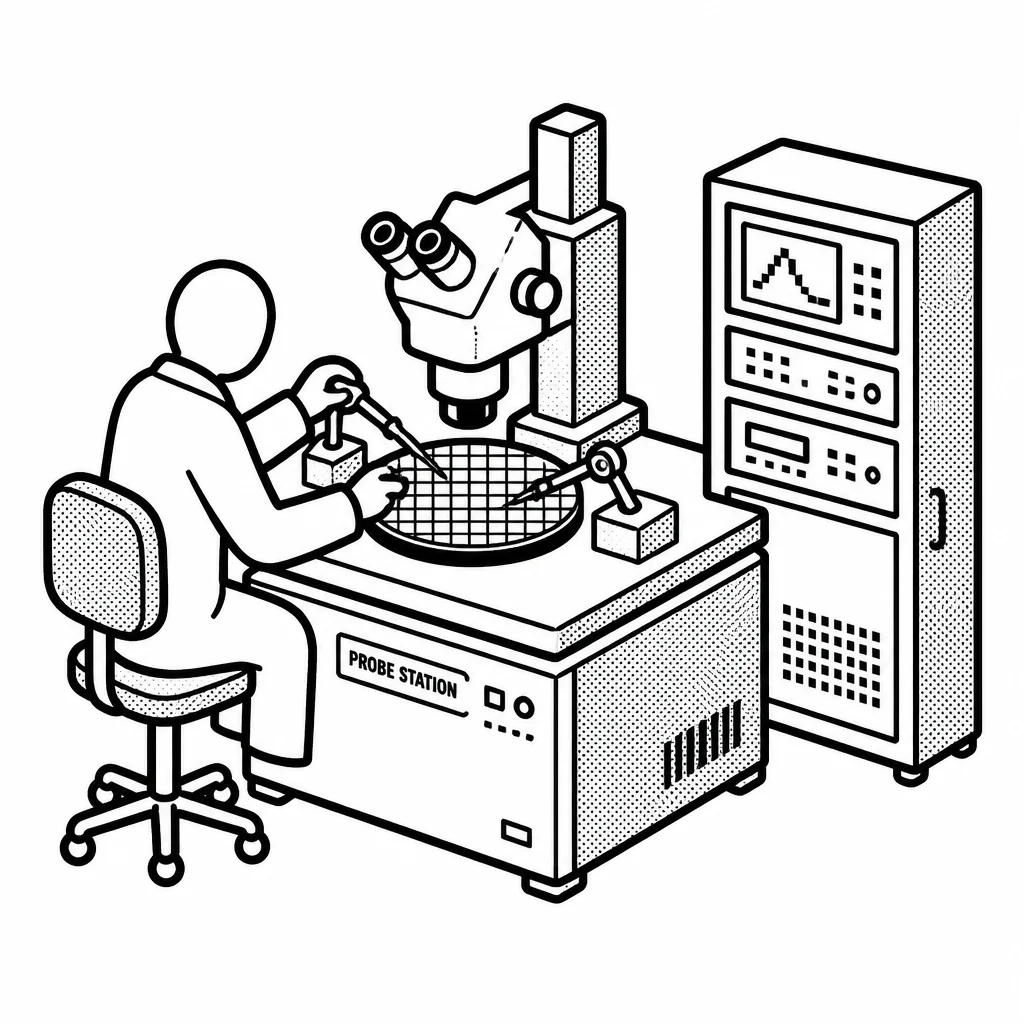
The testing part is the heart of the business. King Yuan runs huge rooms full of machines that put chips under heat, voltage, and time — a process called burn-in — to shake out the ones that would die early. This matters enormously to customers, because a chip that fails inside a car or a server is a disaster, and catching it at the factory is cheap. Chipmakers pay King Yuan for this service because building and running their own test floors is expensive and fiddly, and an independent specialist can do it for many customers at once. King Yuan also sells the burn-in machines and spare parts themselves, so it isn't purely a service shop. That gives it a second leg: customers who want to run their own testing can buy the equipment. The company is headquartered in Hsinchu, Taiwan, right in the middle of the island's chipmaking cluster, which keeps it physically close to the fabs that feed it work. Its main rivals are other Taiwanese test-and-packaging specialists, and the whole group rises and falls with the chip cycle.
That cyclicality is the catch. When chip demand booms, test capacity fills up and King Yuan makes good money; when demand cools, utilization drops and profits can fall fast. It is a capital-hungry business that must keep spending on new testers to stay relevant, and it depends on a small number of very large chip customers. So it is a solid, unglamorous toll booth on the chip supply chain — but one whose traffic depends on how hungry the world is for chips.
Saved answer · last researched 12 Nov 2026
Timeline
Packaging and Testing Startup
In 1987, Chin Kung Li started a company in Taiwan that did the unglamorous back end of the chip business: testing chips to make sure they work and packaging them so they survive inside a device. It was a service business — chipmakers designed and made the chips, and King Yuan checked and dressed them for the trip. Li ran the place for roughly 28 years.
Going Public in Hsinchu
After finishing its headquarters in Hsinchu in 2000, the company listed on the Taiwan Stock Exchange the next year, giving a pure-play test house access to public-market money. That capital mattered, because testing is a business of buying expensive machines and keeping them busy.
Buying Out Donglin
A joint-venture subsidiary came fully in-house in 2018, when the company bought out its partner's share of Donglin Precision for about NT$4.6 billion. A joint venture is a business you share with someone else; this deal meant King Yuan no longer shared the profits or the decisions — though the benefits were expected to show up more than a year later.
A New President
In 2023, President Liu An-hsuan stepped down for family reasons, and Gauss Chang — an executive who had been at the company since 2000 and knew its commercial side — took over that September. Chang would become the face of the company's push overseas.
A Chairman Steps Aside
At the 2026 annual meeting, shareholders elected Hsieh Chi-Chun as chairman, ending Lee Chin-Kung's roughly 28-year run. A quiet handover at the top of a family-influenced Taiwanese industrial firm — the kind of change that says a founder era is closing.
Nvidia's Prepayment
The overseas push got its biggest boost through a US subsidiary, AeternZ, backed by an unusual deal: Nvidia prepaid US$1.1 billion to reserve test capacity, money that funds a new US test facility and equipment aimed at mass production in 2027. It was one of the largest overseas test buildouts in years, and it parked King Yuan right in the path of AI chip demand. A customer paying years ahead is a strong signal it expects to need you badly.
Record Revenue on AI Demand
All that positioning showed up in the numbers: October 2026 monthly revenue hit a record NT$4.4 billion, up almost 30% from a year earlier, and the first ten months already beat all of 2025. AI chip testing was the engine, and the fourth quarter was expected to set more records.