Understand any stock in simple English
Enter a ticker to learn what the company does and how it makes money.
Rechi Precision Co., Ltd.
Rechi Precision makes the small compressors that sit inside air conditioners and refrigerators, and it sells them to the brands that build those appliances.
Rechi Precision makes the hard-working little pump at the heart of an air conditioner — the compressor. Every AC unit needs one to move refrigerant around and actually make cold air, and Rechi builds them by the millions and sells them to the companies that assemble room air conditioners and other cooling equipment. It is one of the world's largest makers of these small compressors, competing mostly from Taiwan and China.
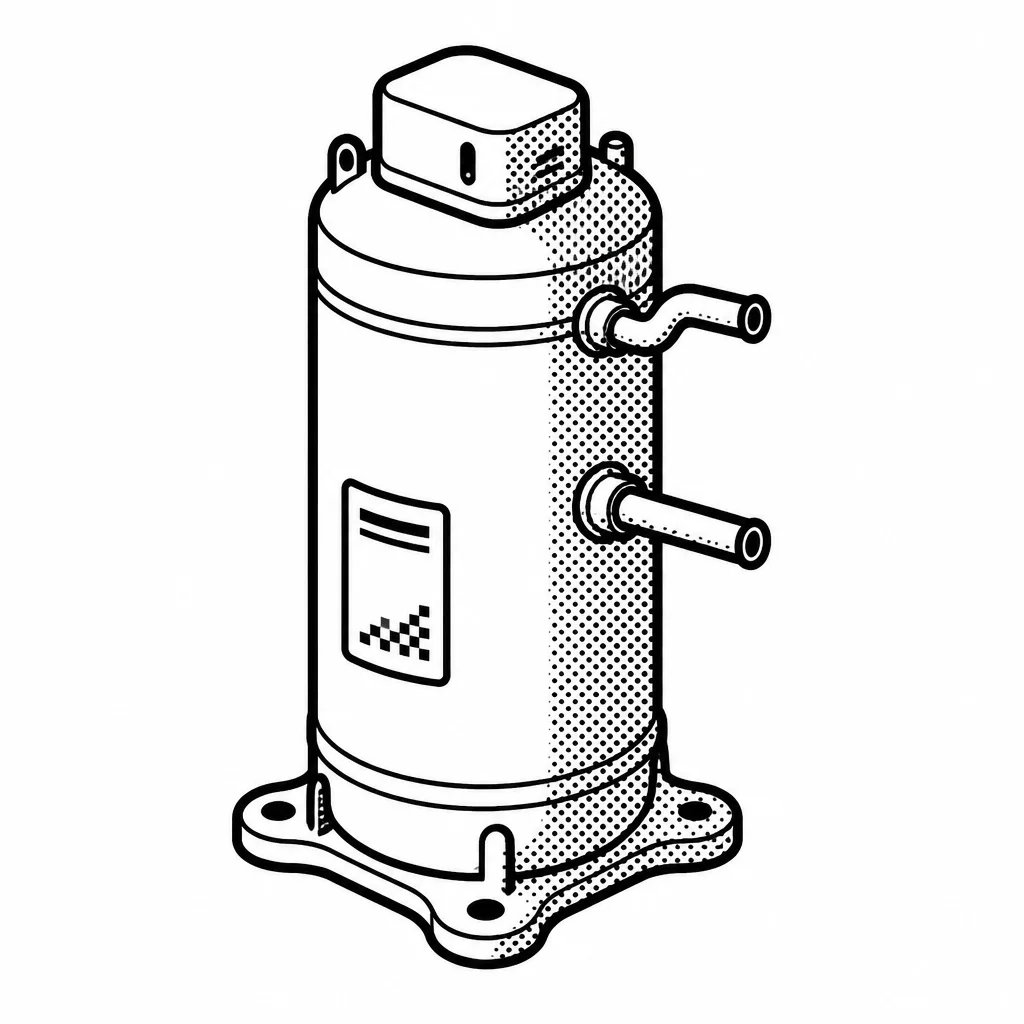
The business is simple in principle: a compressor is a sealed metal can full of precision-made parts, and making one cheaply and reliably at huge scale is genuinely hard. Rechi's customers are appliance brands and original equipment manufacturers, many of them in China, who bolt the compressor into their finished units. Those customers care about price, energy efficiency, and whether the part lasts — a failed compressor means an angry homeowner and a warranty claim, so reliability matters more than a few cents of savings. The catch is that this is a cyclical, competitive business. Demand rises and falls with weather, housing, and consumer spending on appliances, and the air conditioning market is heavily tied to hot summers and construction cycles. Rechi also faces intense price pressure from large Chinese compressor makers, and it has expanded into China itself to be close to customers and keep costs down.
Its ownership ties are worth knowing: Rechi is part of the group associated with Panasonic, which has held a stake in the company, giving it a deep-pocketed partner and a channel into appliance makers. For investors, Rechi is essentially a bet on global air conditioning demand — a steady, unglamorous parts supplier whose fortunes swing with the appliance cycle rather than with any single flashy product.
Saved answer · last researched 8 Nov 2026
BIG PICTURE
Rechi now makes roughly 9 of every 100 compressors sold worldwide
- 8.6% Rechi Precision
- 91.4% Others
Rechi sells the compressors that keep air conditioners and fridges cold, and it now holds 8.6% of the global market, up from 7.5%. That is a small slice of a giant industry, but it makes Rechi one of the few compressor makers still winning volume while rivals shrink. It earns that business by selling to appliance brands, so every point of share is money that would otherwise go to a competitor. Source: BigGo Finance (Rechi Precision FY2026 H1 Earnings Call), data from 2026
Timeline
Three Companies Build a Compressor Maker
In the late 1980s, Taiwan bought every air-conditioner compressor it needed from Japan. That bothered people, so three local companies — Sampo, Tairui Electronics and Tatung — joined forces to build their own. The new company, founded at the end of 1989, set out to do its own research on the key parts inside air conditioners and heat pumps, and to help Taiwan's industry move up a level. It worked: today Rechi is the world's fourth-largest compressor producer, part of the Sampo Group.
The Guanyin Plant Starts Production
A company that only designs things still needs a place to make them. That place arrived at the end of 1993, when the Guanyin plant in Taoyuan began production and gave Rechi a home base for manufacturing.
Approved for the Over-the-Counter Market
In September 2002, the GreTai Securities Market gave the nod for Rechi to list its shares on Taiwan's over-the-counter market. It was the company's first step into public markets.
Moving Up to the Main Board
The over-the-counter market was only a stepping stone. In 2003 Rechi went public on the Taiwan Stock Exchange, moving up from the OTC market to the main board in August.
Qingdao Plant Joins the China Footprint
Rechi had already built factories in China — TCL Huizhou in 2001, Dongguan in 2002 — and in October 2006 its Qingdao precision machinery plant began production, stretching that mainland footprint further.
Inverter Compressors Reach Japan
Rechi had spent years making its products greener, switching to eco-friendly refrigerants in Europe and North America and pushing high-efficiency DC inverter compressors into China and Japan. In October 2009, those inverter compressors finally made it into the Japanese market — a tough crowd to please.
A Joint Venture with Daikin in India
India was adding air conditioners fast, so in December 2024 Rechi formed a joint venture with Daikin Airconditioning India to make and sell compressors there. The plan turned into a rotary compressor plant with a price tag of about ₹547 crore, and ground was broken in February 2026.
The Chairman Also Becomes CEO
In May 2025 the board gave Chairman Chen Sheng Tien the CEO job too. It was a simple move with a big point: put the person setting the strategy in direct charge of carrying it out.
Growing Sales, Squeezed Margins
In the first half of 2026 Rechi sold more compressors, lifting its global market share from 7.5% to 8.6% — but copper and rare-earth costs pushed gross margin below 14%. The answer was to speed up aluminum-wire inverter designs for a second-half rollout and to chase new growth in electric vehicles, AI server cooling and robotics. The company also kept expanding overseas, with India aiming for six million units within three years and total annual capacity headed from 23-24 million toward 26-30 million units.