Understand any stock in simple English
Enter a ticker to learn what the company does and how it makes money.
GigaDevice Semiconductor Inc.
GigaDevice designs and sells memory chips, microcontrollers, sensors, and analog chips that go into consumer gadgets, cars, and industrial machines.
GigaDevice is a chip designer. It doesn't own fabs or build the factories that print silicon wafers — it draws the circuits, writes the software that makes them work, and pays foundries to manufacture the physical chips. Its four product families are flash memory (the NOR flash chips that store code in everything from earbuds to car dashboards), microcontrollers (the tiny computers that run motors, sensors, and appliances), sensors, and analog chips. Customers are electronics makers in consumer, automotive, and industrial markets. They buy GigaDevice parts because the chips are cheap, reliable, and available in huge volumes — and because GigaDevice has built a reputation as a domestic Chinese alternative to foreign suppliers like STMicroelectronics and Infineon in microcontrollers and Winbond in NOR flash.
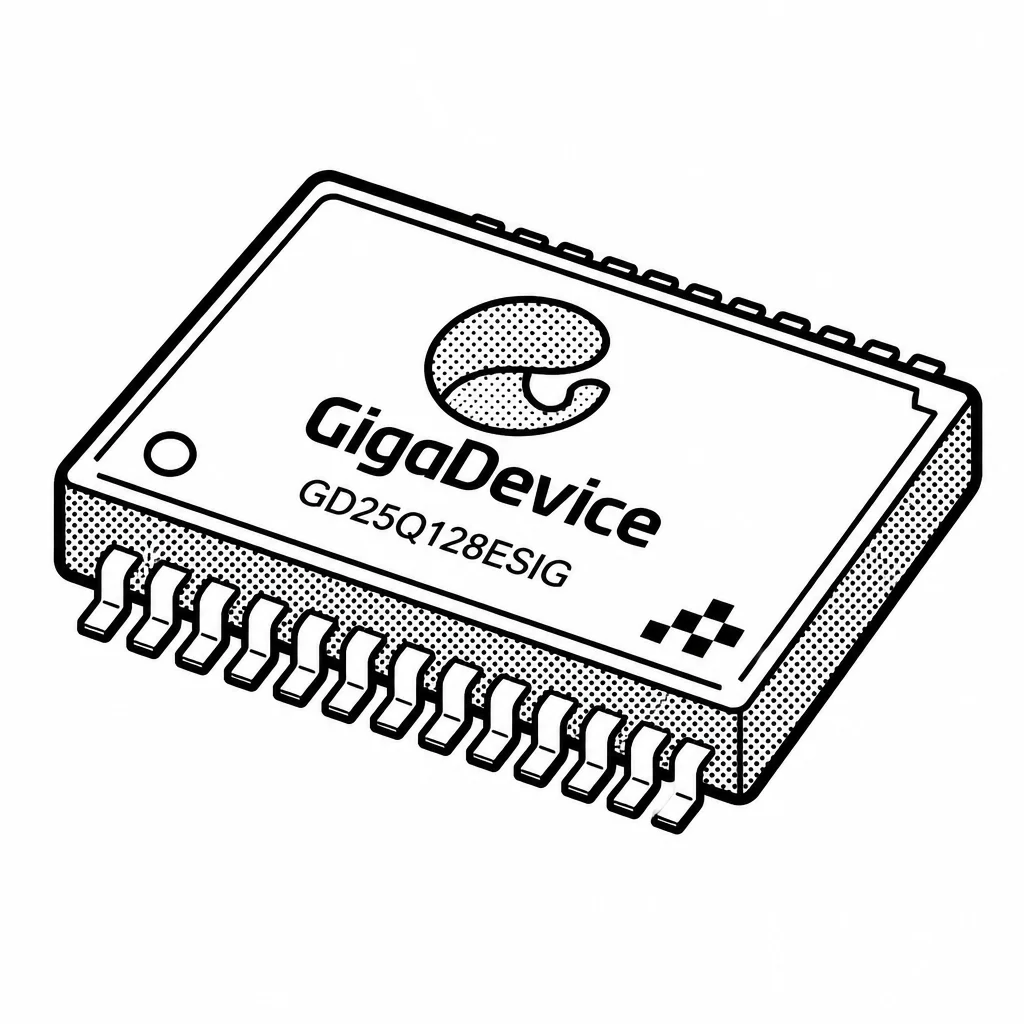
The business model is classic fabless chipmaking: design once, sell the same part millions of times, and let volume do the work. NOR flash is a good example. It's a humble memory chip — not the big DRAM or NAND used for storage, but a small chip that holds the startup code in a device. It's in cars, routers, smart meters, and medical gear. GigaDevice became one of the world's largest NOR flash suppliers, and that steady cash flow helped fund its push into microcontrollers, where it now offers hundreds of part numbers and competes directly with much larger rivals. Sensors and analog chips are newer, smaller bets aimed at selling more content per device. The company's edge is cost and speed. It designs in China, sells to Chinese electronics manufacturers who want local supply, and keeps prices low. That works beautifully in good times and hurts in bad ones: chip prices swing hard, and when the market is flooded with inventory, memory prices can fall faster than costs. GigaDevice's revenue is exposed to those cycles, and its microcontroller business faces tough competition from global giants with deeper product lines and software ecosystems.
One fact worth knowing: GigaDevice started in 2005 and built its name on NOR flash before expanding into microcontrollers in 2013, a move that turned it from a memory supplier into a broader chip company. It listed on the Shanghai Stock Exchange and later added a Hong Kong listing. The company spends heavily on research and development and reinvests most of its profits into new chip designs rather than paying big dividends — a sensible choice for a chipmaker that has to keep pace with much larger competitors.
Saved answer · last researched 12 Nov 2026