Understand any stock in simple English
Enter a ticker to learn what the company does and how it makes money.
Doosan Fuel Cell Co., Ltd.
Doosan Fuel Cell makes fuel cells that generate electricity and heat from hydrogen, selling them mainly to Korean power producers and building owners.
Doosan Fuel Cell builds power plants that fit in a shipping container instead of on a hillside. Its fuel cells combine hydrogen-rich fuel with oxygen in an electrochemical reaction — no burning — to make electricity and useful heat on site, quietly and with far less pollution than a coal or gas plant. The main customers are utilities and large building owners in South Korea who need steadier, cleaner power close to where it is used.
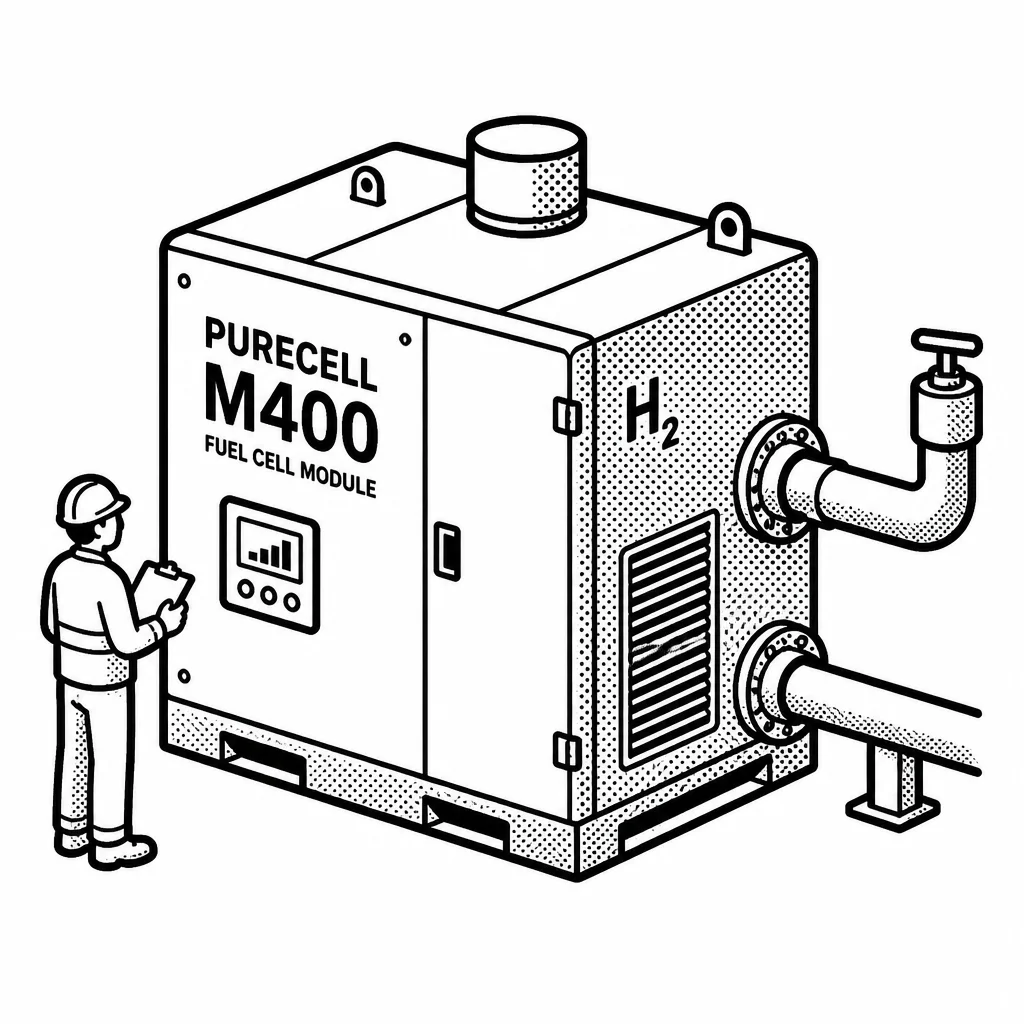
The company sells two main products. One is a phosphoric acid fuel cell, a workhorse box that runs on natural gas and has been installed at hospitals, data centers and office buildings for years; it produces steady electricity plus hot water. The other is a solid oxide fuel cell, a newer, higher-temperature design that can run on fuels like natural gas, biogas or hydrogen and is efficient enough to be paired with industry. Customers buy these because they value reliable on-site power, government support for hydrogen and fuel-cell deployment in Korea, and long-term fuel savings — not because the boxes are cheap. The business is brutally capital-heavy and lumpy. Each project is a big upfront sale, revenue swings with how many units get delivered and serviced, and the company has generally lost money as it funds factories and next-generation products. It has pinned much of its future on hydrogen: Korea's plan to build a hydrogen economy, a push into fuel cells for ships, and a joint venture with Hyundai Motor on hydrogen fuel-cell systems for marine and other uses. Doosan Fuel Cell also bought a stake in a hydrogen tank and fueling specialist to widen its offering. The catch is that hydrogen infrastructure in Korea is still thin, so the company's growth depends on government policy and utility orders arriving on schedule.
If you are trying to judge the business, watch one number: how many fuel cells actually get installed and serviced each year, and whether the company can turn a profit on them. Sales of boxes are one-time; the real gold is the long service life of each unit, which brings recurring maintenance revenue. Until hydrogen demand scales up and manufacturing costs come down, the company is a bet on Korean energy policy and on its ability to hold its lead at home against Ceres Power-style technology rivals and cheaper gas engines.
Saved answer · last researched 16 Nov 2026