Understand any stock in simple English
Enter a ticker to learn what the company does and how it makes money.
Kinsus Interconnect Technology Corp.
Kinsus makes the specialized circuit boards that carry and connect computer chips inside phones, computers, and other electronics.
Kinsus makes the tiny, incredibly complicated circuit boards that sit between a computer chip and the rest of the device. These are called IC substrates, and they do the unglamorous but essential job of routing electrical signals from a chip's microscopic pins out to the larger circuit board around it. Without them, a modern processor couldn't talk to memory, power, or anything else. Kinsus also makes regular printed circuit boards, but the substrate business is the heart of the company.
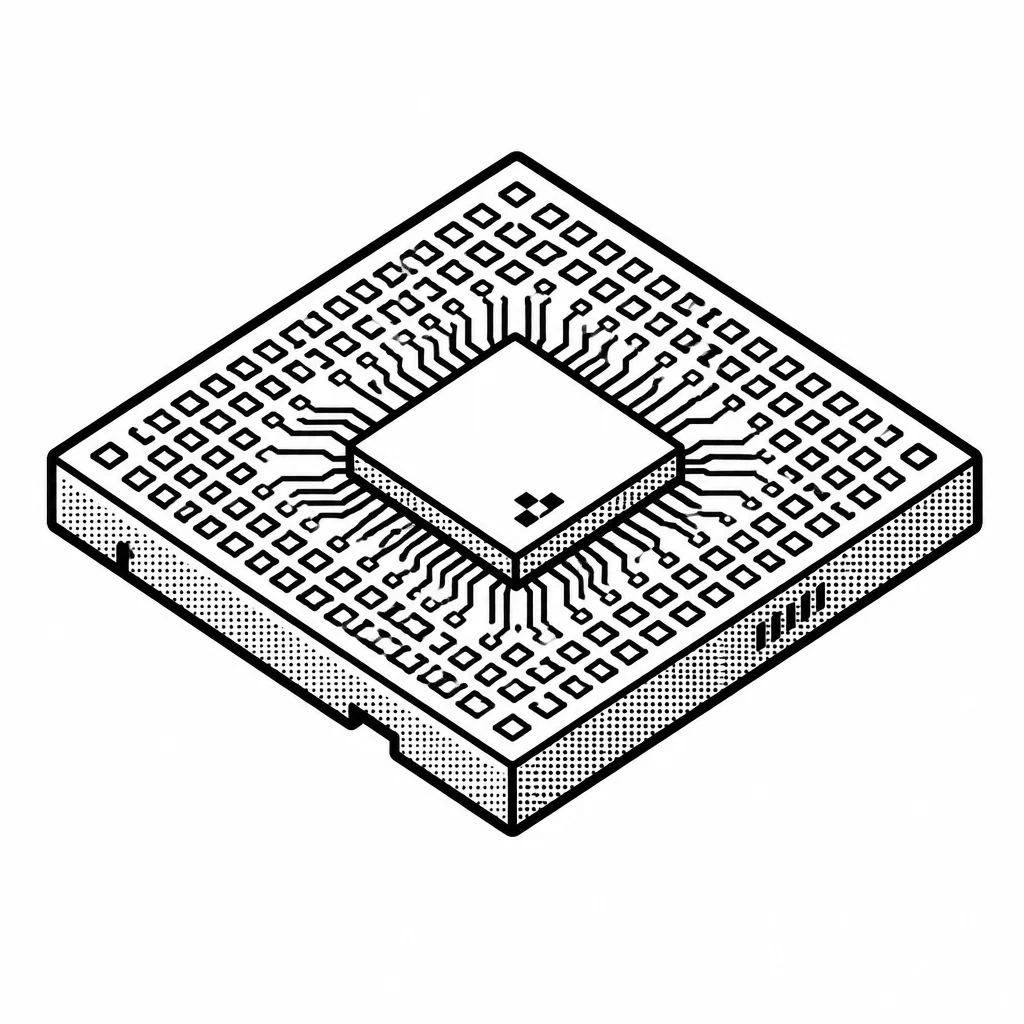
The hardest part of this business is precision. A chip substrate is packed with thousands of hair-thin copper traces and microscopic holes, and it has to survive the heat of soldering a chip onto it without warping or cracking. Customers pay Kinsus because building these things at high volume with few defects is brutally difficult, and a failed substrate can ruin an expensive chip. Kinsus is based in Taoyuan, Taiwan, and sells mostly to chip packaging and assembly companies and to chipmakers themselves, who then sell finished components to phone and computer brands. The customer list is concentrated, which cuts both ways: big orders bring big revenue, but losing one major customer hurts. The industry's center of gravity has shifted toward flip-chip substrates, which connect a chip face-down rather than with wire bonds and can handle far more connections. Kinsus has invested heavily in this area and in the advanced substrates needed for AI and networking chips, a segment where demand has been strong. It competes with much larger players like Unimicron and Nan Ya PCB in Taiwan, plus big Japanese and Korean rivals, so it lives or dies on manufacturing yield and keeping up with each new chip generation. Substrate supply has historically been tight during boom times, giving makers pricing power, but downturns hit hard because factories are expensive to run even when orders slow.
Kinsus has spent heavily on new plants and capacity, which is the kind of bet that pays off only if demand shows up on schedule. The company has also returned cash to shareholders through dividends in profitable years. Its vulnerability is straightforward: it depends on a handful of customers, on the health of the consumer electronics and AI hardware cycles, and on staying ahead on the technical roadmap. When chips get more complex, substrates get harder to make — and that difficulty is exactly what keeps Kinsus in business.
Saved answer · last researched 12 Nov 2026