Understand any stock in simple English
Enter a ticker to learn what the company does and how it makes money.
Nan Ya Printed Circuit Board Corporation
Nan Ya PCB makes the printed circuit boards and chip substrate boards that electronics manufacturers build their products around.
Every electronic device needs a skeleton — a flat board that holds the chips and carries the tiny electrical signals between them. Nan Ya PCB makes those skeletons. It produces ordinary printed circuit boards, the green (or blue, or black) slabs inside computers, TVs, and networking gear, and it also makes the harder, fancier version: IC carrier board substrates, the miniature boards that sit directly under a processor and connect it to the rest of the system.
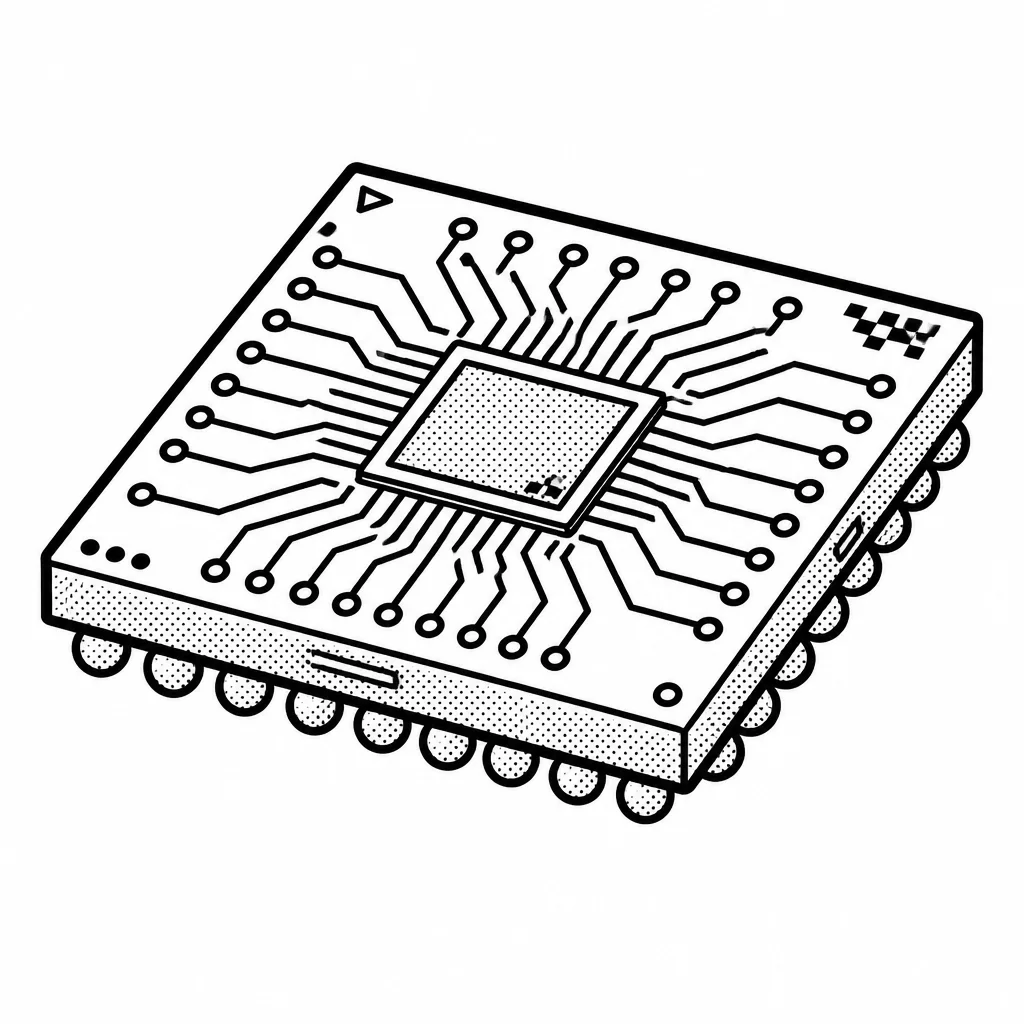
The substrate business is the one that matters most. A modern chip, like the ones made by Nvidia or AMD, has thousands of microscopic connection points packed into a space the size of a fingernail. The substrate has to route all those signals out to the motherboard without losing them or letting them interfere with each other. Few companies in the world can make these at high volume, and that short list is why substrate makers have enjoyed strong pricing power in recent years. Nan Ya PCB is one of the small club of suppliers, alongside bigger names like Ibiden of Japan and Unimicron of Taiwan. Nan Ya PCB is part of the Formosa Plastics group, one of Taiwan's biggest industrial conglomerates, and it is based in Taoyuan, near Taipei. That family connection gave it patient capital and deep manufacturing know-how, but the group's other companies are also major customers of the electronics industry, which helps explain how the business got started. The company's plants sit in Taiwan and China, and its customers are the chip packagers and electronics assemblers who buy substrates and boards in bulk — mostly in Asia.
For years the business was cyclical and unglamorous, with profits rising and falling with the PC and consumer electronics cycle. Then AI servers arrived. The huge accelerator chips at the heart of AI data centers need far more advanced substrates — bigger, denser, with many more layers — and supply has been tight. Nan Ya PCB has been investing heavily to expand that capacity. The risk is equally clear: this is a capital-hungry business where a single advanced substrate plant can cost billions, demand is lumpy, and competitors are racing to add supply. When the cycle turns, prices fall fast. Still, for now, the company sits in a genuinely scarce spot in the AI supply chain, and that is the whole investment story.
Saved answer · last researched 12 Nov 2026