Understand any stock in simple English
Enter a ticker to learn what the company does and how it makes money.
Chunghwa Telecom Co., Ltd.
Chunghwa Telecom sells phone, internet, and data services to people and businesses in Taiwan.
Chunghwa Telecom is Taiwan's biggest phone and internet company. It sells mobile plans, home broadband, and fixed-line phone service to millions of ordinary people, and it also builds networks and IT systems for businesses and government agencies. If you live in Taiwan, there is a good chance your internet comes through a cable or fiber line this company owns.
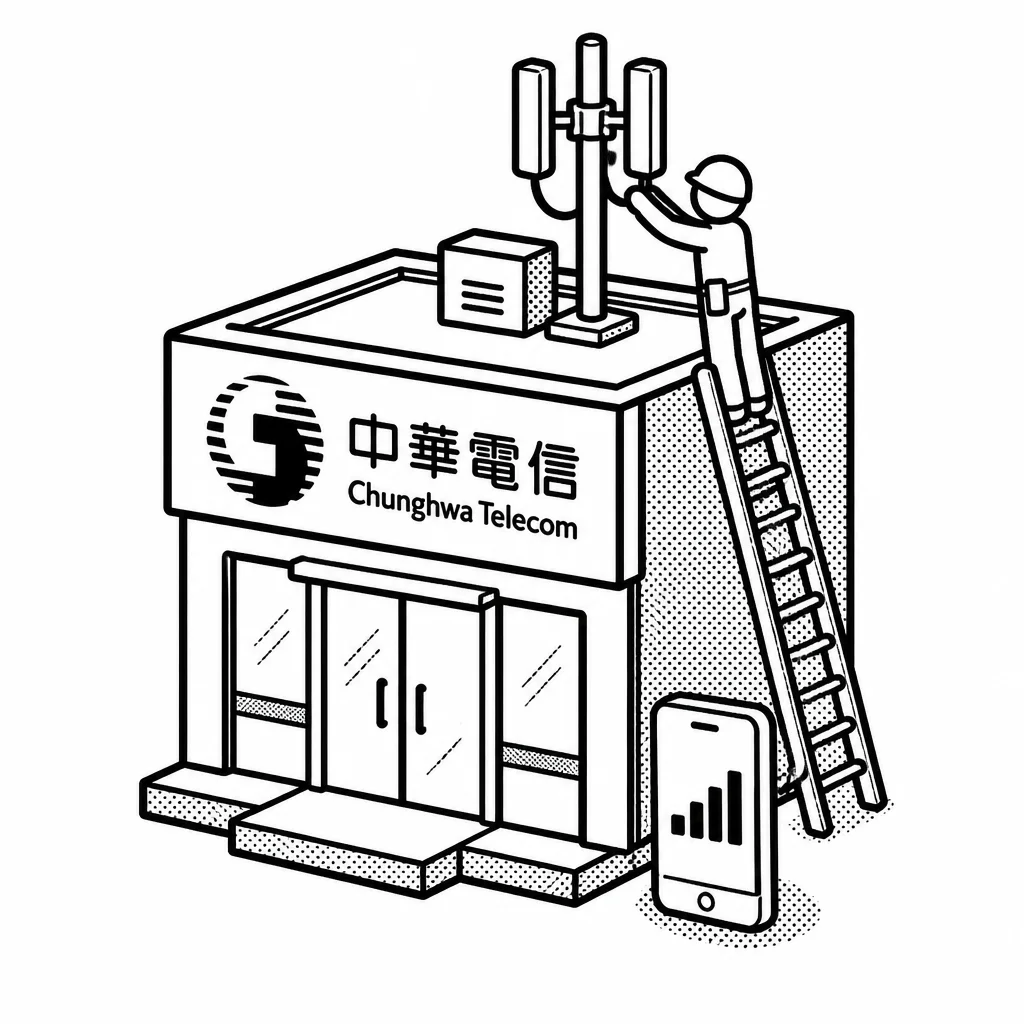
The business rests on a simple foundation: it built and owns the physical network — the cables, the cell towers, the undersea links connecting Taiwan to the rest of the world. Rivals have to lease access or build their own costly infrastructure, while Chunghwa already has the pipes in the ground. That head start in mobile, broadband, and fixed-line gives it a steady base of subscribers who pay every month, which is why the company is often treated as a reliable dividend stock rather than a fast grower. Beyond consumer plans, it has pushed into enterprise technology: cloud services, cybersecurity, data centers, and smart-city projects. This is the growth story, because plain phone service in a mature market like Taiwan does not expand much — the population is not growing, and mobile prices are competitive. The company has also invested in overseas capacity, including undersea cables and data centers, to capture demand from the AI and cloud boom. Competitors include Taiwan Mobile and Far EasTone in the local market.
Chunghwa is majority-owned by the Taiwanese government, which shapes both its stability and its limits. It generates plenty of cash and returns much of it to shareholders through dividends, a big reason income investors like it. The flip side is that it operates in a small, saturated home market, so growth depends on selling more services to businesses and expanding abroad rather than signing up more phone customers. It is a utility-like giant: dependable, deeply embedded in daily life, and not especially exciting — which is exactly the point.
Saved answer · last researched 12 Nov 2026