Understand any stock in simple English
Enter a ticker to learn what the company does and how it makes money.
Chroma ATE Inc.
Chroma makes the testing machines and measurement equipment that electronics and chip makers use to check their products work properly before shipping them.
Chroma ATE is a testing company for the electronics world. When a factory finishes making a power supply, a chip, a solar panel, or a battery, someone needs to prove it actually works and won't fail — Chroma builds the machines and software that do that proving. Its customers are the manufacturers themselves, mostly in semiconductors, power electronics, electric vehicles, and displays, who buy Chroma's test systems and then pay it to install, repair, and maintain them.
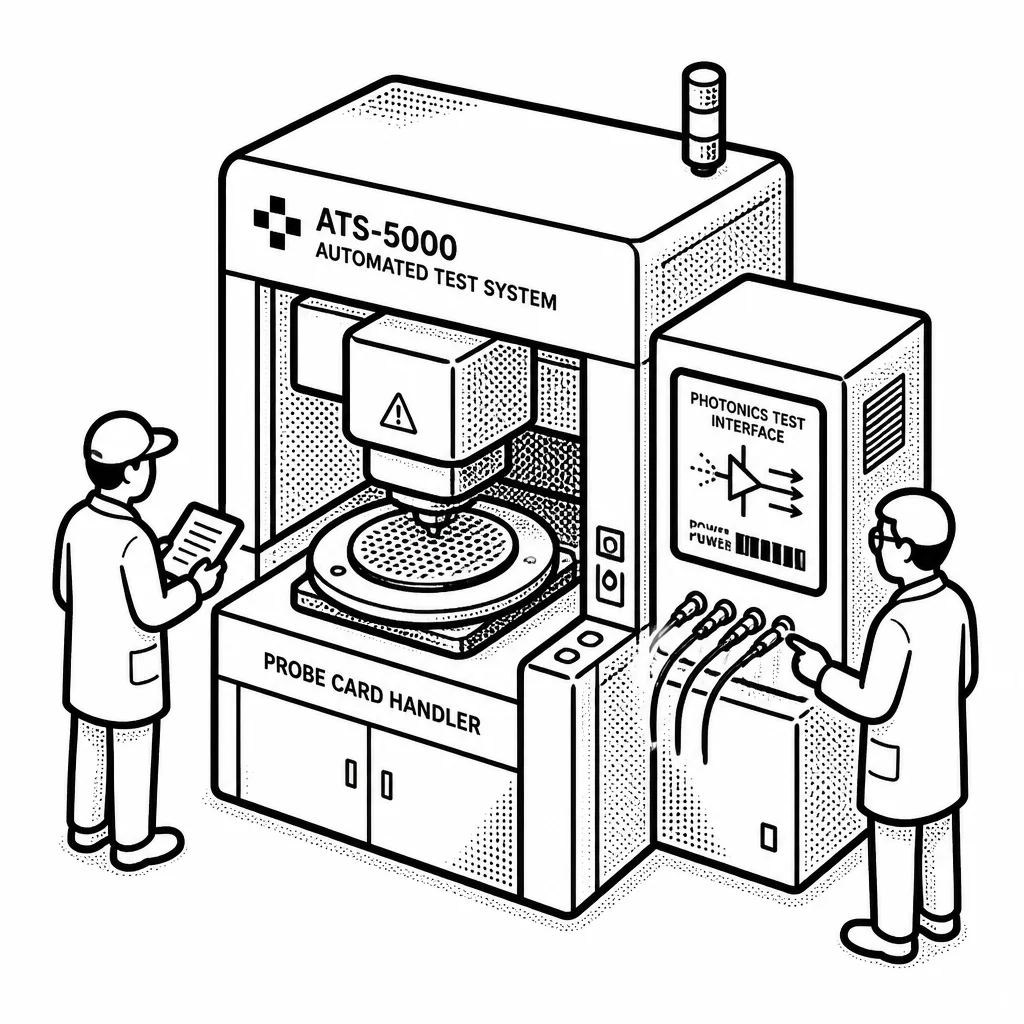
The core of the business is automated test equipment: racks of instruments wired to a computer that run a product through hundreds of checks in seconds, far faster and more consistently than a person with a multimeter could. Chroma's specialty is power — testing power supplies, charging systems, batteries, and the electronics that go into electric cars. That niche has grown more valuable as cars and data centers demand more and better power management. It also sells precision measurement instruments and builds test systems for chips, displays, and solar cells. The company is based in Taoyuan, Taiwan, and it matters that it sits inside Taiwan's electronics ecosystem: it is close to the chipmakers, component suppliers, and device assemblers that are its customers, and it can respond quickly when they need new test setups. Its main competitors are other test-and-measurement firms in the US such as Keysight Technologies and Teradyne, plus a crowded field of Taiwanese and Japanese rivals. Its edge is depth in power testing rather than breadth across every measurement category.
Chroma spends heavily on research and development because test equipment is a moving target: every new chip generation or battery design needs new tests. That spending is also its moat, since a supplier's test systems get baked into customers' production lines, making switching costly. The company pays dividends and has grown steadily, riding the boom in electric vehicles, power electronics, and AI data-center power. The honest risk is cyclicality: when electronics demand cools, manufacturers delay buying big test systems, and Chroma's orders slow with it.
Saved answer · last researched 12 Nov 2026