Understand any stock in simple English
Enter a ticker to learn what the company does and how it makes money.
YesAsia Holdings Limited
YesAsia sells Asian fashion, beauty, cosmetics, and entertainment products online to customers around the world.
YesAsia is an online store for people who love Asian pop culture and style. If you live outside Asia and want the newest K-pop album, a Japanese skincare cream, or a piece of clothing from a Korean brand, YesAsia is one of the places you can order it from and have it shipped to your door.
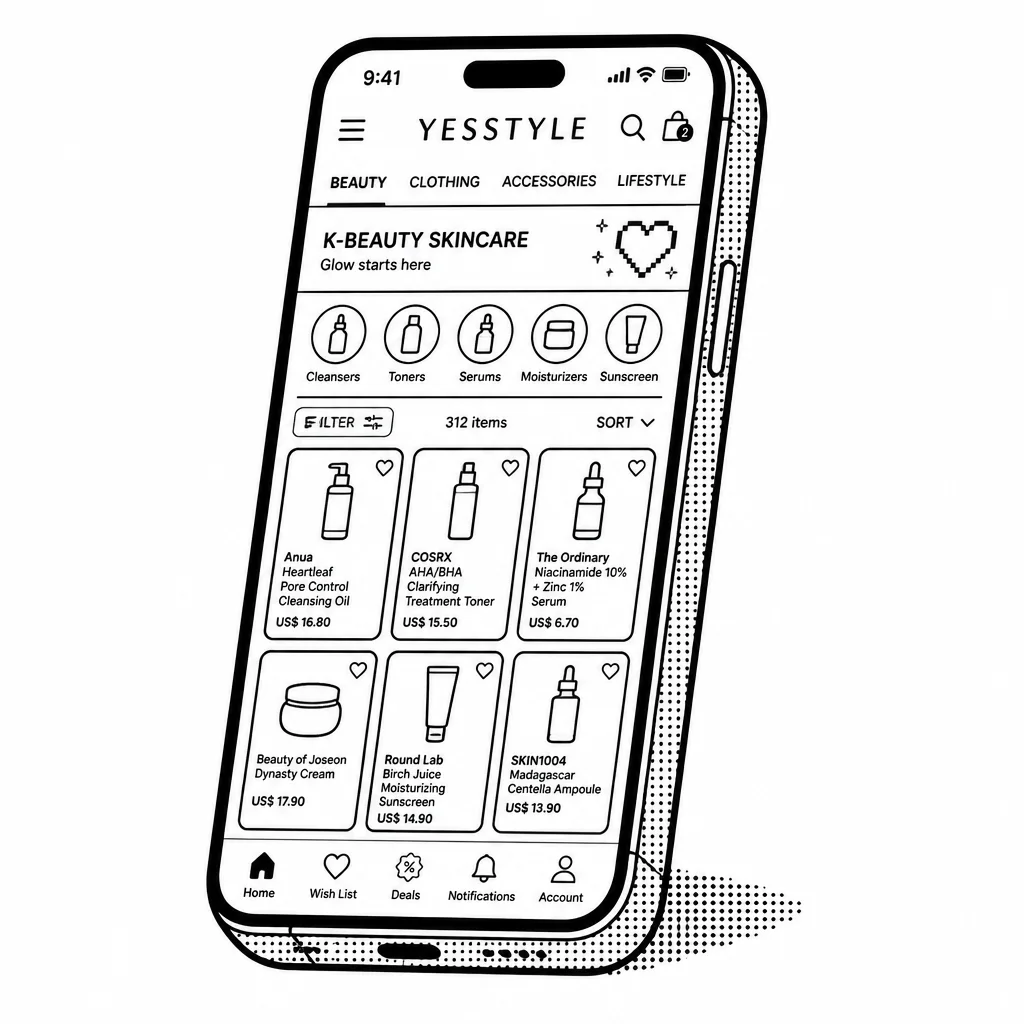
The company runs two main storefronts. YesAsia itself focuses on entertainment and lifestyle goods — CDs, DVDs, collectibles, cosmetics, and fashion — aimed at fans of Asian music, movies, and beauty. Its second storefront, YesStyle, is the bigger business today: a fashion and beauty shop that sells Korean and other Asian clothing and skincare to customers worldwide. YesStyle is where most of the money comes from, and it has grown fast as Korean beauty and fashion went global. The business is essentially a middleman. YesAsia buys products from Asian brands and suppliers, lists them on its websites, and ships them to customers in dozens of countries. Customers choose it because it carries Asian brands that are hard to find locally and because it handles international shipping and payment in one place. The catch is that this kind of retail runs on thin margins: the company has to spend heavily on marketing and shipping to keep attracting buyers, and it depends on a steady flow of new customers who come back to shop again. It competes with bigger players like Amazon and with many smaller specialty stores.
YesAsia is small but has been growing quickly, with revenue climbing sharply in recent years as YesStyle took off during the global boom in Korean beauty. It is headquartered in Hong Kong, close to many of the suppliers and brands it sells. The main thing to watch is whether it can keep growing without spending so much on ads and shipping that the profits disappear — a classic challenge for any online retailer trying to stand out in a crowded market.
Saved answer · last researched 14 Nov 2026
BIG PICTURE
YesAsia makes 97% of its beauty revenue from K-beauty products
- 97% K-beauty share of YesStyle and ABW revenue
- 3% Other beauty, fashion and lifestyle products
YesAsia began life selling Asian CDs and DVDs to homesick expatriates. Today it is one of the world's top three online K-beauty sellers, and Korean cosmetics and skincare bring in almost all of its beauty income. That focus explains the climb: revenue reached US$501.54 million in 2025, with US$148.90 million coming from wholesale. It also shows the risk of leaning on a single trend. Source: Quartr, data from 2025
Timeline
Two Founders Start Asia CD
In 1997, Mr. Lau and Ms. Chu started a small company in California called Asia CD, Inc. They bought Asian entertainment products and sold them to customers in the U.S., where people were hungry for Asian culture but had few easy places to find it. That simple idea — connecting fans abroad with the music and movies they loved — was the seed of everything that followed.
Asia CD Becomes YesAsia
A few years later, after raising a fresh round of money, the company changed its name to YesAsia.com and moved its website to YesAsia.com. The new name said yes to a bigger ambition: not just CDs, but a home for Asian entertainment online.
The Company Moves to Hong Kong
In 2005, the founders reorganized the business, setting up a holding company and shifting the operating companies to Hong Kong. The move was about capturing opportunities beyond the U.S. — Asia was where the culture came from, and now the company wanted to sell from closer to the source.
Streaming Forces a Pivot to Fashion
Then digital streaming arrived and demand for CDs and DVDs plunged. The company's core business was melting away, so it made a bold bet: in 2006 it launched YesStyle.com, an online fashion store built around Korean fashion, and later added beauty products. It was a survival move that would, years down the line, become the whole company.
YesAsia Lists in Hong Kong
In 2021, the company listed on the Hong Kong Stock Exchange, raising money to grow its e-commerce business, which by then leaned heavily on K-Beauty. A company that began as a California CD seller now had public shareholders and a new engine.
Beauty Takes Over the Business
Early in 2023, management made the call to push the business fully toward K-Beauty. Beauty products soon made up about 95% of total revenue — the transformation from entertainment goods to skincare and cosmetics was complete. The old CD business had become a footnote.
Record Results, Crashing Stock
In 2024 the company posted its best numbers ever, with revenue up sharply and profit more than doubling. Yet on one January day the stock fell as much as 80% in intraday trading. Investors were worried about unstable second-half profit, thinner margins as the mix shifted toward business customers, and brutal competition in e-commerce. Great results, terrified market.
New Warehouses and New Markets
The company kept building. In 2025 it opened a second automated warehouse in Hong Kong and a new one in South Korea, which helped cut freight costs as a share of revenue. For the first time, markets outside the U.S., UK, Canada and Australia brought in more than 60% of revenue, led by fast growth in Latin America and the Middle East.
A Wholesale Engine Emerges
The payoff arrived in 2026: revenue hit a record of about half a billion dollars, profit rose, and the dividend went up. A big part of that came from AsianBeautyWholesale, a business-to-business platform whose revenue jumped to nearly 30% of the total, running alongside the YesStyle consumer store. The little CD shop had become a two-engine K-Beauty machine.