Understand any stock in simple English
Enter a ticker to learn what the company does and how it makes money.
Zalando SE
Zalando is an online store that sells shoes, clothes, accessories, and beauty products to shoppers across Europe.
Zalando is Europe's biggest online fashion store. It sells shoes, clothes, bags, and beauty products to shoppers in dozens of European countries, all from a website and app instead of physical shops. If you live in Germany, Poland, the Netherlands, or much of the rest of Europe and want a new pair of sneakers or a winter coat without walking through a mall, Zalando is one of the first places you'd look.
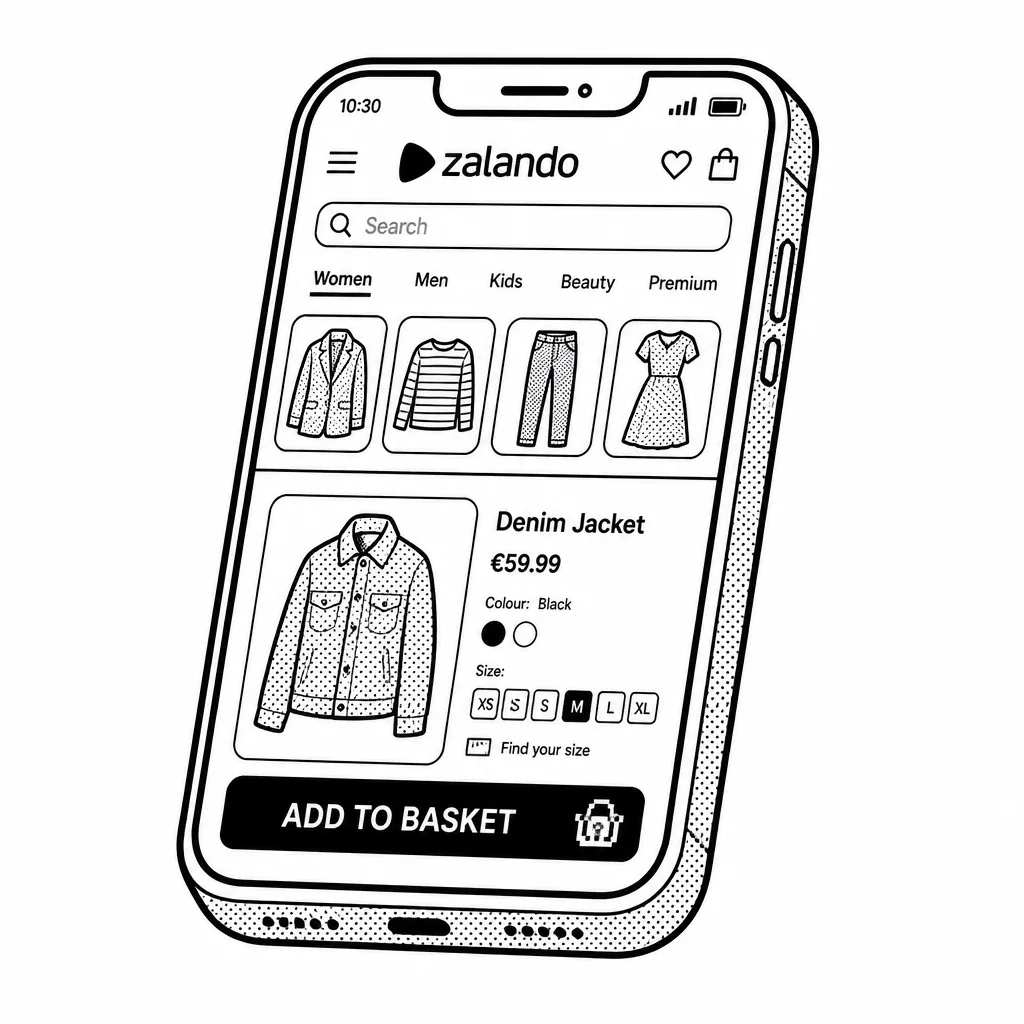
The basic idea is simple: Zalando buys shoes and clothes from brands and sells them to you at a markup, then ships them from its own warehouses. But the clever part is what sits behind that. Zalando built a huge logistics machine — big distribution centers, smart software that predicts what will sell, and a delivery network — so that orders arrive fast and returns are painless. Free returns matter enormously in fashion, because people order three sizes and send two back. Handling all that back-and-forth cheaply is a real edge, and it's a big reason shoppers keep coming back. Zalando doesn't just sell its own stock. It also runs a marketplace where other merchants list their products, and Zalando takes a cut of each sale without owning the inventory. That marketplace has grown into a major part of the business and is more profitable per sale than the classic retail side. On top of that, Zalando offers advertising space to brands who want their products promoted on its site, plus logistics and software services for partners. So the money comes from several places: selling goods, marketplace commissions, ads, and services. The fashion market is brutally competitive. Zalando fights Amazon on one side, fast-growing discount players like Shein on another, and local rivals in each country. Its bet is that being the dedicated fashion specialist — with better selection, easier returns, and a trusted brand — beats being a general store that also happens to sell socks. After a rough stretch when shoppers pulled back following the pandemic spending boom, Zalando has pushed hard on growth and profitability, and it has been expanding into new categories like beauty and more premium brands.
Zalando is headquartered in Berlin, Germany, and was founded in 2008 by two friends, Robert Gentz and David Schneider. The story goes that they were inspired by Zappos, the American online shoe seller, and started by selling flip-flops from a small apartment. It's a nice reminder that a company now shipping millions of parcels a year began with a couple of guys and a website. The question that matters for the future is whether Zalando can keep growing in a crowded, low-margin business while squeezing out real profits — and so far, it's still fighting that fight.
Saved answer · last researched 12 Nov 2026
Timeline
Two Friends Bet on Shoes Online
In 2008, just as the financial world was falling apart, Robert Gentz and David Schneider started selling shoes on the internet from a shared apartment in Berlin. Most people thought shopping for shoes online was a bad idea, but the two founders borrowed the idea from a US retailer called Zappos. Their trick was simple: free delivery and returns you could make for up to a hundred days. That made buying shoes online feel safe, and customers came.
A TV Ad Fails in the Netherlands
When Zalando expanded into the Netherlands, its first market outside German-speaking countries, it brought its German "scream with joy" TV campaign along. Dutch viewers hated it, and it was voted the year's most irritating advert not once but twice. The lesson stuck: marketing and service have to fit each local market, and that idea shaped how Zalando expanded from then on.
Zalando Lists on the Stock Exchange
Zalando went public on the Frankfurt Stock Exchange in the fall of 2014, raising about $664 million and valuing the company at roughly $6.6 billion. The shares popped at the open, then settled back to the offer price, because investors judged the business on the money it made moving boxes, not on a fancy software label. The cash went into warehouses and into the shift from a plain retailer toward a platform carrying other brands.
Becoming a Platform
By 2019 Zalando had opened its infrastructure beyond its own wholesale business, a big step toward being an online platform. It was no longer just a fashion retailer: it was turning into an ecosystem linking customers, brands, retailers and partners.
A Seat in Germany's Top Index
In 2021 Zalando joined Germany's DAX index as it grew to 40 companies. For a Berlin start-up, that was a signal it had made it into the club of Germany's largest listed companies.
Zalando Buys About You
In December 2024 Zalando agreed to buy its competitor About You, along with its subsidiary Scayle, for about €1.13 billion. The deal widened Zalando's reach to both shoppers and business customers and added an enterprise shop system to its software. It closed in the summer of 2025 and was finalized that November, making About You a wholly-owned subsidiary.
Three Apps, One Bigger Group
With About You folded in, Zalando reached more than 60 million active customers and over 7,000 partner brands. The group now runs a multi-app strategy across Zalando, About You and Lounge by Zalando, and management targets around €100 million a year in cost savings from fitting the two businesses together.
Growth Returns With AI
In 2025 Zalando's revenue rose almost 17% to €12.3 billion, with operating profit of €591 million, putting double-digit growth back on the board. Artificial intelligence became a real value driver in marketing, logistics and shopping, with AI-generated product content reaching 90%. The company expects growth of 12% to 17% in 2026 and points to AI and business-to-business as the next chapter of its ecosystem.